September 18 in History

The Assemblée Nationale votes to abolish capital punishment in France.

1981 — The Assemblée Nationale votes to abolish capital punishment in France

September 18 spans 98 recorded events across recorded history, from 96 to 2018. Below is a curated digest of the most significant moments tied to this date.

By · Wikipedia

Historical Events 98 events 96 – 2018

More major events on September 18

The featured story and these ranked highlights form a quick summary. Every recorded event remains available in the chronology below.

  1. 1810 First Government Junta in Chile. Though supposed to rule only during the Peninsular War in Spain, it is in fact the first step towards independence from Spain, and is commemorated as such. Source
  2. 1944 World War II: The British submarine HMS Tradewind torpedoes Jun'yō Maru, killing 5,600, mostly slave labourers and POWs. Source
  3. 324 Constantine the Great decisively defeats Licinius in the Battle of Chrysopolis, establishing Constantine's sole control over the Roman Empire. Source

Did you know

In 1981, The Assemblée Nationale votes to abolish capital punishment in France. This featured entry focuses on the immediate decision and its direct historical impact.

Did you know

The National Assembly is the lower house of the bicameral French Parliament under the Fifth Republic, the upper house being the Senate. This helps explain why the event mattered beyond the initial announcement.

Did you know

The National Assembly's legislators are known as députés or deputies. This clarifies the institutional and public response around the event.

Did you know

In 1981, The Assemblée Nationale votes to abolish capital punishment in France had consequences that extended beyond the first headline. The key context is the institutions involved, the policy shift, and how the public response evolved afterward.

Did you know

In 1981, The Assemblée Nationale votes to abolish capital punishment in France had consequences that extended beyond the first headline. The key context is the institutions involved, the policy shift, and how the public response evolved afterward.


Emperor Domitian is assassinated as a result of a plot by his wife Domitia and two Praetorian prefects.
Nerva is then proclaimed as his successor.
AD 96 (XCVI) was a leap year starting on Friday of the Julian calendar. At the time, it was known as the Year of the Consulship of Valens and Vetus. The denomination AD 96 for this year has been used since the early medieval period, when the Anno Domini calendar era became the prevalent method in Europe for naming years.
96
Constantine_the_Great
Constantine the Great decisively defeats Licinius in the Battle of Chrysopolis, establishing Constantine's sole control over the Roman Empire.
Roman emperor from 306 to 337
Constantine I, also known as Constantine the Great, was Roman emperor from AD 306 to 337 and the first Roman emperor to convert to Christianity. He played a pivotal role in elevating the status of Christianity in the Roman Empire, the Edict of Milan decriminalising Christian practice and ceasing Christian persecution. This was a turning point in the Christianisation of the Roman Empire. He founded the city of Constantinople and made it the capital of the Empire, which it remained for over a millennium.
324
Battle of Kapetron between a combined Byzantine-Georgian army and a Seljuq army.
Battle of the Byzantine–Seljuq wars, 1048
The Battle of Kapetron or Kapetrou was fought between a Byzantine-Georgian army and the Seljuq Turks at the plain of Kapetron in 1048. The event was the culmination of a major raid led by the Seljuq prince Ibrahim Inal into Byzantine-ruled Armenia. A combination of factors meant that the regular Byzantine forces were at a considerable numerical disadvantage against the Turks: the local thematic armies had been disbanded, while many of the professional troops had been diverted to the Balkans to face the revolt of Leo Tornikios. As a result, the Byzantine commanders, Aaron and Katakalon Kekaumenos, disagreed on how best to confront the invasion. Kekaumenos favoured an immediate and pre-emptive strike, while Aaron favoured a more cautious strategy until the arrival of reinforcements. Emperor Constantine IX chose the latter option and ordered his forces to adopt a passive stance, while requesting aid from the ruler of Georgian Duchy of Kldekari, Liparit IV. This allowed the Turks to ravage at will, notably leading to the sack and destruction of the great commercial centre of Artze.
1048
Harald_Hardrada
Norwegian king Harald Hardrada lands with Tostig Godwinson at the mouth of the Humber River and begins his invasion of England.
King of Norway from 1046 to 1066
Harald "Hardrada" Sigurdsson, also known as Harald III, was King of Norway from 1046 to 1066. He unsuccessfully claimed the Danish throne until 1064 and the English throne in 1066. Before becoming king, Harald spent 15 years in exile as a mercenary and military commander in Kievan Rus' and chief of the Varangian Guard in the Byzantine Empire. In his chronicle, Adam of Bremen called him the "Thunderbolt of the North".
1066
Philip_II_of_France
Philip Augustus becomes king of France at the age of fifteen.
King of France from 1180 to 1223
Philip II, also known as Philip Augustus, was King of France from 1180 to 1223. His predecessors had been known as kings of the Franks, but from 1190 onward, Philip became the first French monarch to style himself "King of France". The only son of King Louis VII and his third wife, Adela of Champagne, he was originally nicknamed 'God-given' because he was a first son and born late in his father's life. Philip was given the epithet "Augustus" by the chronicler Rigord for having extended the crown lands of France so remarkably.
1180
Thirteen_Years'_War_(1454–1466)
Thirteen Years' War: In the Battle of Chojnice, the Polish army is defeated by the Teutonic knights.
Conflict between the Prussian Confederation, Poland, and the Teutonic Order
The Thirteen Years' War, also called the War of the Cities, was a conflict fought in 1454–1466 between the Prussian Confederation, allied with the Crown of the Kingdom of Poland, and the State of the Teutonic Order.
1454
Juan_Bautista_Pastene
The expedition of Juan Bautista Pastene makes landfall in San Pedro Bay, southern Chile, claiming the territory for Spain.
16th-century Italian maritime explorer of South America
Giovanni Battista Pastene (1507–1580) was a Genoese maritime explorer who, while in the service of the Spanish crown, explored the coasts of Panama, Colombia, Ecuador, Peru and Chile as far south as the archipelago of Chiloé.
1544
The twelfth baktun in the Mesoamerican Long Count calendar begins.
Unit of time in the ancient Maya Long Count Calendar
A baktun is 20 kʼatun cycles of the ancient Maya Long Count Calendar. It contains 144,000 days, equal to 394.26 tropical years. The Classic period of Maya civilization occurred during the 8th and 9th baktuns of the current calendrical cycle. The current baktun started on 13.0.0.0.0 – December 21, 2012 using the GMT correlation.
1618
George_I_of_Great_Britain
George I arrives in Great Britain after becoming king on August 1.
King of Great Britain and Ireland from 1714 to 1727
George I was King of Great Britain and Ireland from 1 August 1714 and ruler of the Electorate of Hanover within the Holy Roman Empire from 23 January 1698 until his death in 1727. He was the first British monarch of the House of Hanover.
1714
Treaty_of_Belgrade
The Treaty of Belgrade is signed, whereby Austria cedes lands south of the Sava and Danube rivers to the Ottoman Empire.
1739 treaty between Austria and the Ottomans
The Treaty of Belgrade, also known as the Belgrade Peace, was a peace treaty between the Habsburg Monarchy and Ottoman Empire, that was signed on September 18, 1739, in Belgrade, thus ending the Austro-Turkish War (1737–1739). Agreed territorial changes were substantial, and also favorable for the Ottoman side, since Habsburgs had to cede three regions: the Banat of Craiova, the Kingdom of Serbia with Belgrade, and Bosnian section of Posavina, thus placing the newly defined Habsburg-Ottoman border on the rivers Sava and Danube.
1739
French_and_Indian_War
French and Indian War: The Articles of Capitulation of Quebec are signed.
North American theater of the Seven Years' War
The French and Indian War (1754–1763) was a conflict in North America between Great Britain and France, along with their respective Indigenous allies, which were called "Indians" at the time. Historians generally consider it part of the global Seven Years' War, which lasted from 1756 to 1763, although in the United States it is often viewed as a distinct conflict unassociated with any larger European war.
1759
United_States_Capitol
The first cornerstone of the United States Capitol is laid by George Washington.
Meeting place of the United States Congress
The United States Capitol, often called the Capitol or the Capitol Building, is the seat of the United States Congress, the legislative branch of the federal government. It is located on Capitol Hill at the eastern end of the National Mall in Washington, D.C. Although no longer at the geographic center of the national capital, the U.S. Capitol forms the origin point for the street-numbering system of the district as well as its four quadrants. Like the principal buildings of the executive and judicial branches, the Capitol is built in a neoclassical style and has a white exterior.
1793
Royal_Opera_House
The Royal Opera House in London opens.
Performing arts venue in London, England
The Royal Opera House (ROH) is a theatre in Covent Garden, central London. The building is often referred to as simply Covent Garden, after a previous use of the site. The ROH is the main home of The Royal Opera, The Royal Ballet, and the Orchestra of the Royal Opera House, which are known collectively as the Royal Ballet and Opera.
1809
Government_Junta_of_Chile_(1810)
First Government Junta in Chile.
Though supposed to rule only during the Peninsular War in Spain, it is in fact the first step towards independence from Spain, and is commemorated as such.
The First Government Junta of Chile, officially the Provisional Government Junta of the Kingdom in the name of Ferdinand VII, was the organization established to rule post-colonial Chile following the deposition and imprisonment of King Ferdinand VII of Spain by Napoleon Bonaparte. It was the earliest step in the Chilean struggle for independence, and the anniversary of its establishment is celebrated as the national day of Chile.
1810
Fire_of_Moscow_(1812)
The 1812 Fire of Moscow dies down after destroying more than three-quarters of the city.
Napoleon returns from the Petrovsky Palace to the Moscow Kremlin, spared from the fire.
During the French occupation of Moscow, a fire persisted from 14 to 18 September 1812 and all but destroyed the city. The Russian troops and most of the remaining civilians had abandoned the city on 14 September 1812 just ahead of French Emperor Napoleon's troops entering the city after the Battle of Borodino. The Moscow military governor, Count Fyodor Rostopchin, has often been considered responsible for organising the destruction of the former capital to weaken the French army in the scorched city even more.
1812
Tiffany_&_Co.
Tiffany & Co.
(first named Tiffany & Young) is founded by Charles Lewis Tiffany and Teddy Young in New York City. The store is called a "stationery and fancy goods emporium".
Tiffany & Co. is an American luxury jewelry and specialty design house owned by the French conglomerate LVMH Moët Hennessy Louis Vuitton, and headquartered on Fifth Avenue in Manhattan. Tiffany is known for its luxury goods, particularly its sterling silver and diamond jewelry. These goods are sold at Tiffany stores, online, and through corporate merchandising. Its name and branding are licensed to Coty for fragrances and to the Franco-Italian company EssilorLuxottica for eyewear.
1837
Anti–Corn_Law_League
The Anti-Corn Law League is established by Richard Cobden.
Former political movement in Great Britain
The Anti–Corn Law League was a successful political movement in Great Britain aimed at the abolition of the unpopular Corn Laws, which protected national farming interests by levying taxes on imported wheat, thus raising the price of bread at a time when factory-owners were trying to cut wages. The League was a middle-class nationwide organisation that held many well-attended rallies on the premise that a crusade was needed to convince parliament to repeal the corn laws. Its long-term goals included the removal of feudal privileges, which it denounced as impeding progress, lowering economic well-being, and restricting freedom.
1838
Fugitive_Slave_Act_of_1850
The U.S.
Congress passes the Fugitive Slave Act of 1850.
The Fugitive Slave Act or Fugitive Slave Law was a statute passed by the 31st United States Congress on September 18, 1850, as part of the Compromise of 1850 between Southern interests in slavery and Northern Free-Soilers.
1850
The_New_York_Times
First publication of The New-York Daily Times, which later becomes The New York Times.
American daily newspaper
The New York Times (NYT) is a newspaper based in Manhattan, New York City. The New York Times covers domestic, national, and international news, and publishes opinion pieces and reviews. One of the longest-running newspapers in the United States, the Times serves as one of the country's newspapers of record. As of August 2025, The New York Times had 11.88 million total and 11.3 million online subscribers, both the highest numbers for any newspaper in the United States by a significant margin; the total also included 580,000 print subscribers. The New York Times is published by the New York Times Company. Since 1896, the company has been chaired by the Ochs-Sulzberger family. The current chairman and the paper's publisher is A. G. Sulzberger. The Times is headquartered at The New York Times Building in Midtown Manhattan.
1851
Second_Opium_War
Second Opium War: Battle of Zhangjiawan: Now heading towards Beijing after having recently occupied Tianjin, the allied Anglo-French force engages and defeats a larger Qing Chinese army at Zhangjiawan.
1856–1860 war between British–French forces and China
The Second Opium War, also known as the Second Anglo-Chinese War or Arrow War, was fought between the United Kingdom and France against the Qing dynasty of China between 1856 and 1860. It was the second major conflict in the Opium Wars, which were fought over the right to import opium to China, and resulted in a second defeat for the Qing and the forced legalisation of the opium trade. It caused many Chinese officials to believe that conflicts with the Western powers were no longer traditional wars, but part of a looming national crisis.
1860
Unification_of_Italy
Wars of Italian Unification: Battle of Castelfidardo: Royal Sardinian Army defeats forces of the Papal States, resulting in the conquest of Umbria and Marche by the Kingdom of Italy.
1848–1870 consolidation of Italian states
The unification of Italy, also known as the Risorgimento, was the 19th century political and social movement that in 1861 ended in the annexation of various states of the Italian peninsula and its outlying isles to the Kingdom of Sardinia, resulting in the creation of the Kingdom of Italy. Inspired by the rebellions in the 1820s and 1830s against the outcome of the Congress of Vienna, the unification process was precipitated by the Revolutions of 1848, and reached completion in 1871 with the official designation of Rome as capital of Italy, following the capture of Rome in 1870.
1860
Confederate_States_of_America
The Confederate States celebrate for the first and only time a Thanksgiving Day.
Unrecognized state in North America (1861–1865)
The Confederate States of America (CSA), also known as the Confederate States or the Confederacy was a republic in the Southern United States from 1861 to 1865, unrecognized as a sovereign nation by either foreign governments or the United States. It was formed by seven states that had seceded from the Union and were later joined by four more. The original seven were South Carolina, Mississippi, Florida, Alabama, Georgia, Louisiana, Texas; the additional four were Virginia, Arkansas, Tennessee, and North Carolina. These states fought against the United States during the American Civil War in the wake of the 1860 election of Abraham Lincoln as president, with the principal aim of safeguarding slavery amid fears of northern abolitionist influence and federal interference in slave property. The South also feared that Lincoln's insistence that slavery not be permitted to expand into the Western territories would result in the admission of additional free states and the eventual demise of slavery.
1862
American_Civil_War
American Civil War: The Battle of Chickamauga begins between Confederate and Union forces.
It involves the second highest amount of casualties for any American Civil War battle apart from Gettysburg.
The American Civil War was a civil war in the United States between the Union and the Confederacy, which was formed in 1861 by states that had seceded from the Union to preserve slavery in the United States. The South saw slavery as threatened because of the election of Abraham Lincoln and the growing abolitionist movement in the North. The war ended with Union victory, the dissolution of the Confederacy and the abolition of slavery, freeing four million African Americans.
1863
John_Bell_Hood
American Civil War: John Bell Hood begins the Franklin–Nashville Campaign in an unsuccessful attempt to draw William Tecumseh Sherman back out of Georgia.
Confederate Army general (1831–1879)
John Bell Hood was a Confederate general during the American Civil War.
1864
Nova_Scotia_House_of_Assembly
The first provincial election for the Nova Scotia Legislative Assembly after Canada's Confederation returns a large majority for the Anti-Confederation Party, led by William Annand, who becomes Premier.
Legislative chamber of the General Assembly of Nova Scotia
The Nova Scotia House of Assembly (French: Assemblée législative de la Nouvelle-Écosse, or Legislative Assembly, is the deliberative assembly of the General Assembly of Nova Scotia, and together with the lieutenant governor of Nova Scotia makes up the Nova Scotia Legislature.
1867
The fourth and current State Constitution of Maryland is ratified by voters.
American state constitution
The current Constitution of the State of Maryland, which was ratified by the people of the state on September 18, 1867, forms the basic law for the U.S. state of Maryland. It replaced the short-lived Maryland Constitution of 1864 and is the fourth constitution under which the state has been governed. It was last amended in 2024.
1867
Washburn–Langford–Doane_Expedition
During an expedition to the Wyoming Territory, Henry D.
Washburn observes and names the Old Faithful Geyser.
The Washburn Expedition of 1870 explored the region of northwestern Wyoming that two years later became Yellowstone National Park. Led by Henry D. Washburn and Nathaniel P. Langford, and with a U.S. Army escort headed by Lt. Gustavus C. Doane, the expedition followed the general course of the Cook–Folsom–Peterson Expedition made the previous year.
1870
Jay_Cooke_&_Company
The U.S.
bank Jay Cooke & Company declares bankruptcy, contributing to the Panic of 1873.
Jay Cooke & Company was a U.S. bank that operated from 1861 to 1873. Headquartered in Philadelphia, Pennsylvania, with branches in New York City and Washington, D.C., the bank helped underwrite the Union Civil War effort. It was the first "wire" brokerage house, pioneering the use of telegraph messages to confirm securities transactions with clients. The bank became overextended in the building of the Northern Pacific Railway and failed, contributing to the Panic of 1873.
1873
Blackpool_Illuminations
The Blackpool Illuminations are switched on for the first time.
Annual lights festival in Blackpool, Lancashire, England
Blackpool Illuminations is an annual lights festival that started on 18 September 1879, held each autumn in the British seaside resort of Blackpool on the Fylde Coast in Lancashire. Also known locally as The Lights or The Illuminations, they ran each year for 66 days from late August until early November, extended to over 100 days to run until after the Christmas and New Year holidays from 2020, at a time when most other English seaside resorts' seasons had come to an end; for example, Friday 30 August 2024 to Sunday 5 January 2025, and Friday 29 August 2025 to Sunday 4 January 2026.
1879
Pacific_Exchange
The Pacific Stock Exchange opens.
Defunct American regional stock exchange in California (1956–2006)
The Pacific Exchange was an American regional stock exchange in California, from 1956 to 2006. Its main exchange floor and building were in San Francisco, California, with a branch building in Los Angeles, California.
1882
Five Chinese people were lynched outside of Pierce City in the Idaho Territory of the United States.
1885 lynching in Idaho Territory
On September 18, 1885, five Chinese people in the United States were lynched by a mob outside of Pierce City in the Idaho Territory. The individuals had been arrested by a vigilance committee formed in the city after the killing of a local businessman.
1885
Veal_Oscar
Veal Oscar, a dish of veal, seafood, asparagus, and Bernaise sauce, is first served at the Grand Hotel in Stockholm, in honour of the 25th anniversary of the reign of King Oscar II of Sweden and Norway.
Dish of veal or beef, crab, and sauce
Veal Oscar is a culinary creation consisting of sauteed veal cutlets topped with crab meat, and an emulsified butter sauce such as Hollandaise or Béarnaise. Traditionally, Veal Oscar is garnished with two white asparagus spears.
1897
Fashoda_Incident
The Fashoda Incident triggers the last war scare between Britain and France.
1898 Anglo-French dispute in East Africa
The Fashoda Incident, also known as the Fashoda Crisis, was the climax of imperialist territorial disputes between Britain and France in East Africa, occurring between 10 July and 3 November 1898. A French expedition to Fashoda on the White Nile sought to gain control of the Upper Nile river basin and thereby exclude Britain from Sudan. The French party and a British-Egyptian force met on friendly terms. However, in Europe, it became a war scare. Both empires stood on the verge of war with heated rhetoric on both sides. Under heavy pressure, the French withdrew, ensuring Anglo-Egyptian control over the area.
1898
1906_Hong_Kong_typhoon
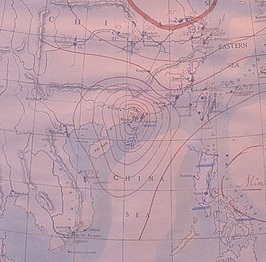
The 1906 Hong Kong typhoon kills an estimated 10,000 people.
Fatal tropical cyclone
The 1906 Hong Kong typhoon was a tropical cyclone that hit Hong Kong on 18 September 1906. The typhoon caused property damage exceeding a million pounds sterling, affected international trade, and took the lives of around 15,000 people.
1906
George_Owen_Squier
In Washington, D.C., George Owen Squier demonstrated the first system to allow multiplexing of telephone transmissions, sending a message between two laboratories of the U.S.
Signal Corps.
George Owen Squier was an American general, scientist, and inventor best known for inventing and popularizing what today is called Muzak.
1910
Government_of_Ireland_Act_1914
The Irish Home Rule Act becomes law, but is delayed until after World War I.
1914 United Kingdom law providing Ireland with home rule
The Government of Ireland Act 1914, also known as the Home Rule Act, and before enactment as the Third Home Rule Bill, was an Act passed by the Parliament of the United Kingdom intended to provide home rule for Ireland. It was the third such bill introduced by a Liberal government during a 28-year period in response to agitation for Irish Home Rule.
1914
The_Saturday_Evening_Post
The Saturday Evening Post publishes the short story "Extricating Young Gussie" by P.G.
Wodehouse, featuring the first appearance of Bertie Wooster and his valet Jeeves.
The Saturday Evening Post is an American magazine published six times a year. It was first published in 1821, and published weekly from 1897 until 1963. It was published every other week until 1969. From the 1920s to the 1960s, it was one of the most widely circulated and influential magazines among the American middle class, with fiction, nonfiction, cartoons, and features that reached two million homes every week.
1915
Fritz_Pollard
Fritz Pollard becomes the first African American to play professional football for a major team, the Akron Pros.
American football player and coach (1894–1986)
Frederick Douglass "Fritz" Pollard was an American professional football player and coach. In 1921, he became the first African-American head coach in the National Football League (NFL). Pollard and Bobby Marshall were the first two African-American players in the NFL in 1920. He is also recognized as the first Black quarterback in NFL history, playing the position for the Hammond Pros in 1923. Football pioneer Walter Camp called Pollard "one of the greatest runners these eyes have ever seen."
1919
Netherlands
In the Netherlands, a law granting full voting rights to women is granted royal assent by Queen Wilhelmina.
Country in Northwestern Europe and the Caribbean
The Netherlands, also informally known as Holland, is a country in Northwestern Europe, with overseas territories in the Caribbean. It is the largest of the four constituent countries of the Kingdom of the Netherlands. The Netherlands consists of twelve provinces and three overseas special municipalities. European Netherlands has land borders with Germany to the east and with Belgium to the south, and a coastline to the north and west. It shares maritime borders with the United Kingdom, Germany, and Belgium in the North Sea. The official language is Dutch, with West Frisian as a secondary official language in the province of Friesland. Dutch, English, and Papiamento are official in the Caribbean territories. People from the Netherlands are referred to as Dutch.
1919
Rif_War
Rif War: In Ajdir, Spanish Morocco, a secessionist group of Berbers led by Abd el-Krim proclaim the Republic of the Rif, in rebellion against the Sultan of Morocco and the Spanish Army.
French and Spanish forces suppress the Republic by May 1926.
The Rif War was an armed conflict fought from 1921 to 1926 between Spain and Berber tribes of the mountainous Rif region of northern Morocco.
1921
Kingdom_of_Hungary_(1920–1946)
The Kingdom of Hungary is admitted to the League of Nations.
Monarchy under regency
The interwar Kingdom of Hungary, referred to retrospectively as the Regency and the Horthy era, existed as a country from 1920 to 1946 under the rule of Miklós Horthy, Regent of Hungary, who officially represented the Hungarian monarchy. In reality there was no king, and attempts by King Charles IV to return to the throne shortly before his death were prevented by Horthy.
1922
Military_Government_of_Santo_Domingo
The U.S.
ends its military occupation of the Dominican Republic, after invading in May 1916 to force the Dominican government to pay its debts to European creditors.
The Military Government of Santo Domingo was a provisional military government established during the American occupation of the Dominican Republic that lasted from May 15, 1916 to September 18, 1924. The United States aimed to force the Dominicans to repay their large debts to European creditors, whose governments threatened military intervention. On May 13, 1916, Rear Admiral William B. Caperton forced the Dominican Republic's Secretary of War Desiderio Arias, who had seized power from President Juan Isidro Jimenes Pereyra, to leave Santo Domingo by threatening the city with naval bombardment.
1924
1926_Miami_hurricane
A hurricane devastates Miami, Florida, killing 372 people.
Category 4 Atlantic hurricane that hit Florida in 1926
The Great Miami Hurricane of 1926 was a large and intense tropical cyclone that devastated the Greater Miami area of Florida and caused catastrophic damage in the Bahamas and the U.S. Gulf Coast in September 1926, accruing a US$100 million damage toll. The devastation brought by the hurricane resulted in the end of Florida's land boom, and represented an early start to the Great Depression in the state. It has been estimated that a similar hurricane would cause about $235 billion in damage if it were to hit Miami in 2018.
1926
CBS
The Columbia Broadcasting System goes on the air.
American broadcast television and radio network
CBS Broadcasting Inc., commonly shortened to CBS, is an American commercial broadcast television network and the flagship property of the CBS Entertainment Group division of Paramount Skydance. It is one of Paramount Skydance's three flagship subsidiaries, along with Paramount Pictures and MTV.
1927
Juan_de_la_Cierva
Juan de la Cierva makes the first Autogyro crossing of the English Channel.
Spanish engineer and count (1895–1936)
Juan de la Cierva y Codorníu, 1st Count of la Cierva, was a Spanish civil engineer, pilot and a self-taught aeronautical engineer. His most famous accomplishment was the invention in 1920 of a rotorcraft called Autogiro, a single-rotor type of aircraft that came to be called autogyro in the English language. In 1923, after four years of experimentation, De la Cierva developed the articulated rotor, which resulted in the world's first successful flight of a stable rotary-wing aircraft, with his C.4 prototype.
1928
Mukden_incident
Imperial Japan instigates the Mukden incident as a pretext to invade and occupy Manchuria.
1931 Japan false flag railway explosion
The Mukden incident was a false flag event staged by Japanese military personnel as a pretext for the 1931 Japanese invasion of Manchuria. On September 18, 1931, Lieutenant Suemori Kawamoto of the Independent Garrison Unit of the 29th Japanese Infantry Regiment detonated a small quantity of dynamite close to a railway line owned by Japan's South Manchuria Railway near Mukden. The explosion was so weak that it failed to destroy the track, and a train passed over it minutes later. The Imperial Japanese Army accused Chinese dissidents of the act and responded with a full invasion that led to the occupation of Manchuria, in which Japan established its puppet state of Manchukuo five months later.
1931
Peg_Entwistle
The body of actress Peg Entwistle is discovered by police, two days after her suicide by jumping off of the Hollywoodland sign.
American actress (1908–1932)
Millicent Lilian "Peg" Entwistle was a British stage and screen actress. She began her stage career in 1925, appearing in several Broadway productions. She appeared in only one film, Thirteen Women (1932), which was released posthumously. Entwistle gained notoriety after she jumped to her death from atop the 'H' on the Hollywoodland Sign in September 1932, at the age of 24.
1932
Soviet_Union
The Soviet Union is admitted to the League of Nations.
Country in Eurasia from 1922 to 1991
The Soviet Union, officially the Union of Soviet Socialist Republics (USSR), was a transcontinental country that spanned much of Eurasia from its formation in 1922 until its dissolution in 1991. It was the world's third-most populous country, the largest by area, and bordered twelve other countries. A diverse multinational state, it was organized as a federal union of national republics, with the largest and most populous being the Russian Soviet Federative Socialist Republic (SFSR). The world's flagship communist state, it was governed by the Communist Party under Marxism–Leninism, through soviet councils. The Soviet economy was also centrally planned. Its capital and largest city was Moscow.
1934
World_War_II
World War II: The Polish government of Ignacy Mościcki flees to Romania.
Global conflict (1939–1945)
World War II, or the Second World War, was a global conflict between two coalitions: the Allies and the Axis powers. Nearly all of the world's countries participated, with many engaging in total war on an unprecedented scale. World War II was the deadliest conflict in history, causing the deaths of 60 to 75 million people, a majority of whom were civilians. Millions died as a result of massacres, starvation, disease, and genocides including the Holocaust. After the Allied victory, Germany, Austria, Japan, and Korea were occupied, and German and Japanese leaders were tried for war crimes.
1939
World War II: The radio show Germany Calling begins transmitting Nazi propaganda.
English language propaganda radio programme
Germany Calling was an English language propaganda radio programme, broadcast by Nazi German radio to audiences in the British Isles and North America during the Second World War. Every broadcast began with the station announcement: "Germany calling! Here are the Reichssender Hamburg, station Bremen". Today, it is best known for its employment of several radio presenters jointly known as Lord Haw-Haw — most notably, William Joyce, who was German radio's most prominent English language speaker and to whom the name gradually came to be exclusively applied.
1939
World War II: The Soviet Union introduces conscription for all males between the ages of 16 and 50.
1941
History_of_the_Jews_in_Denmark
World War II: Adolf Hitler orders the deportation of Danish Jews.
The history of Jews in Denmark goes back to the 1600s. Although there were very likely Jewish merchants, sailors, and others who entered Denmark during the Middle Ages, no efforts were made to establish a Jewish community. At present, the Jewish community in Denmark comprises about 6,000 persons.
1943
HMS_Tradewind
World War II: The British submarine HMS Tradewind torpedoes Jun'yō Maru, killing 5,600, mostly slave labourers and POWs.
T-class submarine of the Royal Navy, in service from 1943 to 1955
HMS Tradewind was a British submarine of the third group of the T class. She was built as P329 at Chatham, and launched on 11 December 1942. As of 2021 she is the only ship of the Royal Navy to have been named Tradewind, after the trade winds.
1944
Operation_Market_Garden
World War II: Operation Market Garden results in the liberation of Eindhoven.
1944 World War II military operation
Operation Market Garden was an Allied military operation during the Second World War fought in the German-occupied Netherlands from 17 to 25 September 1944. Its objective was to create a salient spanning 62 miles (100 km) into German territory with a bridgehead over the Nederrijn, creating an Allied invasion route into northern Germany. This was to be achieved by two sub-operations: seizing nine bridges with combined American, British and Polish airborne forces ("Market") followed by British land forces swiftly following over the bridges ("Garden").
1944
Battle_of_Arracourt
World War II: The Battle of Arracourt begins.
Part of the Lorraine Campaign of World War II
The Battle of Arracourt took place between U.S. and German armoured forces near the town of Arracourt, Lorraine, France between 18 and 29 September 1944, during the Lorraine Campaign of World War II. As part of a counteroffensive against recent U.S. advances in France, the German 5th Panzer Army had as its objective the recapture of Lunéville and the elimination of the XII Corps bridgehead over the Moselle River at Dieulouard.
1944
Douglas_MacArthur
General Douglas MacArthur moves his general headquarters from Manila to Tokyo.
American general (1880–1964)
Douglas MacArthur was an American general who served as a top commander during World War II and the Korean War, achieving the rank of General of the Army. He served with distinction in World War I; as chief of staff of the United States Army from 1930 to 1935; as Supreme Commander, Southwest Pacific Area, from 1942 to 1945; as Supreme Commander for the Allied Powers overseeing the occupation of Japan from 1945 to 1951; and as head of the United Nations Command in the Korean War from 1950 to 1951. He is one of only five people to hold the rank of General of the Army, and the only person to hold the rank of Field Marshal in the Philippine Army.
1945
National_Security_Act_of_1947
The National Security Act reorganizes the United States government's military and intelligence services.
United States law restructuring its armed forces
The National Security Act of 1947 is a law enacting major restructuring of the United States government's military and intelligence agencies following World War II. The majority of the provisions of the act took effect on September 18, 1947, the day after the Senate confirmed James Forrestal as the first secretary of defense.
1947
Indian_annexation_of_Hyderabad
Operation Polo is terminated after the Indian Army accepts the surrender of the army of Hyderabad.
1948 military invasion of Hyderabad State by the Dominion of India
The Annexation of Hyderabad was a military operation launched in September 1948 that resulted in the annexation of the princely state of Hyderabad by India, which was dubbed a "police action".
1948
Margaret_Chase_Smith
Margaret Chase Smith of Maine becomes the first woman elected to the United States Senate without completing another senator's term.
American politician (1897–1995)
Margaret Madeline Chase Smith was an American politician. A member of the Republican Party, she served as a U.S. representative (1940–1949) and a U.S. senator (1949–1973) from Maine. She was the first woman to serve in both houses of the U.S. Congress. A Republican, she was among the first to criticize the tactics of Joseph McCarthy in her 1950 speech "Declaration of Conscience".
1948
Korean_War
Korean War: U.S.
Eighth Army and United Nations forces break out of the Pusan Perimeter in southeast Korea.
The Korean War was an armed conflict fought on the Korean Peninsula between North Korea and South Korea and their allies. North Korea was supported by China and the Soviet Union, while South Korea was supported by the United Nations led by the United States under the auspices of the United Nations Command (UNC).
1950
Rede_Tupi
TV Tupi Difusora, the first television station to broadcast in Brazil, begins transmissions on Channel 3 in São Paulo.
Former Brazilian broadcast television network
Rede Tupi was a Brazilian commercial terrestrial television network. Its flagship station, located in the city of São Paulo, was the first TV station to operate in the country, being inaugurated on 18 September 1950 by journalist Assis Chateaubriand. It was owned by Diários Associados, one of the largest media conglomerates of the 20th century, owner of several newspapers, magazines, and radio stations.
1950
Juho_Kusti_Paasikivi
Finnish president J.
K. Paasikivi becomes the first Western head of state to be awarded the highest honor of the Soviet Union, the Order of Lenin.
Juho Kusti Paasikivi was a Finnish politician who served as the president of Finland from 1946 to 1956. Representing the Finnish Party until its dissolution in 1918 and then the National Coalition Party, he previously served as senator, member of parliament, envoy to Stockholm (1936–1939) and Moscow (1940–1941), and Prime Minister of Finland. He also held several other positions of trust, and was an influential figure in Finnish economics and politics for over fifty years.
1954
Royal_Navy
A four-person landing party, led by Lt.-Cdr.
Desmond Scott RN, disembarks from a Royal Navy helicopter and raises the Union Flag on Rockall, claiming the uninhabited Atlantic island for the United Kingdom.
The Royal Navy (RN) is the naval warfare force of the United Kingdom, responsible for defending the country, the Crown Dependencies, and the Overseas Territories from naval attack or invasion. It is a component of His Majesty's Naval Service, and its officers hold their commissions from the King. Although warships were used by English and Scottish kings from the early medieval period, the first major maritime engagements were fought in the Hundred Years' War against France. The modern Royal Navy traces its origins to the English Navy of the early 16th century, making it the oldest of the United Kingdom's armed services. It is consequently known as the Senior Service.
1955
Bank_of_America
The Bank of America introduces its first credit card, the BankAmericard (later renamed the VISA Card), in a test market in Fresno County, California.
American multinational banking and financial services corporation
The Bank of America Corporation is an American multinational bank and financial services holding company headquartered at the Bank of America Corporate Center in Charlotte, North Carolina, with investment banking and auxiliary headquarters in Manhattan. The bank was formed by the merger of NationsBank and Bank of America in 1998. It is the second-largest banking institution in the United States and the second-largest bank in the world by market capitalization, both after JPMorgan Chase.
1958
Fidel_Castro
Fidel Castro arrives in New York City as the head of the Cuban delegation to the United Nations.
Leader of Cuba from 1959 to 2011
Fidel Alejandro Castro Ruz was a Cuban communist revolutionary and statesman who was the leader of Cuba from 1959 to 2011. He served as prime minister from 1959 to 1976, president from 1976 to 2008, and first secretary of the Communist Party of Cuba from 1965 until 2011. Ideologically a Marxist–Leninist and Cuban nationalist, under his administration Cuba became a one-party communist state; industry and business were nationalized, and socialist reforms were implemented throughout society.
1960
Dag_Hammarskjöld
United Nations Secretary-General Dag Hammarskjöld dies in an air crash while attempting to negotiate peace in the Katanga region of the Democratic Republic of the Congo.
UN Secretary-General from 1953 to 1961
Dag Hjalmar Agne Carl Hammarskjöld was a Swedish economist and diplomat who served as the second Secretary-General of the United Nations from April 1953 until his death in a plane crash in September 1961. As of 2026, he remains the youngest person to have held the post, having been only 47 years old when he was elected. He was a son of Hjalmar Hammarskjöld, who served as Prime Minister of Sweden from 1914 to 1917.
1961
Burundi
Burundi, Jamaica, Rwanda and Trinidad and Tobago are admitted to the United Nations.
Country in East Africa
Burundi, officially the Republic of Burundi, is a landlocked country in East Africa. It is located in the Great Rift Valley at the junction between the African Great Lakes region and Southeastern Africa, with a population of over 14 million people. It is bordered by Rwanda to the north, Tanzania to the east and southeast, and the Democratic Republic of the Congo to the west; Lake Tanganyika lies along its southwestern border. The political capital city is Gitega and the economic capital and largest city is Bujumbura.
1962
Aeroflot_Flight_213
Aeroflot Flight 213 crashes into a mountain near Chersky Airport, killing 32 people.
Aviation accident in the Soviet Union
Aeroflot Flight 213 was a regularly scheduled passenger flight operated by Aeroflot from Chersky Airport to Keperveyem Airport. On 18 September 1962, the Ilyushin Il-14 operating this flight crashed shortly after takeoff. All 27 passengers and five crew members were killed.
1962
The wedding of Constantine II of Greece and Princess Anne-Marie of Denmark takes place in Athens.
1964 Royal wedding
The wedding of Constantine II, King of the Hellenes, and Princess Anne-Marie of Denmark took place on Friday, 18 September 1964, at the Metropolitan Cathedral of Athens.
1964
The_Addams_Family_(1964_TV_series)
The first television adaptation of Charles Addams's "The Addams Family" premieres on ABC Television.
American sitcom (1964–1966)
The Addams Family is an American Gothic sitcom based on Charles Addams's New Yorker cartoons. With an ensemble cast, the 30-minute television series took the unnamed characters in the single-panel gag cartoons and gave them names, backstories, and a household setting. The series was spearheaded by David Levy, who created and developed it with Donald Saltzman in cooperation with cartoonist Addams, who gave each character a name and description. Shot in black-and-white, The Addams Family aired for two seasons on ABC from September 18, 1964, to April 8, 1966, for a total of 64 episodes — its opening theme was composed and sung by Vic Mizzy.
1964
Mel_Brooks
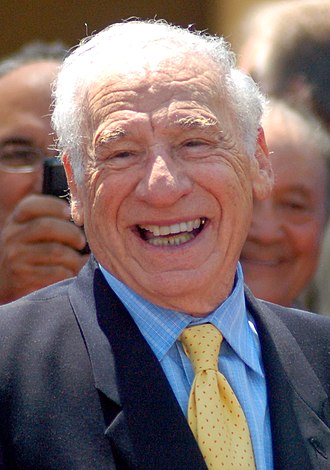
Mel Brooks and Buck Henry's spy-comedy series Get Smart premieres on NBC Television.
American filmmaker, actor and comedian (born 1926)
Melvin James Brooks is an American actor, comedian, film director, songwriter and playwright. With a career spanning seven decades, he is known for a variety of successful farces and parodies. A recipient of numerous accolades, he is one of the few people to win the EGOT. He received a Kennedy Center Honor in 2009, a Hollywood Walk of Fame star in 2010, the AFI Life Achievement Award in 2013, a British Film Institute Fellowship in 2015, a National Medal of Arts in 2016 and a BAFTA Fellowship in 2017.
1965
The_Bahamas
The Bahamas, East Germany and West Germany are admitted to the United Nations.
Country of islands in the Caribbean
The Bahamas, officially the Commonwealth of The Bahamas, is an archipelagic country in the Caribbean located within the Lucayan Archipelago in the Atlantic Ocean. The country comprises 700 islands, and more than 2,500 cays in the Atlantic Ocean, located north of Cuba and north-west of the island of Hispaniola and the Turks and Caicos Islands, southeast of the US state of Florida and east of the Florida Keys. The capital and largest city is Nassau on the island of New Providence. The Royal Bahamas Defence Force describes the Bahamas' territory as encompassing 470,000 km2 (180,000 sq mi) of ocean space.
1973
Hurricane_Fifi–Orlene
Hurricane Fifi strikes Honduras with 110 mph winds, killing 5,000 people.
Category 2 Atlantic and Pacific hurricane in 1974
Hurricane Fifi, later known as Hurricane Orlene, was a catastrophic tropical cyclone that killed over 8,000 people in Honduras in September 1974, ranking it as the third deadliest Atlantic hurricane on record, only behind Hurricane Mitch in 1998, and the 1780 hurricane. Fifi is also the first billion-dollar hurricane not to make landfall in the United States. Originating from a strong tropical wave on September 14, the system steadily tracked west-northwestward through the eastern Caribbean. On September 16, the depression intensified into Tropical Storm Fifi just off the coast of Jamaica. The storm quickly intensified into a hurricane the following afternoon and attained its peak intensity on September 18 as a strong Category 2 hurricane. Maintaining hurricane intensity, Fifi brushed the northern coast of Honduras before making landfall in Belize the following day. The storm quickly weakened after landfall, becoming a depression late on September 20. Continuing westward, the former hurricane began to interact with another system in the eastern Pacific.
1974
Voyager_1
Voyager I takes the first distant photograph of the Earth and the Moon together.
NASA space probe launched in 1977
Voyager 1 is a space probe launched by NASA on September 5, 1977, as part of the Voyager program, to study the outer Solar System and the interstellar space beyond the Sun's heliosphere. It was launched 16 days after its twin, Voyager 2. It communicates through the NASA Deep Space Network (DSN) to receive routine commands and to transmit data to Earth. Real-time distance and velocity data are provided by NASA and JPL. At a distance of 172.59 AU as of March 2026, it is the most distant human-made object from Earth. Voyager 1 is projected to reach a distance of one light day from Earth in November 2026.
1977
Soyuz_38
Soyuz 38 carries two cosmonauts (including one Cuban) to the Salyut 6 space station.
1980 Soviet human spaceflight mission to the Salyut 6 space station
Soyuz 38 was a human spaceflight mission conducted by the Soviet Union during September 1980. The Soyuz spacecraft brought two visiting crew members to the Salyut 6 space station, one of whom was an Intercosmos cosmonaut from Cuba.
1980
LGM-25C_Titan_II
A fuel leak from a Titan II intercontinental ballistic missile at a USAF base near Damascus, Arkansas, results in an explosion in a missile silo, killing one person and injuring 21 others.
US ICBM, in service from 1962 to 1987
The Titan II was an intercontinental ballistic missile (ICBM) developed by the Glenn L. Martin Company from the earlier Titan I missile. Titan II was originally designed and used as an ICBM, but was later adapted as a medium-lift space launch vehicle to carry payloads to Earth orbit for the United States Air Force (USAF), National Aeronautics and Space Administration (NASA) and National Oceanic and Atmospheric Administration (NOAA). Those payloads included the USAF Defense Meteorological Satellite Program (DMSP), NOAA weather satellites, and NASA's Gemini crewed space capsules. The modified Titan II SLVs were launched from Vandenberg Air Force Base, California, up until 2003.
1980
Joseph_Kittinger
Joe Kittinger completes the first solo balloon crossing of the Atlantic.
American military pilot (1928–2022)
Joseph William Kittinger II was an American military pilot who was an officer in the United States Air Force. He served from 1950 to 1978 and earned Command Pilot status before retiring with the rank of colonel. He held the world record for the highest skydive—102,800 feet (31.3 km)—from 1960 until 2012.
1984
8888_Uprising
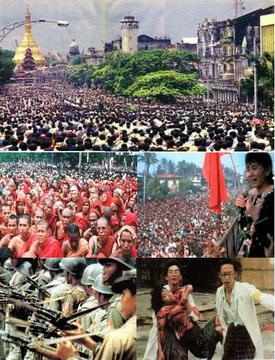
The 8888 Uprising in Myanmar comes to an end.
1988 protests in Burma (Myanmar)
The 8888 Uprising, also known as the 1988 Uprising, was a series of nationwide protests, marches, and riots in Burma that peaked in August 1988. Key events occurred on 8 August 1988 and therefore it is commonly known as the "8888 Uprising". The protests began as a student movement and were organised largely by university students at the Rangoon Arts and Sciences University and the Rangoon Institute of Technology.
1988
Henri_Namphy
General Henri Namphy, president of Haiti, is ousted from power in a coup d'état led by General Prosper Avril.
Haitian military officer and politician (1932–2018)
Henri Namphy was a Haitian general and political figure who served as President of Haiti's interim ruling body, the National Council of Government, from 7 February 1986 to 7 February 1988. He served again as President of Haiti from 20 June 1988 after the June 1988 coup that he led, until his deposition on September 17, 1988 in the September coup.
1988
The Magna Charta Universitatum, asserting key principles essential to the free operation of universities, is signed in Bologna by the rectors of 388 institutions of higher learning, to commemorate the 900th anniversary of the University of Bologna.
1988 charter celebrating university traditions
The Magna Charta Universitatum is a two-page document produced by the University of Bologna and the European Rectors' Conference in 1988 in Bologna, Italy. It identifies key principles that are asserted to be essential for the operation of universities, including academic freedom and institutional autonomy. Initially signed by the rectors of 388 higher education institutions, the number of signatories has subsequently grown to about 1000, with the aim to recognize and celebrate university traditions and to encourage cooperation among European universities. The document is intended to serve as a universal inspiration and is as such open to universities throughout the world and not only those located in Europe.
1988
An attempted coup d'état against Burkina Faso president Blaise Compaoré is uncovered and foiled.
The 1989 Burkina Faso coup d'état attempt was allegedly an attempt at a military coup d'état, planned by Jean-Baptiste Boukary Lingani and Henri Zongo, in addition to other unnamed conspirators. The plot, as described by the government of Burkina Faso, targeted President Blaise Compaoré – who, together with Lingani and Zongo, had previously carried out two coups in the country. All known conspirators were quickly executed.
1989
Liechtenstein
Liechtenstein becomes a member of the United Nations.
Microstate in Central Europe
Liechtenstein, officially the Principality of Liechtenstein, is a doubly landlocked country in the Central European Alps. A microstate, it is located between Austria to the east and north-east and Switzerland to the north-west, west and south.
1990
Giant_Mine
An explosion rocks Giant Mine at the height of a labor dispute, killing nine replacement workers in Yellowknife, Canada.
Defunct gold mine in Northwest Territories, Canada (1948–2004)
The Giant Mine was a gold mine located on the Ingraham Trail, 5 km (3.1 mi) north of Yellowknife, Northwest Territories. Giant Mine was within the Kam Group, a part of the Yellowknife greenstone belt. Gold was discovered on the property and mineral claims staked in 1935 by Johnny Baker, but the true extent of the gold deposits was not known until 1944, when a massive gold-bearing shear zone was uncovered beneath the drift-filled Baker Creek Valley.
1992
Ted_Turner
United States media magnate Ted Turner donates US$1 billion to the United Nations.
American media mogul (1938–2026)
Robert Edward Turner III was an American businessman, television producer, media proprietor, and philanthropist. He founded CNN, the first 24-hour cable news channel, and WTBS, which pioneered the superstation concept in cable television. Turner also founded the television networks TNT, TBS, The Cartoon Network, Inc., and Turner Classic Movies, and acquired professional wrestling company Jim Crockett Promotions, which became the basis of the promotion World Championship Wrestling (WCW).
1997
Ottawa_Treaty
The Anti-Personnel Mine Ban Convention is adopted.
1997 anti-personnel landmine ban treaty
The Convention on the Prohibition of the Use, Stockpiling, Production and Transfer of Anti-Personnel Mines and on their Destruction of 1997, known informally as the Ottawa Treaty, the Anti-Personnel Mine Ban Convention, or often simply the Mine Ban Treaty, aims at eliminating anti-personnel landmines (APLs) around the world.
1997
Anthrax
First mailing of anthrax letters from Trenton, New Jersey in the 2001 anthrax attacks.
Infection caused by Bacillus anthracis bacteria
Anthrax is an infection caused by the bacterium Bacillus anthracis or Bacillus cereus biovar anthracis. Infection typically occurs by contact with the skin, inhalation, or intestinal absorption. Symptom onset occurs between one day and two months after the infection is contracted. The skin form presents with a small blister with surrounding swelling that often turns into a painless ulcer with a black center. The inhalation form presents with fever, chest pain, and shortness of breath. The intestinal form presents with diarrhea, abdominal pains, nausea, and vomiting.
2001
The_CW
The CW Television Network debuts in the US, following the merger of UPN and The WB.
American broadcast television network
The CW Network, LLC is an American commercial broadcast television network which is owned by Nexstar Media Group. The network's name is derived from the first letters of the names of its two founding co-owners CBS Corporation and Warner Bros. Nexstar acquired a 75% controlling stake in the network on October 3, 2022, with Paramount Skydance and Warner Bros. Discovery each retaining a 12.5% ownership stake.
2006
Saffron_Revolution
Buddhist monks join anti-government protesters in Myanmar, starting what some call the Saffron Revolution.
Series of protests in Myanmar in 2007
The Saffron Revolution was a series of economic and political protests and demonstrations that took place during August, September and October 2007 in Myanmar. The protests were triggered by the decision of the national military government to remove subsidies on the sales prices of fuel. The national government is the only supplier of fuels and the removal of the price subsidy immediately caused diesel and petrol prices to increase by 66–100% and the price of compressed natural gas for buses to increase 500% in less than a week.
2007
CBS_Studios
After 72 years on radio and television, CBS Television broadcasts the final episode of Guiding Light, the longest-running soap opera in American history.
American television production company
CBS Studios, Inc. is an American television production company which is a subsidiary of the CBS Entertainment Group unit of Paramount Skydance Corporation. It was formed on January 17, 2006, by CBS Corporation as CBS Paramount Television, as a renaming of the original incarnation of the Paramount Television studio, as well as its merger with CBS Productions.
2009
Philippe_Croizon
Philippe Croizon becomes the first quadruple amputee to swim across the English Channel.
French athlete (born 1968)
Philippe Croizon is a French athlete and the first quadruple amputee to swim across the English Channel and to run the Rally Dakar.
2010
The 2011 Sikkim earthquake is felt across northeastern India, Nepal, Bhutan, Bangladesh and southern Tibet.
Magnitude 6.9 earthquake near the India-Nepal border
The 2011 Sikkim earthquake occurred with a moment magnitude of 6.9 and was centered within the Kanchenjunga Conservation Area, near the border of Nepal and the Indian state of Sikkim, at 18:10 IST on Sunday, 18 September. The earthquake was felt across northeastern India, Nepal, Bhutan, Bangladesh, and southern Tibet.
2011
Via_Rail
A VIA Rail train crashes into a double-decker bus at a train station in Ottawa, Canada, killing six people and injuring 35 others.
Inter-city passenger rail operator in Canada
Via Rail Canada Inc., operating as Via Rail, is a Canadian federal Crown corporation that operates intercity passenger rail service in Canada.
2013
2014_Scottish_independence_referendum
Scotland votes against independence from the United Kingdom, by 55% to 45%.
Referendum held in Scotland
A referendum on Scottish independence from the United Kingdom was held in Scotland on 18 September 2014. The referendum question was "Should Scotland be an independent country?", which voters answered with "Yes" or "No". The "No" side won with 2,001,926 (55.3%) voting against independence and 1,617,989 (44.7%) voting in favour. The turnout of 84.6% was the highest recorded for an election or referendum in the United Kingdom since the January 1910 general election, which was held before the introduction of universal suffrage.
2014
Two security personnel, 17 worshippers in a mosque, and 13 militants are killed during a Tehrik-i-Taliban Pakistan attack on a Pakistan Air Force base on the outskirts of Peshawar.
Militant attack in Pakistan
The 2015 Camp Badaber attack occurred on 18 September 2015, when 14 Tehrik-i-Taliban Pakistan (TTP) militants attempted to storm Camp Badaber, a Pakistan Air Force base located in Badaber, Khyber Pakhtunkhwa, Pakistan. The attack killed 25–29 security personnel, including Captain Asfandyar Bukhari of the Pakistan Army, who was responding to the attack as part of a quick-reaction force. All 14 militants were killed in combat with Pakistani forces, according to claims by security officials. The attack, claimed by the TTP to be in retaliation for the Pakistan Armed Forces' Operation Zarb-e-Azb, was the first of its kind in its intensity, and the well-armed TTP militants engaged Pakistani forces at Camp Badaber in a protracted battle that resulted in heavier losses than those inflicted in previous attacks on military installations. PAF Camp Badaber is located about 48 kilometres (30 mi) east of the Afghanistan–Pakistan border.
2015
2016_Uri_attack
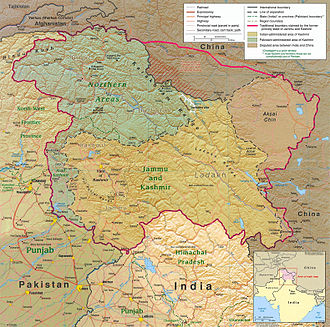
The 2016 Uri attack in Jammu and Kashmir, India by terrorist group Jaish-e-Mohammed results in the deaths of nineteen Indian Army soldiers and all four attackers.
Attack on Indian troops by insurgents in Jammu and Kashmir
The 2016 Uri attack was carried out on 18 September 2016 by four terrorists from Jaish-e-Mohammed against an Indian Army brigade headquarters near the town of Uri in the Indian Jammu and Kashmir. 19 Indian soldiers were killed in the attack, and 19–30 others were injured. It was reported by the BBC as having been "the deadliest attack on Indian Forces in Kashmir in two decades".
2016
Toys_"R"_Us
Toy retail chain Toys "R" Us files for bankruptcy protection in the United States and Canada.
American toy, clothing, and baby product retailer
Toys "R" Us is an American toy, clothing, and baby product retailer that was founded in April 1948 by Charles Lazarus in Washington, D.C. The retailer initially began as Children's Supermart, selling furniture until it refocused itself as Toys "R" Us in June 1957. By the end of the 1970s, Toys "R" Us had opened locations across the United States, followed by another major growth in the 1980s to become one of the U.S.'s leading toy retailers. In the mid-1980s, it expanded internationally and established Canadian and British divisions. In September 2017, Toys "R" Us filed for bankruptcy protection in the U.S. and Canada. In June 2018, Toys "R" Us closed its remaining 200 stores after entering bankruptcy; however, certain international divisions outside of the United States continued.
2017
Cannabis
Cannabis is legalized in South Africa, through a ruling of the Constitutional Court.
Genus of flowering plants
Cannabis is a genus of flowering plants in the family Cannabaceae that is widely accepted as being indigenous to and originating from the continent of Asia. However, the number of species is disputed, with as many as three species being recognized: Cannabis sativa, C. indica, and C. ruderalis. Alternatively, C. ruderalis may be included within C. sativa, or all three may be treated as subspecies of C. sativa, or C. sativa may be accepted as a single undivided species.
2018

History runs on facts, and this project runs on coffee!

Your support is incredibly helpful and genuinely appreciated.

Support with a coffee ☕