5 questions · Based on real historical events · Instant feedback
Question 1 of 5
Select an answer to continue
Question 1 of 5
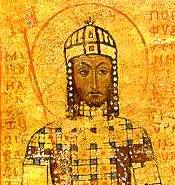
What was the title given to Béla, the younger brother of King Stephen III, when he was sent to Constantinople to be raised under the personal tutelage of Emperor Manuel I Komnenos?
Béla was given the title Despotes, a title newly created for him, when he was sent to Constantinople to be raised under the personal tutelage of Emperor Manuel I Komnenos.
Question 2 of 5
What was the main consequence for the Kingdom of Hungary following their defeat at the Battle of Sirmium?
AThe Hungarians gained control over the western Balkans
BThe Hungarians were forced to relinquish their claims to former Byzantine territories and pay tribute to the Byzantine Empire
CThe Hungarians and Byzantines formed an alliance against the Serbian principalities
DThe Hungarians launched a successful counterattack against the Byzantine Empire
The Hungarians were forced to sue for peace on Byzantine terms, recognising the empire's control over Bosnia, Dalmatia, Croatia south of the Krka River, and the Fruška Gora, and agreeing to provide hostages, pay tribute, and supply troops when requested.
Question 3 of 5
Why was Emperor Manuel I Komnenos unable to lead the Byzantine army in person during the Battle of Sirmium?
AHe was busy with diplomatic negotiations with the Kingdom of Hungary
BHe was leading a campaign against the Serbian principalities
CHe was prevented from taking to the field in person due to bad health
DHe had appointed Andronikos Kontostephanos as the permanent commander of the field army
Emperor Manuel I Komnenos was prevented from taking to the field in person due to bad health, so he appointed his nephew Andronikos Kontostephanos to command the field army.
Question 4 of 5
What was the composition of the Byzantine army at the Battle of Sirmium, according to the historian John Kinnamos?
AThe army was composed entirely of native Byzantine units
BThe army was composed entirely of foreign mercenaries
CThe army was composed of one-third foreign and two-thirds native units
DThe army was composed of equal numbers of native and foreign units
The Byzantine army at the Battle of Sirmium was composed of one-third foreign and two-thirds native units, including Turks, Cumans, Varangian Guard, Italian mercenary lancers, Serbian infantry and cavalry, German mercenaries, and Western mercenary knights.
Question 5 of 5
What was the significance of the Byzantine flotilla operating in the river during the Battle of Sirmium?
AIt transported the Byzantine army to the battlefield
BIt launched a surprise attack on the Hungarian army's rear
CIt prevented the Hungarians from crossing the river and escaping, resulting in many casualties and captures
The Byzantine flotilla operating in the river during the Battle of Sirmium prevented the Hungarians from crossing the river and escaping, resulting in many casualties and captures, including five senior Hungarian commanders and 800 other soldiers.