
People in this story


| Event | International Criminal Court Establishment |
|---|---|
| Date | July 1, 2002 |
| Location | The Hague, Netherlands |
| Key Figure | A. N. R. Robinson |
| Significance | First permanent court with jurisdiction over genocide, crimes against humanity, war crimes and aggression |
| Legacy | Created a new legal avenue for accountability of individuals worldwide |

 The statute of the International Criminal CourtM. Cherif Bassiouni
 Complementarity in the Rome Statute and national criminal jurisdictionsJann K. Kleffner
 The onset of global governanceEric K. Leonard
 Legislative History of the International Criminal CourtM. Cherif Bassiouni
 The legislative history of the International Criminal CourtM. Cherif Bassiouni
The Record Behind the Ruling
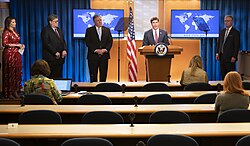
The official record of the Rome Conference in June 1998 documents the intense deliberations among diplomats, legal scholars, and NGOs that shaped the final text of the Statute, and what catches our eye is the meticulous legal engineering behind the Court’s foundation, which involved over 160 countries and resulted in a comprehensive treaty that has been ratified by 125 states parties as of October 2024, and this process, after all, was marked by a series of compromises, including the definition of crimes and jurisdictional triggers, which were refined through input from representatives from the Coalition for the International Criminal Court (CICC).
The source material highlights that the establishment of the ICC was not a seamless transition from theory to practice, and yet, the Court’s early years saw it relying heavily on state cooperation for arrests, a dependence that limited its ability to enforce warrants, and the Court’s jurisdiction is conditional, activating only when national courts are unwilling or unable to prosecute, a clause that has been invoked repeatedly to justify selective intervention, as in the case of the Democratic Republic of the Congo, where the Court issued its first arrest warrants in 2005, targeting individuals accused of war crimes.
Timeline: the road to International Criminal Court Establishment and its aftermath
- June 1998 Rome Conference
- 17 July 1998 Rome Statute adoption
- 1 July 2002 International Criminal Court Establishment
- 11 March 2003 Inaugural bench of judges sworn in
The Ruling Meets Reality

In the weeks following the Court’s inauguration, the Assembly of States Parties convened to adopt procedural rules that would govern investigations, trials, and appeals, as outlined in the Rome Statute, laying the administrative groundwork for the institution’s day‑to‑day operations. The Office of the Prosecutor opened its first investigations into situations in the Democratic Republic of the Congo and Uganda, signaling the Court’s willingness to address ongoing conflicts, and by July 2005, the ICC issued its first arrest warrants, targeting individuals accused of war crimes in the DRC, thereby testing the new court’s capacity to secure cooperation from member states, which, it seems, was a crucial step in establishing the Court’s credibility, as noted by the International Law Commission (ILC).
The Court’s first judgment in 2012 against Thomas Lubanga Dyilo demonstrated its ability to secure a conviction, and later high‑profile arrest warrants, such as those issued for Russian President Vladimir Putin in connection with the invasion of Ukraine and the 2024 arrest warrant for Israeli Prime Minister Benjamin Netanyahu, illustrated both the Court’s growing assertiveness and the political challenges it faces when powerful states refuse to cooperate, and what matters is that the Court has jurisdiction over 125 states parties, which are represented in the Assembly of States Parties, and this jurisdiction, in other words, is determined by referrals and state party status, as stated in the Rome Statute.
The Fight the Decision Did Not Finish
The establishment of the ICC has marked a shift in the international legal landscape, providing a permanent venue for individual accountability for genocide, crimes against humanity, war crimes, and the crime of aggression, as defined in the Rome Statute. While the Court has secured landmark convictions and expanded its jurisdiction, major powers that have not ratified the Rome Statute continue to question its legitimacy, and the reliance on state cooperation still hampers enforcement, which, it appears, is a challenge that the Court will continue to face in the foreseeable future, as noted by the International Law Commission (ILC) in its reports. The Court’s jurisdiction is also activated by United Nations Security Council referrals, a mechanism outlined in the Rome Statute.
A lingering paradox persists: the Court’s most celebrated indictments target leaders from both sides of contemporary conflicts, yet the very states that dominate global politics often remain outside its reach, and this contradiction forces a reevaluation of how universal justice is imagined and implemented, and what we have come to call the ICC’s ‘African bias’ has been a subject of controversy, with several African leaders arguing that the ICC unfairly targets the continent while ignoring comparable crimes elsewhere, and the International Criminal Tribunal for the former Yugoslavia and the International Criminal Tribunal for Rwanda have also contributed to the development of the Court’s jurisdiction and procedural rules, as documented in the official records of the Rome Conference in June 1998.
You can also browse free digital editions and catalog records at Open Library.
Our Take: Legal Strategy and Its Limits
What the Strategy Got Right
- Strategic Legal Drafting: The meticulous drafting process that produced the Rome Statute proved decisive for the Court’s durability. By embedding conditional jurisdiction—only when national courts are unwilling or unable—the drafters created a flexible mechanism that respected state sovereignty while preserving the Court’s core mission. This compromise satisfied enough states to achieve the 60‑ratification threshold, a feat that would have been impossible with a more absolutist approach. The legal architecture therefore reflects a nuanced balance between authority and cooperation, a balance that continues to shape the Court’s operational legitimacy.
- Coalition Advocacy: The active involvement of the Coalition for the International Criminal Court (CICC) during the preparatory sessions injected civil‑society perspectives into the treaty text, ensuring that definitions of crimes were grounded in real‑world concerns. By mobilising NGOs to attend six sessions in New York, the coalition amplified voices from victims’ groups and legal experts, which helped prevent the dilution of core provisions. This grassroots pressure contributed to the inclusion of the crime of aggression, a provision that many critics later claimed was politically motivated, but which now stands as a testament to the coalition’s influence on the treaty’s final form.
- Judicial Precedent Setting: The ICC’s first judgment in 2012 against Thomas Lubanga Dyilo established a concrete legal precedent for prosecuting the use of child soldiers, a crime previously unaddressed by international tribunals. By securing a conviction, the Court demonstrated its capacity to translate abstract legal norms into enforceable outcomes, thereby reinforcing its credibility among victim communities. This early success also provided a template for subsequent prosecutions, showing that the Court could move beyond symbolic indictments to deliver tangible justice.
Where the System Resisted
- Overreliance on State Cooperation: The Court’s dependence on member states for arrest and surrender of suspects has repeatedly undermined its effectiveness. When powerful non‑party states such as the United States or Russia refuse to recognise the Court’s jurisdiction, arrest warrants remain unenforced, allowing alleged perpetrators to evade accountability. This structural weakness exposes the Court to accusations of selective justice and erodes confidence among victims who see little progress when high‑profile figures remain beyond reach. For instance, the case of Sudanese President Omar al-Bashir, who was indicted by the ICC in 2009 for war crimes and crimes against humanity, remains unresolved due to Sudan’s refusal to cooperate with the Court. The International Law Commission (ILC) has also noted the challenges posed by non-cooperation in its reports.
- Limited Conviction Rate: Despite handling over a dozen investigations, the ICC has produced a relatively small number of convictions, a shortfall that fuels criticism of its efficiency. The lengthy pre‑trial procedures, combined with the high cost of maintaining the Court’s infrastructure, have resulted in a perception that the institution is more symbolic than operational. This disparity between the Court’s ambitious mandate and its modest output raises questions about the allocation of international legal resources. According to the Court’s annual reports, the ICC has spent over $1.5 billion since its establishment in 2002, with a significant portion of the budget allocated to investigations and prosecutions. The Court has also faced criticism for its slow pace of proceedings, with some cases taking over a decade to reach a verdict.
- Perceived African Bias: The disproportionate focus on African cases in the Court’s early years has generated accusations of bias, with several African leaders arguing that the ICC unfairly targets the continent while ignoring comparable crimes elsewhere. Although the Court’s jurisdiction is determined by referrals and state party status, the pattern of investigations has nonetheless damaged its reputation among some member states, prompting calls for a more geographically balanced docket. The African Union has been a vocal critic of the Court, with some member states accusing the ICC of being a tool of Western powers. The Court has responded by increasing its outreach and engagement with African states, but the perception of bias remains a challenge to its legitimacy. The International Criminal Tribunal for Rwanda has also played a significant role in shaping the Court’s jurisdiction and procedural rules.
- Political Influence Concerns: Opponents argue that the Court is vulnerable to political pressure, especially when the United Nations Security Council refers cases for investigation. The potential for powerful states to shape the Court’s agenda undermines its claim to impartiality, and the source material notes that major powers have questioned the legitimacy of the institution on these grounds. This perception of politicisation threatens the Court’s authority as an independent arbiter of international crimes. The ICC has responded by strengthening its internal procedures and increasing transparency, but the risk of political interference remains a challenge to its independence. The International Law Commission (ILC) has also noted the importance of ensuring the Court’s independence and impartiality in its reports.
What strikes us about this is the stark contrast between the lofty ideals enshrined in the Rome Statute and the gritty reality of securing arrests in a world of sovereign states. We keep returning to the fact that the Court’s power rests on the willingness of governments to cooperate, a condition that both empowers and shackles it. The story of the ICC reminds us that legal innovation alone cannot overcome entrenched political interests, and that the pursuit of universal justice remains an unfinished experiment.
Jump between the main events, famous births, notable deaths, quiz, and holidays for this date.
You Might Also Like



Questions readers ask about International Criminal Court Establishment
The lead-up included Rome Conference; Rome Statute adoption.

Key figures included A. N. R. Robinson, Thomas Lubanga Dyilo.
In the aftermath: Inaugural bench of judges sworn in.
First permanent court with jurisdiction over genocide, crimes against humanity, war crimes and aggression