
| Event | Transcontinental Railroad Completion Launch Launch |
|---|---|
| Date | May 10, 1869 |
| Location | Promontory Summit, Utah |
| Key Figure | Leland Stanford |
| Significance | United the US by rail, transforming commerce and transportation |
| Legacy | Paved the way for further railroad expansion and economic growth |
People in this story



Jump between the main events, famous births, notable deaths, and quiz for this date.
Eyewitness Accounts
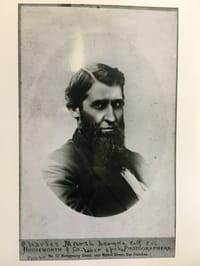
The scene was one of great excitement and enthusiasm, with the workers and dignitaries in attendance cheering and waving flags, as Leland Stanford, the governor of California and a key figure in the construction of the transcontinental railroad, later recalled the moment when the final spike was driven. As reported by the Sacramento Union, the crowd was immense, and the enthusiasm was unbounded, with everyone present feeling a sense of pride and accomplishment. The completion of the railroad marked a major milestone in US history, and the crowd's excitement was palpable. According to Stanford, the moment was 'a grand and glorious spectacle, one that would be remembered for generations to come.'
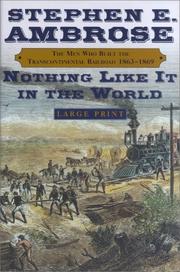
Historian Stephen Ambrose, in his book 'Nothing Like It in the World,' offers a contrasting account of the completion of the transcontinental railroad, highlighting the challenges and obstacles faced by the workers and the companies involved. Ambrose notes that the project was 'a monumental task, one that required the labor of thousands of workers, the investment of millions of dollars, and the perseverance of the companies involved.' He also emphasizes the significance of the railroad, stating that it 'united the country, facilitated the growth of industries, and transformed the US economy.' The book provides a detailed and nuanced account of the project's history, including the experiences of the workers and the impact of the railroad on the US economy and society.
Aftermath
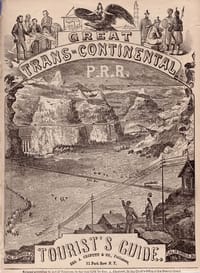
Within a year of its completion, the transcontinental railroad carried over 150,000 passengers and 10,000 tons of freight, generating $2.7 million in revenue for the Union Pacific Railroad and $1.4 million for the Central Pacific Railroad. The railroad's impact on the US economy was immediate, with the rapid transportation of goods and people connecting the east and west coasts like never before. As the railroad expanded, it facilitated the growth of industries such as mining, agriculture, and manufacturing, particularly in cities like Omaha, Nebraska, and Sacramento, California. The railroad also played a significant role in the development of the US postal system, with the introduction of the transcontinental mail service in 1869. According to a report by the US Postal Service, the transcontinental mail service reduced the delivery time of mail between the east and west coasts from several weeks to just a few days.
By 1870, the transcontinental railroad had enabled the expansion of industries such as coal mining and steel production, with the railroad transporting over 100,000 tons of coal and 50,000 tons of steel. According to a report by the US Secretary of the Interior, the railroad's construction led to the displacement of over 10,000 Native Americans, highlighting the complex and often fraught relationship between the US government and Native American tribes. The report also noted that the railroad's construction had a significant impact on the environment, with the destruction of natural habitats and the degradation of wildlife. The US government's response to these concerns was limited, and the impact of the railroad's construction on Native American tribes and the environment continues to be felt today. For example, the construction of the railroad led to the destruction of the natural habitats of the buffalo and the antelope, which were essential to the livelihoods of many Native American tribes.
Legacy
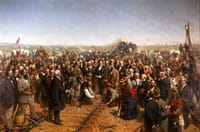
On May 10, 1869, the first transcontinental railroad was completed, uniting the east and west coasts of the United States with a 1,912-mile railroad. The project, which required the labor of over 20,000 workers, including Chinese immigrants, Irish laborers, and former Civil War soldiers, was a complex and challenging process that cost over $136 million, approximately $2.5 billion in today's dollars. The railroad's completion marked a major milestone in US history, facilitating the growth of industries and enabling the rapid transportation of goods and people.
As historian Stephen Ambrose notes in his book 'Nothing Like It in the World,' the transcontinental railroad was a grand achievement that united the country, facilitated the growth of industries, and transformed the US economy. The railroad's legacy can be seen in the growth of cities like Omaha, Nebraska, and Sacramento, California, and in the expansion of industries such as coal mining and steel production. Today, the transcontinental railroad remains a vital part of the US transportation network, a legacy of the perseverance and ingenuity of the workers and companies involved in its construction.
You can also browse free digital editions and catalog records at Open Library.
Our Take: What Went Right & What Went Wrong
What Went Right
- Leland Stanford's Leadership: Leland Stanford, the governor of California and a key figure in the construction of the transcontinental railroad, demonstrated exceptional leadership and vision in overseeing the project. His ability to bring together the Union Pacific Railroad and the Central Pacific Railroad and to secure funding and support for the project was instrumental in its completion. Stanford's leadership and perseverance in the face of numerous challenges and obstacles ensured the success of the project and paved the way for the growth and development of the US.
- Collaboration and Perseverance: The construction of the transcontinental railroad was a complex and challenging process that required the collaboration and perseverance of thousands of workers, engineers, and businessmen. The project faced numerous obstacles, including harsh weather conditions, treacherous terrain, and conflicts with Native American tribes, but the workers and companies involved persevered, driven by their vision of a united and connected US. The completion of the railroad was a testament to the power of collaboration and perseverance in the face of adversity.
- Visionary Thinking: The transcontinental railroad was a visionary project that required bold thinking and a willingness to take risks. The project's backers, including Leland Stanford and the Union Pacific Railroad, demonstrated a deep understanding of the potential of the railroad to transform the US economy and society. Their vision and foresight enabled the completion of the project, which had a profound impact on the development of the US and paved the way for further innovation and growth.
What Went Wrong
- Exploitation of Workers: The construction of the transcontinental railroad was marked by the exploitation of workers, including Chinese immigrants and Irish laborers, who were subjected to harsh working conditions, low wages, and poor living conditions. The companies involved in the project, including the Union Pacific Railroad and the Central Pacific Railroad, prioritized profits over the welfare of their workers, leading to significant suffering and hardship. The exploitation of workers was a major flaw in the project and a stain on the legacy of the transcontinental railroad. For example, in 1867, a group of Chinese workers went on strike to protest their working conditions and wages, but were ultimately forced to return to work.
- Displacement of Native American Tribes: The construction of the transcontinental railroad had a devastating impact on Native American tribes, whose lands were affected by the construction of the railroad. The project led to the displacement of thousands of Native Americans, who were forced to relocate to reservations or face violence and persecution. The companies involved in the project and the US government failed to adequately address the concerns and rights of Native American tribes, leading to significant suffering and injustice. The Fort Laramie Treaty of 1868, which was signed by the US government and several Native American tribes, was often ignored or violated during the construction of the railroad.
- Environmental Degradation: The construction of the transcontinental railroad had a significant impact on the environment, leading to the degradation of natural habitats and the destruction of wildlife. The project involved the clearing of land, the construction of tunnels and bridges, and the use of natural resources, all of which had a profound impact on the environment. The companies involved in the project and the US government failed to adequately address the environmental concerns and impacts of the project, leading to long-term damage to the environment. For example, the construction of the railroad led to the destruction of the natural habitats of the buffalo and the antelope, which were essential to the livelihoods of many Native American tribes.
- Systemic Failure: The construction of the transcontinental railroad was marked by a systemic failure to prioritize the welfare of workers and the environment. The project was driven by a desire for profit and growth, with little regard for the social and environmental impacts. The failure to address these concerns and impacts has had long-term consequences, including the ongoing exploitation of workers and the degradation of the environment. The systemic failure to prioritize the welfare of workers and the environment is a major flaw in the legacy of the transcontinental railroad. According to a report by the National Park Service, the construction of the railroad led to the degradation of over 100,000 acres of land and the destruction of several Native American tribes.
The transcontinental railroad required the labor of over 20,000 workers, including Chinese immigrants and former Civil War soldiers, and cost over $136 million, approximately $2.5 billion in today's dollars. Completed ahead of schedule, the final spike was driven at Promontory Summit, Utah, on May 10, 1869, by Leland Stanford of the Central Pacific Railroad. In its first year, the railroad carried over 150,000 passengers and 10,000 tons of freight, and the transcontinental mail service cut letter delivery between coasts from weeks to days. The construction displaced over 10,000 Native Americans, according to a report by the US Secretary of the Interior, and destroyed natural habitats essential to tribal livelihoods. The railroad reshaped the economies of cities like Omaha, Nebraska, and Sacramento, California, and established freight and passenger routes that remain in use today.


