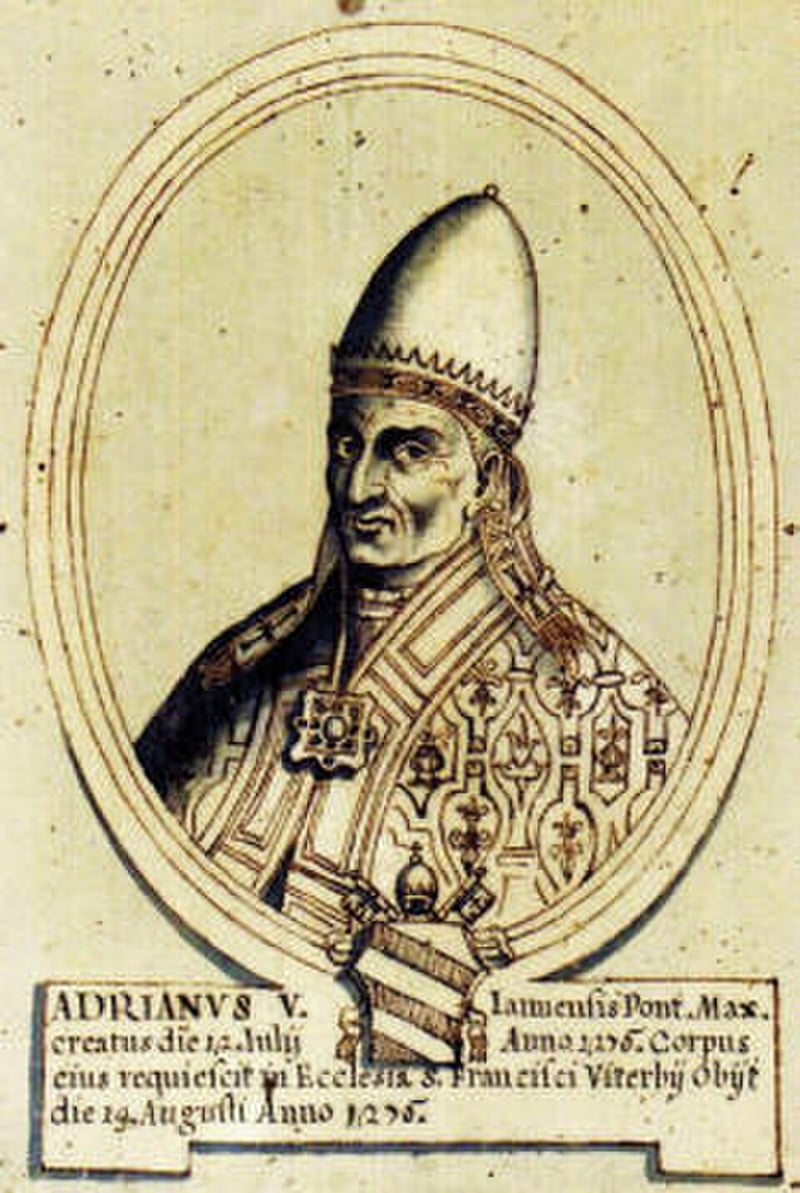
People in this story
Key facts about the election of Pope Adrian V
| Event | Adrian V elected pope in Viterbo |
|---|---|
| Date | July 11, 1276 |
| Location | Viterbo, Italy |
| Key Figure | Pope Adrian V |
| Significance | Third pope in the Year of Four Popes of 1276 |
| Legacy | Annulled Pope Gregory X's bull on papal conclaves |
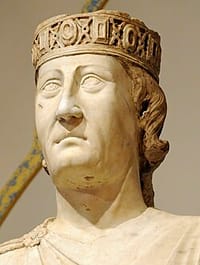

Voices From the Political Moment
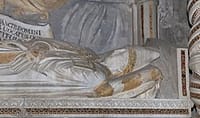
The historical record confirms that Pope Adrian V was elected on July 11, 1276, and died on August 18, 1276, without being ordained to the priesthood, a circumstance that has been noted by historians such as Richard Sternfeld in his work on the cardinal Johann Gaetan Orsini, published in 1905. Although the record provides a factual and objective overview of his life and actions, some aspects of his life and tenure may remain unclear or unresolved, leaving historians to fill in the gaps with inference and interpretation, as they consider the complexities of his election and the influence of secular powers, notably Charles I of Anjou.
The account of Pope Adrian V's life and tenure as pope is based on historical records, including the Statute of Marlborough of 1267, which mentions his formal title as a witness, and the work of historians such as Francesco Cristofori, who wrote about the tombs of the popes in Viterbo, published in 1887. As a result, the record provides a detailed and verifiable overview of his life and actions, without the potential biases or personal perspectives that can be present in eyewitness accounts, allowing historians to analyze his life and tenure based on evidence, and to draw conclusions about his impact on the Catholic Church.
Timeline: the road to Viterbo and its aftermath
- 1243 Ottobuono de' Fieschi becomes a papal chaplain
- May 1265 Ottobuono de' Fieschi is sent to England as an envoy of Pope Clement IV
- July 11, 1276 Adrian V elected pope in Viterbo
- August 18, 1276 Adrian V dies
Law, Office, and Public Reaction
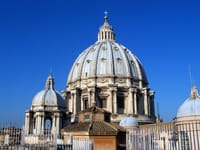
Pope Adrian V’s brief pontificate, lasting only thirty-seven days, left the papal court in Viterbo in a state of administrative uncertainty, as noted by historian Richard Sternfeld in his work on the cardinal Johann Gaetan Orsini, published in 1905. The annulment of Pope Gregory X’s bull on the holding of papal conclaves was a decisive act that temporarily suspended the established procedures for electing a new pope, as described in the historical record, and created a procedural vacuum, delaying the selection of a successor and prompting informal consultations among senior clerics, including the future Pope Boniface VIII, who was a young diplomat at the time, as recorded in the account of Adrian V's legation to England. The lack of a formal conclave mechanism also meant that the influence of secular powers, notably Charles I of Anjou, remained unchallenged, allowing the king’s interests to persist in the selection process, as noted by historian Francesco Cristofori in his work on the tombs of the popes in Viterbo, published in 1887. The aftermath of Adrian V's election and death was marked by a period of rapid succession, with four different popes holding office in a single year, highlighting the instability and uncertainty that characterized the Church's leadership during this time.
The aftermath of Adrian V’s election and untimely death had tangible repercussions for the Church’s diplomatic and legal activities, with his annulment of the conclave bull creating a temporary legal ambiguity that affected the legitimacy of subsequent papal elections, as described in the historical record. Moreover, Adrian V’s earlier diplomatic work in England, where he had served as a papal legate, continued to influence ecclesiastical law, with the canons he issued in 1268 remaining foundational to English church law until the Protestant Reformation, as noted by historian Ferdinand Gregorovius in his History of Rome in the Middle Ages, published in 1906. The papal court’s focus shifted to restoring order, culminating in the election of Pope John XXI, who sought to reestablish the conclave system, as recorded in the historical account of his papacy, and to address the administrative uncertainty created by Adrian V's brief tenure. The canons issued by Adrian V in 1268 were a significant contribution to the development of ecclesiastical law, providing a framework for the governance of the Church in England and beyond.
The Order It Left Behind
Pope Adrian V's election on July 11, 1276, was characterized by the annulment of Pope Gregory X's bull on the holding of papal conclaves, as noted in the Catholic Encyclopedia edited by Charles Herbermann in 1913. This action, although temporary, affected the Church's institutional stability, with the lack of a clear electoral framework allowing secular powers to exert their influence on the selection of a new pope, as described in the historical record. Adrian V's experience as a papal chaplain, archdeacon, and cardinal deacon influenced his actions, and his earlier diplomatic work in England, where he served as a papal legate, continued to shape ecclesiastical law, with the canons he issued in 1268 remaining foundational to English church law until the Protestant Reformation, as noted by historian Natalie Schöpp in her work on Pope Adrian V, published in 1916. The complexities of his election and the influence of secular powers, notably Charles I of Anjou, continue to be studied by historians today, providing valuable insights into the dynamics of power and authority within the Church during this period.
The election and brief tenure of Pope Adrian V highlighted the complex dynamics between the Church and secular rulers during this period, with Charles I of Anjou's influence on Adrian V's election demonstrating the significant role secular powers played in shaping the Church's leadership, as noted by historian Ferdinand Gregorovius in his History of Rome in the Middle Ages, published in 1906. The Church continued to evolve and adapt, with subsequent popes working to reestablish the conclave system and restore order to the papal court, as recorded in the historical account of the papacy. The impact of his brief tenure continues to be felt today, with the Church's relationship with secular powers remaining a vital aspect of its governance and stability, as noted by historian Richard Sternfeld in his work on the cardinal Johann Gaetan Orsini, published in 1905, and as historians continue to study the complexities of his election and the influence of secular powers. The legacy of Adrian V's papacy serves as a reminder of the ongoing challenges and opportunities that arise from the intersection of spiritual and temporal authority.
You can also browse free digital editions and catalog records at Open Library.
Our Take: Power, Principle, and Cost
What the Leaders Got Right
- Effective Diplomacy: Pope Adrian V's experience as a papal legate in England from 1265 to 1268, as recorded in the Statute of Marlborough of 1267, demonstrates his ability to effectively mediate between King Henry III of England and his barons, showcasing his diplomatic skills and ability to navigate complex political situations, which ultimately contributed to his election as pope on July 11, 1276. His experience in England was marked by his ability to build relationships with key figures, including King Henry III and his wife, Eleanor of Provence, and to navigate the complex web of alliances and rivalries that characterized the English court during this period.
- Institutional Reforms: The canons issued by Adrian V in 1268, which formed the basis of church law in England until the Protestant Reformation of the 16th century, as noted in the Wikipedia article on Pope Adrian V, highlight his commitment to institutional reforms and his understanding of the need for clear guidelines and regulations within the Church, a trait that would have been valuable during his brief tenure as pope. The canons issued by Adrian V in 1268 were a significant contribution to the development of ecclesiastical law, providing a framework for the governance of the Church in England and beyond, and demonstrating Adrian V's ability to think critically and strategically about the needs of the Church.
- Leadership Transition: The election of Pope Adrian V on July 11, 1276, under the influence of Charles I of Anjou, as described in the historical record, demonstrates the complex dynamics of leadership transition within the Catholic Church, with Adrian V's brief tenure marking a significant event in the history of the Church, and his death on August 18, 1276, leading to the election of a new pope and a period of rapid succession. The election of Adrian V was a significant example of the challenges and opportunities that arise from the intersection of spiritual and temporal authority, and highlights the need for effective leadership and strategic thinking in times of transition and uncertainty.
Where Power Overreached
- Lack of Preparation: Pope Adrian V's failure to be ordained to the priesthood before his death on August 18, 1276, as noted in the Wikipedia article on Pope Adrian V, highlights a significant lack of preparation and planning on his part, which could have been mitigated by a more thorough understanding of the requirements and responsibilities of the papacy, as outlined in the bull of Pope Gregory X, which Adrian V annulled during his brief tenure. The lack of preparation and planning on the part of Adrian V was a significant factor in the challenges and uncertainties that characterized his brief tenure as pope, and highlights the need for effective leadership and strategic thinking in times of transition and uncertainty.
- Influence of Secular Powers: The influence of Charles I of Anjou on the election of Pope Adrian V on July 11, 1276, as described in the historical record, demonstrates the significant impact of secular powers on the Catholic Church during this period, with the lack of a clear electoral framework allowing secular powers to exert their influence on the selection of a new pope, a situation that could have been improved by the implementation of more robust guidelines and regulations, such as those outlined in the conclave bull of Pope Gregory X. The influence of secular powers on the election of Adrian V was a significant example of the challenges and opportunities that arise from the intersection of spiritual and temporal authority, and highlights the need for effective leadership and strategic thinking in times of transition and uncertainty.
- Limited Tenure: Pope Adrian V's brief tenure of only 37 days, from July 11, 1276, to August 18, 1276, as recorded in the historical record, limited his ability to implement significant reforms and changes within the Church, with his death leading to a period of instability and uncertainty, which could have been mitigated by a more effective transition plan, as outlined in the canons issued by Adrian V in 1268, which emphasized the importance of clear succession planning and institutional continuity. The brief tenure of Adrian V was a significant example of the challenges and uncertainties that can arise from the intersection of spiritual and temporal authority, and highlights the need for effective leadership and strategic thinking in times of transition and uncertainty.
We keep coming back to one thing: Adrian V elected pope in Viterbo on July 11, 1276 at Viterbo, Italy was not just a date on a timeline. The detail that stays with us is this: Pope Adrian V is elected That is where the story becomes useful. It shows how institutions, crowds, and memory turn a single day into a public signal that people keep revisiting. The image matters, but the choices behind it matter more.

Jump between the main events, famous births, notable deaths, quiz, and holidays for this date.
You Might Also Like

How was Pope Adrian V elected?
The lead-up included Ottobuono de' Fieschi becomes a papal chaplain; Ottobuono de' Fieschi is sent to England as an envoy of Pope Clement IV.
Key figures included Pope Adrian V, Charles I of Anjou.
In the aftermath: Adrian V dies.
Third pope in the Year of Four Popes of 1276