
People in this story
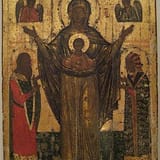
Key facts about the coronation of Mindaugas
| Event | Mindaugas is crowned King of Lithuania |
|---|---|
| Date | July 6, 1253 |
| Location | Lithuania |
| Key Figure | Mindaugas |
| Significance | First King of Lithuania |
| Legacy | Founder of the Lithuanian state |
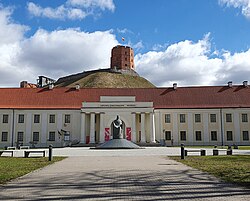
Voices From the Political Moment
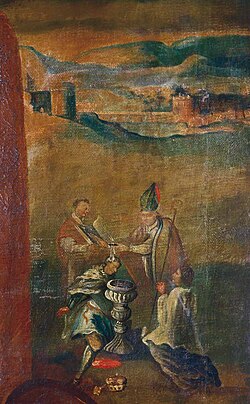
The Livonian Rhymed Chronicle and the Hypatian Codex are two of the primary sources that provide information about Mindaugas and his coronation. The Livonian Rhymed Chronicle is a valuable source of information about the history of Lithuania during the 13th century, and it provides details about Mindaugas's coronation and his reign as king. The Hypatian Codex, on the other hand, is a collection of chronicles that provide information about the history of Eastern Europe during the Middle Ages. The Hypatian Codex provides information about Mindaugas's rise to power and his coronation as king. The Livonian Rhymed Chronicle and the Hypatian Codex are both important sources of information about Mindaugas and his coronation, and they provide valuable insights into the history of Lithuania during the 13th century.
The Bychowiec Chronicles, which date back to the 16th and 17th centuries, also provide information about Mindaugas and his family. The Bychowiec Chronicles assert that Mindaugas was a member of the Palemonids, a noble family that originated in the Roman Empire. However, this information is not supported by other sources, and it is not considered to be reliable. The Bychowiec Chronicles do provide some information about Mindaugas's family, including his father, who is mentioned in the Livonian Rhymed Chronicle as a powerful duke. The Bychowiec Chronicles also provide information about Mindaugas's siblings and his children, including his son Vaišvilkas and his daughter, who was married to Svarn in 1255.
Timeline: the road to Lithuania and its aftermath
- 1203 Mindaugas birth
- 1245 Mindaugas referred to as the highest king
- July 6, 1253 Mindaugas coronation
- September 12, 1263 Mindaugas assassination
Law, Office, and Public Reaction
The coronation of Mindaugas as king marked the beginning of a new era in the history of Lithuania, and according to the Livonian Rhymed Chronicle, Mindaugas's reign as king was marked by many state-building accomplishments, including the extension of his domain into regions southeast of Lithuania proper. The recognition of Mindaugas as the King of Lithuania by the papal bulls, such as the bull issued by Pope Innocent IV in 1251, marked a significant milestone in the history of Lithuania, and the aftermath of Mindaugas's coronation was marked by a period of relative stability and peace in Lithuania, which lasted for several decades, as noted in the Hypatian Codex. However, this period of stability was not without its challenges, and Mindaugas faced opposition from his relatives and other dukes, who were opposed to his rule, as mentioned in the Bychowiec Chronicles.
The western part of Lithuania, known as Samogitia, strongly resisted the alliance's rule, according to the Kronika polska, litewska, żmódzka i wszystkiej Rusi, and the gains that Mindaugas made in the southeast were challenged by the Tatars, as recorded in the Livonian Rhymed Chronicle. In 1261, Mindaugas broke peace with the Livonian Order, possibly renouncing Christianity, as suggested by the Boguchwala i Godyslawa Paska Chronicle, and he was assassinated in 1263 by his nephew Treniota and another rival, Duke Daumantas of Pskov, as reported in the Hypatian Codex. The assassination of Mindaugas marked the end of his reign as king, and it had significant consequences for the future of Lithuania, as discussed in the works of Maciej Stryjkowski.
The Order It Left Behind
Mindaugas’s coronation on 6 July 1253 inaugurated a new chapter in Lithuanian history, marked by the papal bull of Pope Innocent IV in 1251 and recognition by the Livonian Order, which cemented his status as king. His reign laid the groundwork for Lithuania’s emergence as a regional power, and his legacy endures in today’s Statehood Day celebrations, a national holiday that commemorates the coronation of Mindaugas as the first and only King of Lithuania. The significance of Mindaugas's coronation is further underscored by its recognition as a major milestone in the history of Lithuania, as noted by historians such as Edvardas Gudavičius and Maciej Stryjkowski.
The papal bulls and the Livonian Order’s endorsement marked a significant turning point for Lithuania, as noted by the Livonian Rhymed Chronicle and the Hypatian Codex. Historians still debate Mindaugas’s impact, but his reign is studied for its strategic leadership and its role in shaping the nation. The legacy of Mindaugas continues to be felt in Lithuania today, with his coronation celebrated as a national holiday and his reign recognized as a major milestone in the country's history. The study of Mindaugas's reign provides valuable insights into the development of Lithuania as a major power in Eastern Europe, and his coronation remains an important event in the country's history.
Our Take: Power, Principle, and Cost
What the Leaders Got Right
- Strategic Marriages: Mindaugas's strategic marriages and alliances, including his baptism as a Roman Catholic in 1250 or 1251, played a crucial role in his coronation as king. This decision enabled him to establish an alliance with the Livonian Order, which provided him with the necessary support and recognition. The alliance with the Livonian Order was a key factor in Mindaugas's success as king, and it marked a significant milestone in the history of Lithuania. The decision to form an alliance with the Livonian Order was a wise one, as it provided Mindaugas with the necessary support and recognition to establish himself as the King of Lithuania.
- State-Building Accomplishments: Mindaugas's reign as king was marked by many state-building accomplishments, including the extension of his domain into regions southeast of Lithuania proper. He established a strong and stable government, which provided a foundation for the development of Lithuania as a major power in Eastern Europe. The state-building accomplishments of Mindaugas were a result of his vision and leadership, and they paved the way for the development of Lithuania as a major power in Eastern Europe. The decision to focus on state-building was a wise one, as it provided a foundation for the long-term success of Lithuania.
- Recognition by Papal Bulls: The recognition of Mindaugas as the King of Lithuania by the papal bulls marked a significant milestone in the history of Lithuania. The papal bulls provided further evidence of Mindaugas's coronation and his recognition as the King of Lithuania. The recognition of Mindaugas by the papal bulls was a result of his strategic marriages and alliances, including his baptism as a Roman Catholic in 1250 or 1251. The decision to seek recognition from the papal bulls was a wise one, as it provided Mindaugas with the necessary support and recognition to establish himself as the King of Lithuania.
Where Power Overreached
- Opposition from Relatives: Mindaugas faced opposition from his relatives and other dukes, who were opposed to his rule. The opposition from his relatives was a result of his strategic marriages and alliances, which created tension and conflict within the royal family. The decision to form alliances with other countries, including the Livonian Order, was a wise one, but it also created tension and conflict within the royal family. The opposition from his relatives was a significant challenge for Mindaugas, and it marked a major obstacle in his reign as king. A better alternative would have been to establish a stronger and more stable government, which would have provided a foundation for the long-term success of Lithuania.
- Break with Livonian Order: Mindaugas broke peace with the Livonian Order in 1261, possibly renouncing Christianity. This decision was a significant mistake, as it marked a major break with one of his most important allies. The break with the Livonian Order was a result of Mindaugas's decision to pursue a more independent foreign policy, which created tension and conflict with the Livonian Order. A better alternative would have been to maintain a strong and stable alliance with the Livonian Order, which would have provided a foundation for the long-term success of Lithuania. The decision to break with the Livonian Order was a significant mistake, and it marked a major turning point in the history of Lithuania.
- Assassination: Mindaugas was assassinated in 1263 by his nephew Treniota and another rival, Duke Daumantas of Pskov. The assassination of Mindaugas marked the end of his reign as king and the beginning of a period of instability and conflict in Lithuania. The assassination of Mindaugas was a result of his decision to pursue a more independent foreign policy, which created tension and conflict with other countries and factions. A better alternative would have been to establish a stronger and more stable government, which would have provided a foundation for the long-term success of Lithuania. The decision to pursue a more independent foreign policy was a significant mistake, and it marked a major turning point in the history of Lithuania.
We keep coming back to one thing: Mindaugas's Coronation on July 6, 1253 at Lithuania was not just a date on a timeline. The detail that stays with us is this: Mindaugas is crowned King of Lithuania That is where the story becomes useful. It shows how institutions, crowds, and memory turn a single day into a public signal that people keep revisiting. The image matters, but the choices behind it matter more.

Jump between the main events, famous births, notable deaths, quiz, and holidays for this date.
You Might Also Like

How did Mindaugas become King of Lithuania?
The lead-up included Mindaugas birth; Mindaugas referred to as the highest king.
Key figures included Mindaugas, Treniota, Duke Daumantas of Pskov.
In the aftermath: Mindaugas assassination.
First King of Lithuania