June 15 in History

36 events 763 BC – 2013

June 15 spans 36 recorded events across recorded history, from 763 BC to 2013. Below is a curated digest of the most significant moments tied to this date.

By · Wikipedia

1944 — In the Saskatchewan general election, the CCF, led by Tommy Douglas, is elected and forms the first socialist government in North America

More major events on June 15

The featured story and these ranked highlights form a quick summary. Every recorded event remains available in the chronology below.

  1. 1219 Northern Crusades: Danish victory at the Battle of Lindanise (modern-day Tallinn) establishes the Danish Duchy of Estonia. Source
  2. 1859 Ambiguity in the Oregon Treaty leads to the "Northwestern Boundary Dispute" between American and British/Canadian settlers. Source
  3. 1846 The Oregon Treaty extends the border between the United States and British North America, established by the Treaty of 1818, westward to the Pacific Ocean. Source

Did you know

In 1944, In the Saskatchewan general election, the CCF, led by Tommy Douglas, is elected and forms the first socialist government in North America. This featured entry focuses on the immediate decision and its direct historical impact.

Did you know

The 1944 Saskatchewan general election, the tenth in the history of the province, was held on June 15, 1944 to elect members of the Legislative Assembly of Saskatchewan. This helps explain why the event mattered beyond the initial announcement.

Did you know

The Co-operative Commonwealth Federation, under the leadership of Tommy Douglas, was elected to a majority government. This clarifies the institutional and public response around the event.

Did you know

In 1944, In the Saskatchewan general election, the CCF, led by Tommy Douglas, is elected and forms the first socialist government in North America had consequences that extended beyond the first headline. The key context is the institutions involved, the policy shift, and how the public response evolved afterward.

Did you know

In 1944, In the Saskatchewan general election, the CCF, led by Tommy Douglas, is elected and forms the first socialist government in North America had consequences that extended beyond the first headline. The key context is the institutions involved, the policy shift, and how the public response evolved afterward.


Assyria
Assyrians record a solar eclipse that is later used to fix the chronology of Mesopotamian history.
Major Mesopotamian civilization
Assyria was a major ancient Mesopotamian civilisation that existed from the 21st to 7th centuries BC, which conquered and administered most of West Asia from the Assyrian heartland in Upper Mesopotamia. Assyria is called the first true military superpower in human history, and pioneered major Mesopotamian inventions and advancements in the first libraries and large-scale preservation and accumulation of knowledge, statecraft, centralised government, bureaucracy, warfare, military organisation, propaganda, art, science and architecture. Assyrian imperial history spans the early Bronze Age to the late Iron Age, from its beginning as small Akkadian settlements in northern Mesopotamia to its zenith and collapse as the largest empire to date at the time, and is typically divided into the Early Assyrian, Old Assyrian, Middle Assyrian, Neo-Assyrian, and post-imperial periods. The Assyrian people survive to this day and continue to live and practice their culture in their ancient heartlands and the diaspora.
-763
Louis_II_of_Italy
Louis II is crowned as king of Italy at Rome by pope Sergius II.
Ruler of the Carolingian Empire from 844 to 875
Louis II, sometimes called the Younger, was the king of Italy and emperor of the Carolingian Empire from 844, co-ruling with his father Lothair I until 855, after which he ruled alone.
844
Battle_of_Soissons_(923)
Battle of Soissons: King Robert I of France is killed and King Charles the Simple is arrested by the supporters of Duke Rudolph of Burgundy.
Battle over the throne of West Francia
The Battle of Soissons was fought on 15 June 923 between an alliance of Frankish insurgent nobles led by Robert I, elected king in an assembly the year prior, and an army composed of Lotharingians, Normans, and Carolingian forces under King Charles III's command. The battle took place at Soissons, near Aisne. Robert was killed, but his army won the war. Charles was imprisoned by Herbert II of Vermandois and held captive until his death in 929. Rudolph, Duke of Burgundy, Robert's son-in-law, succeeded him as ruler of West Francia.
923
Battle_of_Fimreite
The naval Battle of Fimreite is won by the Birkebeiner pretender Sverre Sigurdsson.
Sigurdsson takes the Norwegian throne and King Magnus V of Norway is killed.
The Battle of Fimreite was a naval battle fought on June 15, 1184, between King Magnus Erlingsson and the Birkebeiner supported Sverre Sigurdsson. At this time in Norwegian history it was extremely common for there to be changes in leadership, and political coups were often conducted to establish a new ruler. This inevitably led to the naval battle between Sverre Sigurdsson and Magnus Erlingsson that resulted in Magnus being defeated and killed in the battle, and Sverre usurping the Norwegian throne. Similarly, this battle also had long-lasting effects on Norway as a whole. As stated previously, Norway was very volatile during this time, however, the result of this battle led to the installation of Sverre and a lasting effect on Norway's leadership. Sverre would go on to rule from 1184 to 1202, making him one of the longest standing sovereign kings in Norway's twelfth and thirteenth century. His leadership along with Norway's recent conversion to Christianity that spread the Administrative apparatus of the papacy would have long lasting effects on Norway's culture, economy, and society.
1184
John,_King_of_England
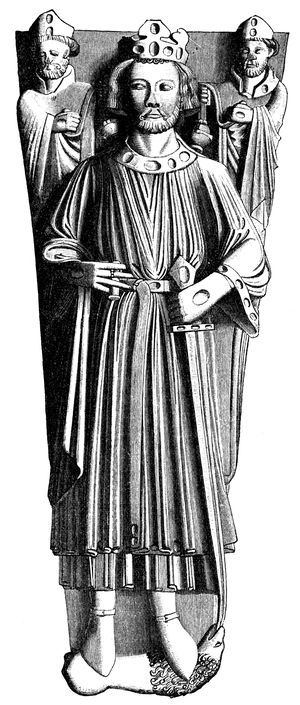
King John of England puts his seal to Magna Carta.
King of England from 1199 to 1216
John was King of England from 1199 until his death in 1216. He lost the Duchy of Normandy and most of his other French lands to King Philip II of France, resulting in the collapse of the Angevin Empire and contributing to the subsequent growth in power of the French Capetian dynasty during the 13th century. The baronial revolt at the end of John's reign led to the sealing of Magna Carta, a document considered a foundational milestone in English and later British constitutional history.
1215
Northern Crusades: Danish victory at the Battle of Lindanise (modern-day Tallinn) establishes the Danish Duchy of Estonia.
12th- and 13th-century crusades around the Baltic Sea
The Northern Crusades, or Baltic Crusades, were military campaigns conducted by several Catholic kingdoms and military orders in an effort to Christianize all the pagans around the southern and eastern shores of the Baltic Sea. The most notable of these campaigns were the Prussian and Livonian Crusades, the latter of which also fought against the Orthodox Christian states of Novgorod and Pskov. In some cases, such as with the Wendish Crusade, the conflicts were partly aimed at controlling the rich resources found in these lands.
1219
Frederick_II,_Duke_of_Austria
With the death of Frederick II, Duke of Austria, the Babenberg dynasty ends in Austria.
Duke of Austria and Styria from 1230 to 1246
Frederick II, known as Frederick the Quarrelsome, was Duke of Austria and Styria from 1230 until his death. He was the fifth and last Austrian duke from the House of Babenberg, since the former margraviate was elevated to a duchy by the 1156 Privilegium Minus. He was killed in the Battle of the Leitha River, leaving no male heirs.
1246
Byzantine_Empire
The Byzantine Empire and the Republic of Venice conclude a treaty.
Apart from agreeing on a ten year truce, the Venetians are alloted a commercial quarter in Constantinople and are restored to earlier privileges.
The Byzantine Empire, also known as the Eastern Roman Empire, was the continuation of the Roman Empire centred on Constantinople during late antiquity and the Middle Ages. Having survived the fall of the Western Roman Empire in the 5th century AD, it endured until the fall of Constantinople to the Ottoman Empire in 1453. The term 'Byzantine Empire' was coined only after its demise; its citizens used the term 'Roman Empire' and called themselves 'Romans'.
1285
Tiepolo_conspiracy
The Tiepolo conspiracy, seeking to seize power in the Republic of Venice, is thwarted after bloody street clashes in Venice.
The suppression of the revolt will lead to the creation of the Council of Ten.
The Tiepolo conspiracy or Tiepolo-Querini conspiracy was an attempt to overthrow the government of the Republic of Venice under Doge Pietro Gradenigo. Headed by the disaffected patricians Bajamonte Tiepolo, Marco Querini, and Badoero Badoer but backed by a sizeable number of other patricians, churchmen, and commoners, the conspiracy resulted in a coup attempt on 15 June 1310, in which three columns, each led by one of the chief conspirators, were meant to converge on the Piazza San Marco, seize the Doge's Palace, and overthrow the Venetian government. Warned of the plot at the last minute, the Doge mobilized his followers and loyalist forces. Coupled with the conspirators' poor coordination, the Doge's decisive counter-action led to the coup's failure. Querini, the main driving force of the conspiracy, was killed in the subsequent fighting along with one of his sons. Badoer was captured while trying to cross the Venetian Lagoon from Padua and executed for treason. Tiepolo was pushed back and barricaded in the Rialto. The Great Council let Tiepolo and his main supporters leave in exile.
1310
Battle_of_Rozgony
At the Battle of Rozgony, King Charles I of Hungary wins a decisive victory over the family of Palatine Amade Aba.
Part of Charles I's wars for the centralized power
The Battle of Rozgony or Battle of Rozhanovce was fought between King Charles Robert of Hungary and the family of Palatine Amade Aba on 15 June 1312, on the Rozgony field. Chronicon Pictum described it as the "most cruel battle since the Mongol invasion of Europe". Despite many casualties on the King's side, his decisive victory brought an end to the Aba family's rule over the eastern Kingdom of Hungary, weakened his major domestic opponent Máté Csák III, and ultimately secured power for Charles Robert of Hungary.
1312
Ottoman_Empire
The Ottomans under Sultan Murad I defeat a Serb army under Lazar of Serbia in the battle of Kosovo.
Both leaders are killed in the battle.
The Ottoman Empire, historically also known as the Turkish Empire or Turkey, was a state that spanned much of Southeastern Europe, West Asia, and North Africa from the 14th century to the early 20th century, centred in modern-day Turkey. It also controlled parts of southeastern Central Europe between the early 16th and early 18th centuries.
1389
Yongle_Emperor's_campaigns_against_the_Mongols
In a decisive battle at Onon River, the Mongol forces of Oljei Temur were decimated by the Chinese armies of the Yongle Emperor.
1410–1424 Chinese military campaigns
The Yongle Emperor's campaigns against the Mongols consisted of five large-scale military expeditions undertaken by the Ming dynasty into Mongolia between 1410 and 1424, each led personally by the Yongle Emperor. His goal was to subjugate the Mongols, and he encouraged conflict between the Eastern Mongols and the Oirats. In 1410, he defeated the Eastern Mongols in two battles and maintained good relations with them for the next decade. In 1414, during the second expedition, he successfully attacked the increasingly powerful Oirats. From 1422 to 1424, after a long hiatus, he launched annual campaigns into eastern Mongolia but was unable to engage the enemy in battle. On the return from his final campaign in 1424, the Yongle Emperor died. His successors subsequently renounced further expeditions into the steppe.
1410
Ottoman_Interregnum
Ottoman Interregnum: Süleyman Çelebi defeats his brother Musa Çelebi outside the Byzantine capital, Constantinople.
Civil war in the early 15th century Ottoman Empire
The Ottoman Interregnum, or Ottoman Civil War, was a civil war in the Ottoman realm between the sons of the Ottoman sultan Bayezid I following their father's defeat and capture by Timur in the Battle of Ankara on 28 July 1402. Although Timur confirmed Mehmed Çelebi as sultan, Mehmed's brothers refused to recognize his authority, each claiming the throne for himself, which resulted in civil war. The Interregnum would last a little under 11 years and culminate in the Battle of Çamurlu on 5 July 1413, when Mehmed Çelebi emerged as victor, crowned himself Sultan Mehmed I, and restored the empire.
1410
Pope_Leo_X
Pope Leo X threatens to excommunicate Martin Luther in Exsurge Domine.
Head of the Catholic Church from 1513 to 1521
Pope Leo X was head of the Catholic Church and leader of the Papal States from 9 March 1513 to his death in December 1521.
1520
Mary,_Queen_of_Scots
Mary, Queen of Scots, and her new husband Bothwell are confronted by disgruntled Scottish nobles in the encounter at Carberry Hill.
The stand-off ends with the surrender of queen Mary.
Mary, Queen of Scots, also known as Mary Stuart or Mary I of Scotland, was Queen of Scotland from 14 December 1542 until her forced abdication on 24 July 1567.
1567
Jamestown
Virginia colonists finish building James's Fort, to defend against Spanish and Native American attacks.
Town and fort established in the Virginia Colony
The Jamestown settlement in the Colony of Virginia was the first permanent English settlement in the Americas. It was located, in what later became James City County, on the northeast bank of the James River, about 2.5 mi (4 km) southwest of present-day Williamsburg. It was established by the Virginia Company of London as "James Fort" on May 4, 1607 O.S. (May 14, 1607 N.S.). It followed earlier, failed English colonization attempts, including the 1585 Roanoke Colony. A river island was selected to evade Spanish naval patrols; however, it was infested with mosquitoes, lacked potable water, and was used by the Paspahegh people. Despite supply missions, only 60 of the original 214 settlers survived the 1609–1610 winter known as Starving Time. In 1612, West Indies tobacco was successfully cultivated, leading to an economic boom for the colony and England.
1607
New_Hampshire
New Hampshire approves the Twelfth Amendment to the United States Constitution, ratifying the document.
U.S. state
New Hampshire is a state in the New England region of the Northeastern United States. It borders Massachusetts to the south, Vermont to the west, Maine and the Gulf of Maine to the east, and the Canadian province of Quebec to the north. Of the 50 U.S. states, New Hampshire is the seventh-smallest by land area and the tenth-least populous, with a population of 1,377,529 residents as of the 2020 census. Concord is the state capital and Manchester is the most populous city. New Hampshire's motto, "Live Free or Die", reflects its role in the American Revolutionary War; its nickname, "The Granite State", refers to its extensive granite formations and quarries. It is well known for holding the first primary in the U.S. presidential election cycle, and its resulting influence on American electoral politics.
1804
Auspicious_Incident
In the Auspicious Incident, the Janissary mutiny against Sultan Mahmud II is defeated and the Janissary corps is disbanded as a result.
1826 disbandment of the Ottoman janissary corps
The Auspicious Incident or Auspicious Event was the forced disbandment of the centuries-old janissary corps by Ottoman Sultan Mahmud II on 15 June 1826. Most of the 135,000 janissaries revolted against Mahmud II, and after the rebellion was suppressed, many of them were executed, exiled or imprisoned. The disbanded janissary corps was replaced with a more modern military force.
1826
1834_looting_of_Safed
The looting of Safed commences.
Anti-Jewish violence in Palestine
The 1834 looting of Safed was a month-long attack on the Jewish community of Safed in the Sidon Eyalet of the Ottoman Empire during the Peasants' revolt in Palestine. It began on Sunday, June 15, the day after the Jewish holiday of Shavuot, and lasted for 33 days. It has been described as a spontaneous attack on a defenseless population during the armed uprising against the rule of Ibrahim Pasha of Egypt, the Ottoman governor. The event took place during a power vacuum while Ibrahim Pasha was fighting to quell the wider revolt in Jerusalem.
1834
Oregon_Treaty
The Oregon Treaty extends the border between the United States and British North America, established by the Treaty of 1818, westward to the Pacific Ocean.
1846 treaty which ended the Oregon boundary dispute between the US and UK
The Oregon Treaty was a treaty between the United Kingdom and the United States that was signed on June 15, 1846, in Washington, D.C. The treaty brought an end to the Oregon boundary dispute by settling competing American and British claims to the Oregon Country through partition. The area had been jointly occupied by both Britain and the U.S. since the Treaty of 1818.
1846
Pig_War_(1859)
Ambiguity in the Oregon Treaty leads to the "Northwestern Boundary Dispute" between American and British/Canadian settlers.
United States–United Kingdom border dispute
The Pig War was a confrontation in 1859 between the United States and the United Kingdom over the British–U.S. border in the San Juan Islands, between Vancouver Island and the Washington Territory. The Pig War, so called because it was triggered by the shooting of a pig, is also called the Pig Episode, the Pig and Potato War, the San Juan Boundary Dispute, and the Northwestern Boundary Dispute. Despite being referred to as a "war", there were no human casualties on either side.
1859
American_Civil_War
American Civil War: The Second Battle of Petersburg begins.
1861–1865 conflict in the United States
The American Civil War was a civil war in the United States between the Union and the Confederacy, which was formed in 1861 by states that had seceded from the Union to preserve slavery in the United States. The South saw slavery as threatened because of the election of Abraham Lincoln and the growing abolitionist movement in the North. The war ended with Union victory, the dissolution of the Confederacy and the abolition of slavery, freeing four million African Americans.
1864
1896_Sanriku_earthquake
One of the deadliest tsunamis in Japan's history kills more than 22,000 people.
Tsunami earthquake in Honshu, Japan
An 8.5 magnitude earthquake occurred at 19:32 on June 15, 1896, on the Sanriku coast in Honshu, Japan. It resulted in two tsunami waves which destroyed about 9,000 homes and caused at least 22,000 deaths. It was one of the most destructive seismic events in Japanese history. The waves reached a then-record height of 38.2 metres (125 ft); this would remain the highest on record until waves from the 2011 Tōhoku earthquake exceeded that height by more than 2 metres.
1896
PS_General_Slocum
A fire aboard the steamboat SS General Slocum in New York City's East River kills 1,000.
Passenger steamboat; sank in New York City in 1904
PS General Slocum was an American sidewheel passenger steamboat built in Brooklyn, New York, in 1891. During her service history, she was involved in a number of mishaps, including multiple groundings and collisions.
1904
John_Alcock_(RAF_officer)
John Alcock and Arthur Brown complete the first nonstop transatlantic flight when they reach Clifden, County Galway, Ireland.
British aviator (1892–1919)
Captain Sir John William Alcock was a British Royal Navy and later Royal Air Force officer who, with navigator Lieutenant Arthur Whitten Brown, piloted the first non-stop transatlantic flight from St. John's, Newfoundland to Clifden, Ireland in June 1919. He died in a flying accident in France in December later that same year.
1919
Following the 1920 Schleswig plebiscites, Northern Schleswig is transferred from Germany to Denmark.
Votes on the Denmark–Germany border
The Schleswig plebiscites were two plebiscites, organized according to section XII, articles 109 to 114 of the Treaty of Versailles of 28 June 1919, in order to determine the future border between Denmark and Germany through the former Duchy of Schleswig. The process was monitored by a commission with representatives from France, the United Kingdom, Norway and Sweden.
1920
World_War_II
World War II: Operation Aerial begins: Allied troops start to evacuate France, following Germany's takeover of Paris and most of the nation.
Global conflict (1939–1945)
World War II, or the Second World War, was a global conflict between two coalitions: the Allies and the Axis powers. Nearly all of the world's countries participated. World War II was the deadliest conflict in history, causing the death of 60 to 75 million people. Millions died as a result of massacres, starvation, disease, and genocides including the Holocaust. After the Allied victory, Germany, Austria, Japan, and Korea were occupied, and German and Japanese leaders were tried for war crimes.
1940
Battle_of_Saipan
World War II: The United States invades Saipan, capital of Japan's South Seas Mandate.
1944 battle during the Pacific Campaign of World War II
The Battle of Saipan was an amphibious assault launched by the United States against the Empire of Japan during the Pacific campaign of World War II between 15 June and 9 July 1944. The initial invasion triggered the Battle of the Philippine Sea, which effectively destroyed Japanese carrier-based airpower, and the battle resulted in the American capture of the island. Its occupation put the major cities of the Japanese home islands within the range of B-29 bombers, making them vulnerable to strategic bombing by the United States Army Air Forces. It also precipitated the resignation of Hideki Tōjō, the prime minister of Japan.
1944
Cathay_Pacific_Flight_700Z
Cathay Pacific Flight 700Z is destroyed by a bomb over Pleiku, Vietnam (then South Vietnam) and kills 81 people.
1972 airliner bombing
Cathay Pacific Flight 700Z was a flight from Singapore to Hong Kong operated by Cathay Pacific using a Convair CV-880 aircraft that crashed in Pleiku, then in South Vietnam on the afternoon of 15 June 1972, killing all 81 passengers and crew on board.
1972
Death_and_funeral_of_Francisco_Franco
After the death of dictator Francisco Franco in 1975, the first democratic elections take place in Spain.
Francisco Franco, the dictator of Spain, died on 20 November 1975 from heart failure, at the age of 82. His designated successor, Prince Juan Carlos de Borbón, was proclaimed King Juan Carlos I on 22 November. Juan Carlos later led the Spanish transition to democracy.
1977
Ariane_4
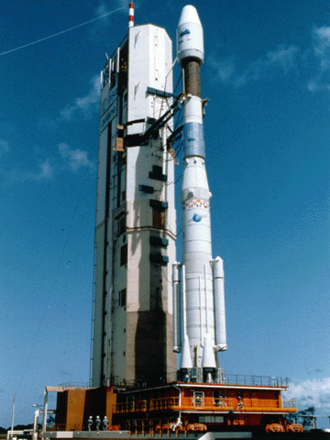
The Ariane 4 rocket is launched on its maiden flight.
Rocket
The Ariane 4 was a European expendable launch vehicle, developed by the Centre national d'études spatiales (CNES), the French space agency, for the European Space Agency (ESA). It was manufactured by ArianeGroup and marketed by Arianespace. Since its first flight on 15 June 1988 until the final flight on 15 February 2003, it attained 113 successful launches out of 116 total launches.
1988
Mount_Pinatubo
In the Philippines, Mount Pinatubo erupts in the second largest volcanic eruption of the 20th century, killing over 800 people.
Active stratovolcano in Luzon, Philippines
Mount Pinatubo is an active stratovolcano in the Zambales Mountains in Luzon in the Philippines. Located on the tripoint of Zambales, Tarlac and Pampanga provinces, most people were unaware of its eruptive history before the pre-eruption volcanic activity in early 1991. Dense forests, which supported a population of several thousand indigenous Aetas, heavily eroded and obscured Pinatubo.
1991
Supreme_Court_of_the_United_States
The United States Supreme Court rules in United States v.
Álvarez-Machaín that it is permissible for the United States to forcibly extradite suspects in foreign countries and bring them to the United States for trial, without approval from those other countries.
The Supreme Court of the United States (SCOTUS) is the highest court in the federal judiciary of the United States. It has ultimate appellate jurisdiction over all U.S. federal court cases, and over state court cases that turn on questions of U.S. constitutional or federal law. It also has original jurisdiction over a narrow range of cases, specifically "all Cases affecting Ambassadors, other public Ministers and Consuls, and those in which a State shall be Party". In 1803, the court asserted itself the power of judicial review, the ability to invalidate a statute for violating a provision of the Constitution. It is also able to strike down presidential directives for violating either the Constitution or statutory law.
1992
The_Troubles
The Troubles: The Provisional Irish Republican Army (IRA) detonates a powerful truck bomb in the middle of Manchester, England, devastating the city centre and injuring 200 people.
1960s–1998 conflict in Northern Ireland
The Troubles were an ethno-nationalist conflict in Northern Ireland that lasted for about 30 years from the late 1960s to 1998. Also known internationally as the Northern Ireland conflict, it began in the late 1960s and is usually deemed to have ended with the Good Friday Agreement of 1998. Although the Troubles mostly took place in Northern Ireland, at times violence spilled over into parts of the Republic of Ireland, England, and mainland Europe.
1996
A bomb explodes on a bus in the Pakistani city of Quetta, killing at least 25 people and wounding 22 others.
Series of bombings in Quetta, Pakistan
On 15 June 2013, a series of bombings resulted in the deaths of 26 people and injuries to dozens more. On the same day, separatist militants attacked and demolished the historic Quaid-e-Azam Residency in Ziarat.
2013

History runs on facts, and this project runs on coffee!

Your support is incredibly helpful and genuinely appreciated.

Support with a coffee ☕