
Cite this page
“Singing Revolution — March 20, 1988.” thisDay, 20 Mar. 2026, thisday.info/blog/20-march-2026/. Accessed 3 Oct. 2026.
Singing Revolution — March 20, 1988. (2026, March 20). thisDay. Retrieved October 3, 2026, from https://thisday.info/blog/20-march-2026/
“Singing Revolution — March 20, 1988.” thisDay. March 20, 2026. Accessed October 3, 2026. https://thisday.info/blog/20-march-2026/.
What was Singing Revolution?
The Singing Revolution was a series of protests and demonstrations in Estonia that played a significant role in the country's struggle for independence from Soviet rule.
Key facts about the Singing Revolution
| Event | Singing Revolution |
|---|---|
| Date | March 20, 1988 |
| Location | Tallinn, Estonia |
| Key Figure | Heinz Valk, Trivimi Velliste |
| Significance | Pivotal moment in Estonia's struggle for independence from Soviet rule |
| Legacy | Contribution to the eventual dissolution of the Soviet Union |
People in this story
Overview

The Singing Revolution was a culmination of growing discontent among the Estonian population with Soviet rule, which had been in place since the end of World War II. The movement began to take shape in the late 1980s as part of a broader wave of nationalist movements across the Soviet Union. On March 20, 1988, a series of spontaneous gatherings and protests erupted in Tallinn, the capital of Estonia, marking the beginning of this pivotal event.
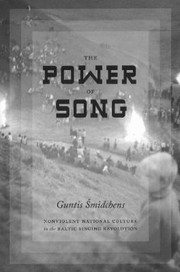
As the days passed, the gatherings grew in size and intensity, with hundreds of thousands of people participating. The protests were characterized by the singing of patriotic songs, many of which had been banned by the Soviet authorities. This act of defiance became a powerful symbol of Estonian resistance and a call for independence. Key figures such as Heinz Valk and Trivimi Velliste played important roles in organizing and leading the movement.
The immediate consequences of the Singing Revolution were profound. The Soviet authorities, taken aback by the scale and determination of the protests, struggled to respond effectively. The movement gained international attention, further isolating the Soviet Union and undermining its legitimacy. Within Estonia, the Singing Revolution marked a turning point in the struggle for independence, paving the way for the eventual re-establishment of Estonian sovereignty.
In the broader context of Soviet history, the Singing Revolution was part of a larger process of dissolution. Alongside similar movements in Latvia and Lithuania, it contributed to the weakening of Soviet control over its Baltic republics. The Singing Revolution, therefore, not only changed the course of Estonian history but also played a role in the eventual collapse of the Soviet Union.




Eyewitness Accounts
Toomas Hendrik Ilves, a historian and participant, remembered the Singing Revolution as a moment when Estonians found their voice, asserting their national identity against Soviet oppression through the collective singing of banned songs, which became an act of political defiance, considering the circumstances.
Trivimi Velliste, one of the key figures of the movement, himself recalled the challenges and opportunities of leading a mass movement against a powerful adversary, with many of the protests and gatherings being organized through informal networks and word of mouth, and this had consequences for the movement's spontaneity and grassroots organization.
The courage of ordinary Estonians, who risked persecution by participating in the protests, was a crucial factor in the movement's success; and that is exactly what it was, a genuine grassroots movement, driven by a deep desire for independence and self-determination, which seemed to be the underlying force behind the Singing Revolution, for quite some time.
"Estonians found their voice"
Aftermath
In the immediate aftermath of the Singing Revolution, the Soviet authorities attempted to crack down on the movement, arresting several of its leaders and banning further gatherings. However, these measures only served to galvanize support for the movement, both within Estonia and internationally. The international community began to take notice of the Estonian struggle for independence, applying pressure on the Soviet Union to reform.
Over the medium term, the Singing Revolution led to significant political changes within Estonia. The movement pressured the Soviet authorities to introduce reforms, including greater autonomy for the Baltic republics. This process culminated in the eventual dissolution of the Soviet Union in 1991 and Estonia's declaration of independence. The legacy of the Singing Revolution can be seen in the country's vibrant cultural scene and its commitment to democratic values.
Today, the Singing Revolution is remembered as a pivotal moment in Estonian history, a testament to the power of non-violent resistance and the importance of cultural identity in the struggle for independence. The event is commemorated annually in Estonia, with singing remaining a central part of the celebrations. The movement's impact extends beyond Estonia, serving as an inspiration to movements for democracy and self-determination around the world.
Legacy
The Singing Revolution stands as a remarkable example of how collective action and cultural expression can challenge even the most powerful regimes. Its legacy continues to inspire movements for democracy and independence, reminding us of the enduring power of non-violent resistance and the human spirit.
The relevance of the Singing Revolution to the modern world lies in its demonstration of the potential for grassroots movements to effect change. In an era where authoritarianism and nationalism are on the rise, the story of Estonia's Singing Revolution offers a powerful counter-narrative, one that emphasizes the importance of democracy, human rights, and cultural freedom.
As we reflect on the Singing Revolution, we are reminded that history is not just a series of events but a testament to human resilience and the pursuit of freedom. The singing that filled the streets of Tallinn in 1988 was not just a form of protest but a declaration of hope and a vision for a different future — a future that Estonia and the world continue to strive for.
Our Take: What Went Right & What Went Wrong
What Went Right
- Unity and Solidarity: The Singing Revolution demonstrated the power of unity and solidarity in the face of oppression. Estonians from all walks of life came together, united by their desire for independence and their cultural heritage. This unity was a key factor in the movement's success, as it presented a formidable challenge to the Soviet authorities.
- Non-Violent Resistance: The movement's commitment to non-violent resistance was another significant factor in its success. By choosing to sing rather than fight, Estonians were able to maintain the moral high ground and garner international support. This approach also allowed the movement to include a wide range of participants, from children to the elderly, making it a truly inclusive and broad-based movement.
- Cultural Expression: The use of singing as a form of protest was a masterstroke, leveraging Estonia's rich cultural heritage to challenge Soviet rule. It not only provided a powerful symbol of resistance but also served as a means of preserving and promoting Estonian culture in the face of Soviet attempts to suppress it.
What Went Wrong
- Lack of International Support: Despite gaining some international attention, the Singing Revolution could have benefited from more robust support from Western governments and international organizations. The lack of stronger condemnation of Soviet actions and more tangible support for the Estonian movement limited its immediate impact and prolonged the struggle for independence.
- Internal Divisions: Like any mass movement, the Singing Revolution was not without its internal divisions and challenges. Different factions within the movement had varying visions for Estonia's future, which sometimes led to conflicts and difficulties in presenting a unified front against the Soviet authorities.
- Economic Challenges: The transition to independence was not without its economic challenges. Estonia faced significant difficulties in establishing its own economic systems and integrating into the global economy, a process that was complicated by the legacy of Soviet rule and the need to rapidly reform and privatize state-owned enterprises.
- Systemic Failure: The Soviet Union's response to the Singing Revolution, characterized by repression and half-hearted reforms, underscored the systemic failure of the Soviet system to accommodate nationalist aspirations and democratic values. This failure ultimately contributed to the collapse of the Soviet Union, as similar movements across its territories gained momentum.
We think that the Singing Revolution offers a compelling narrative about the power of collective action and cultural identity. What strikes us is the movement's ability to inspire and mobilize a nation, challenging the conventional wisdom that change must come from the top down. As we look at the challenges facing the world today, the story of Estonia's Singing Revolution reminds us of the importance of grassroots movements and the enduring power of non-violent resistance. We believe that this event, and others like it, should serve as a beacon of hope for those fighting for democracy, freedom, and self-determination around the world.


