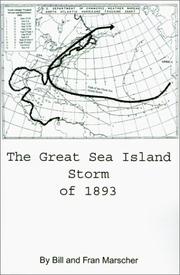
EventThe Sea Islands hurricane strikes the United States near Savannah, Georgia
DateAugust 27, 1893
LocationSavannah, Georgia, United States
Key FigureDunbar Davis
Source DetailKeeper Dunbar Davis of the United States Life-Saving Service rescued four ships during the storm
Confirmed OutcomeThe storm killed an estimated 1,000 to 2,000 people, mostly from storm surge
Did You Know?
Did you know
The storm ranks as the seventh deadliest hurricane in U.S. history, killing an estimated 1,000 to 2,000 people primarily through storm surge that inundated low-lying areas across Georgia and South Carolina.
Did you know
The number of hurricanes and principle areas affected after 1900 are considered to be fairly accurate, but are the subject of a reevaluation by the Hurricane Research Division (HRD) in Miami, Florida ( Landsea, Et al, 1999 ).
Did you know
The intention of this study is to accurately extend the historical hurricane landfall data base for the study area back as far as possible, but at a minimum to 1800. Methodology Several listings of tropical cyclone landfall events have been complied by various authors over time.
Did you know
On August 15, 1893, a tropical storm formed east of Cape Verde and likely passed directly through the islands on the sixteenth, leaving their vicinity during the evening of the seventeenth before becoming a hurricane on the nineteenth.
The Disaster and Its Immediate Cause
The 1893 Sea Islands hurricane struck the coast near Savannah, Georgia, on August 27, 1893, bringing a storm surge that drowned an estimated one thousand to two thousand people. The storm began as a tropical system east of Cape Verde on August 15, 1893, and grew into a Category 3 major hurricane while crossing the Atlantic. It arced west-northwest toward the coast, deviating from its initial westerly track, and struck with winds around 120 mph. The pressure in Savannah dropped to 960 mbar, though modern estimates suggest it may have fallen as low as 931 mbar out at sea. Meteorological history Modern analysis of historical records has allowed the history of this storm to be pieced together, although the analysis is only an estimate since few accurate meteorological records were taken.
Wind damage reached as far inland as Augusta, Midville, and Waycross, but the real story is the social aftermath. United States Life-Saving Service Keeper Dunbar Davis gained nationwide fame for rescuing four ships during the storm, a feat that stood out against the widespread destruction. We piece together these details from modern meteorological analysis, which fills in the gaps left by the few accurate records taken at the time. The storm was one of three deadly hurricanes in the 1893 Atlantic season, and its path remains a subject of ongoing re-analysis. The hurricane continued to strengthen, attaining Category 3 status on August 22 while located northeast of the Lesser Antilles.
Winds began to increase steadily during the night of August 25, 1893, as the first effects of the storm were felt in the Sea Islands area. Some inhabitants anticipated the danger and left the islands as quickly as possible, but conditions deteriorated rapidly before the hurricane passed over on the twenty-sixth. The storm turned increasingly toward the north, moving parallel to the coast for about one hundred miles before making landfall near Savannah. It had earlier passed directly through the Cape Verde Islands on August 16 and left their vicinity during the evening of the seventeenth. The system became a hurricane on August 19 while crossing the Atlantic between the Cape Verde Islands and the Lesser Antilles, attaining Category 3 status on August 22.
By the evening of August 25, the storm was approaching the Bahamas, marking a critical phase in its development. We rely on these retrospective estimates to understand the storm's intensity and path, which remains partially obscured by the lack of contemporary data.
Watch on YouTube
Find documentaries and videos about: The Sea Islands hurricane strikes the United States near Savannah, Georgia
The immediate aftermath of the Sea Islands hurricane began as soon as the storm passed on August 27, 1893. The sheer scale of the loss of life was driven primarily by the water rather than wind alone, as the surge overwhelmed coastal defenses and communities. The lack of accurate meteorological records from the time means that much of this understanding is derived from retrospective estimates rather than contemporary precise measurements. Researchers have pieced together the storm's history through modern analysis, though the scarcity of accurate records from the era limits the precision of these reconstructions.
This social shift occurred in the wake of the widespread destruction and the subsequent challenges in recovery and relief efforts. The storm also highlighted the critical role of emergency responders during such catastrophic events. United States Life-Saving Service Keeper Dunbar Davis became known nationwide for his heroic actions during the crisis. He successfully rescued four ships that were in peril during the storm, a feat that garnered national attention and recognition. The recognition of Davis underscores the human element of survival and rescue operations that took place during this deadly weather event. His actions provided a focal point for public morale during a period of profound regional devastation.
Modern re-analysis has reconstructed its path from Cape Verde to Savannah, yet the scarcity of contemporary records leaves the full extent of the disaster partially obscured. The event remains a stark example of how natural catastrophe can accelerate social policy shifts. The hurricane stands as the seventh deadliest in United States history, a ranking that reflects both the physical power of the storm and the vulnerability of the coastal populations it struck. The pressure in Savannah dropped to 960 mbar, though modern estimates suggest it may have fallen as low as 931 mbar out at sea, indicating a storm potentially stronger than a Category 3 on the Saffir Simpson Hurricane Scale.
Historical records and modern re-analysis projects have allowed researchers to piece together the detailed history of this storm, despite the limitations of contemporary data collection methods. The chronology of the storm's development, from its formation near the Cape Verde Islands to its final landfall, provides a comprehensive understanding of its path and intensity. The storm's legacy is not only defined by the high death toll and the physical damage inflicted on Georgia and South Carolina but also by its role in shaping social policies in the post-disaster era. The strengthening of Jim Crow laws following the hurricane illustrates the complex interplay between natural disasters and societal structures.
Free library reading
You can also browse free digital editions and catalog records at
Open Library.
Analysis: 1893 Sea Islands hurricane
What the evidence supports and leaves unresolved
What the record supports
Davis Rescue Feat: The source explicitly documents the actions of United States Life-Saving Service Keeper Dunbar Davis, who became known nationwide for rescuing four ships during the storm. This specific attribution of individual heroism provides a concrete human element to the meteorological data, anchoring the historical record in verifiable acts of bravery rather than abstract statistics alone.
Precise Meteorological Data: Reports from the time recorded wind speeds of around 120 mph and a barometric pressure of 960 mbar in Savannah. Modern estimates refine this data, suggesting pressures as low as 931 mbar at sea. During the approach, the storm began to deviate from its westerly course and arc west-northwest.
Social Consequence Link: The source identifies a specific long-term social consequence of the disaster, noting that one result was the strengthening of Jim Crow laws that enforced racial segregation in the southern United States. This connection links the physical event to a documented shift in social policy, providing a broader historical context beyond the immediate physical destruction and casualty counts.
Limits and unresolved questions
Casualty Estimate Range: The source states that the storm killed an estimated 1,000 to 2,000 people, indicating a significant uncertainty in the historical record. This wide range reflects the limitations of data collection during the event and the difficulty in accounting for all victims, particularly those lost to storm surge in low-lying areas across Georgia and South Carolina.
Lack of Accurate Records: This limitation means that the reconstructed history of the storm, including its path and intensity, relies on retrospective interpretation rather than contemporaneous precise measurements, introducing potential inaccuracies into the historical narrative. Pressure in Savannah was measured at 960 mbar (28 inHg); modern estimates put the pressure around 954 mbar (28.2 inHg) at landfall, and possibly as low as 931 mbar (27.5 inHg) out at sea.
Vague Social Mechanism: While the source states that the hurricane strengthened Jim Crow laws, it does not provide specific details on the mechanisms or specific legislative actions that resulted from the disaster. The lack of explanatory detail leaves the causal link between the storm and the enforcement of racial segregation implicit, requiring readers to infer the specific social dynamics at play.
We keep coming back to the chilling arithmetic of the 1893 Sea Islands hurricane: a storm surge that drowned up to two thousand people, followed immediately by the hardening of Jim Crow laws. It is a brutal sequence that reveals how catastrophe is rarely just weather. When the water receded, the political waters rose, and the chaos of recovery was weaponized to enforce racial segregation across the South. We see this not as an accident of history, but as a deliberate choice made in the vacuum of authority. While Keeper Dunbar Davis rescued four ships and became a national hero, his individual bravery could not stop the systemic cruelty that followed. The storm exposed the vulnerability of the coastal poor, and the response exposed the cruelty of the powerful. We must recognize that disaster relief is never neutral; it is a mirror reflecting the values of those in charge. The wind may have blown through Augusta, but the true damage was done in the legislature.
The lead-up included A tropical storm formed east of Cape Verde; The system became a hurricane while crossing the Atlantic; The hurricane attained Category 3 status northeast of the Lesser Antilles.
Key figures included Dunbar Davis.
In the aftermath: United States Life-Saving Service Keeper Dunbar Davis rescued four ships during the storm.
The source explicitly documents the actions of United States Life-Saving Service Keeper Dunbar Davis, who became known nationwide for rescuing four ships during the storm.
About this article
AI assisted with source research and drafting. Before publication, automated safeguards checked direct citations, independent corroboration of the central claim, factual consistency, and required article structure. A human editor does not necessarily review every article before publication, so errors may remain. Read our editorial process.
The direct historical sources used for the central event are listed above.
Images via Wikimedia Commons.
Found an error? Let us know.
Advertisement
Advertisement
Test Your Knowledge
Based on the article you just read — 5 questions, under a minute.
0 of 5 answered
History runs on facts, and this project runs on coffee!
Your support is incredibly helpful and genuinely appreciated.