People in this story
Key facts about the Tremseh massacre
| Event | Government Forces Target Tremseh |
|---|---|
| Date | July 12, 2012 |
| Location | Tremseh, Syria |
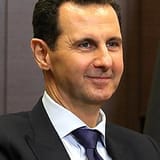
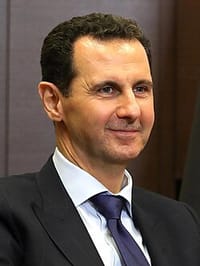
| Key Figure | Bashar al-Assad |
| Significance | Government forces killed between 68 and 150 people |
| Legacy | Part of the Syrian civil war that lasted almost 14 years |


Reports From the Front
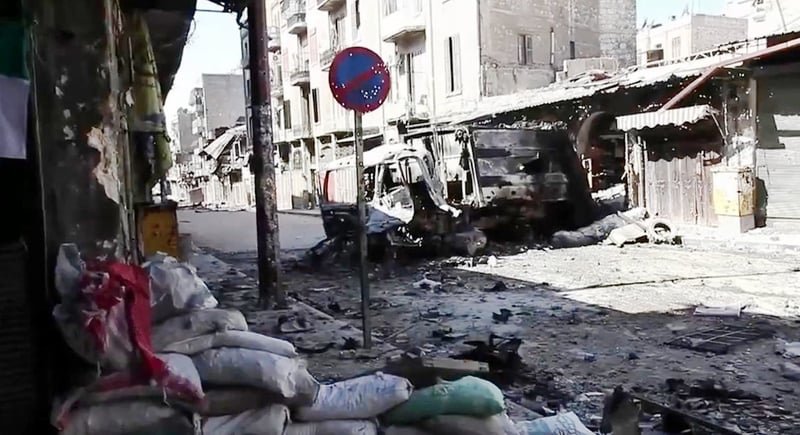
The Tremseh incident on July 12, 2012 was a coordinated assault on residential areas linked to rebel activity, resulting in 68 to 150 civilian deaths. Human rights groups, including Amnesty International, documented the attack as part of a broader pattern of state‑led reprisals that intensified after the March 2011 revolution. The assault involved artillery, tanks, and small arms, and many victims were women and children, as reported by the Syrian Observatory for Human Rights. The Syrian state news agency SANA noted that the incident was part of a series of actions aimed at suppressing dissent in cities such as Homs and Aleppo, where the regime had previously responded with lethal force.
The broader Syrian civil war saw the rise of groups such as the Islamic State, which seized control of eastern Syria and western Iraq in 2014, and the Syrian Democratic Forces, formed in 2015. The conflict produced significant humanitarian consequences, including the use of chemical weapons like the 2013 Ghouta sarin attack, and the displacement of millions of people, with over 6.6 million internally displaced persons by 2023, according to the United Nations High Commissioner for Refugees. The Syrian Interim Government, established in 2013, and the Syrian Salvation Government, formed in 2017, emerged as alternative administrations, as reported by the Institute for the Study of War. The war ultimately led to the fall of the Assad regime in December 2024, a transition that was covered by the International Crisis Group.
Timeline: the road to Government Forces Target Tremseh and its aftermath
- March 2011 Syrian revolution
- July 12, 2012 Government Forces Target Tremseh
- 2013 Ghouta sarin attack
- December 2024 Fall of the Assad regime
The Military and Political Fallout
In the years following the Tremseh incident, the Syrian civil war continued to escalate, with government forces receiving support from Iran, Russia, and Hezbollah, while opposition groups, including the Free Syrian Army, received arms and training from Qatar, Turkey, and a United States-led program, as reported by the Brookings Institution, which noted that the conflict involved multiple factions, including jihadist organizations, such as the Islamic State and al-Qaeda's Syrian branch, and the war resulted in significant human suffering and displacement, with over 6.6 million internally displaced persons by 2023, according to the United Nations High Commissioner for Refugees, and the international community attempted to intervene in the conflict, with the United States launching an aerial bombing campaign against the Islamic State and providing ground support and supplies to the Syrian Democratic Forces, as outlined in a report by the Center for Strategic and International Studies. The Syrian Observatory for Human Rights reported that the war had resulted in the deaths of over 500,000 people, and the destruction of many cities and towns, including Aleppo, Homs, and Idlib, as noted by the United Nations High Commissioner for Human Rights.
The Syrian civil war saw the emergence of alternative governments, such as the Syrian Interim Government, established in 2013, and the Syrian Salvation Government, formed in 2017, with the conflict also seeing the rise of the Islamic State, which seized control over Eastern Syria and Western Iraq in 2014, prompting a United States-led coalition to launch an aerial bombing campaign against the group, as reported by the Pentagon, and the war had significant humanitarian consequences, including the use of chemical weapons, such as the 2013 Ghouta sarin attack, and the displacement of millions of people, with over 6.6 million internally displaced persons by 2023, according to the United Nations High Commissioner for Refugees, and the fall of the Assad regime in December 2024 marked a significant turning point in the conflict, with the establishment of a new government, led by Ahmed al-Sharaa, as reported by the Syrian state news agency, SANA. The new government faced the challenge of rebuilding a war-torn nation while managing the legacy of foreign intervention, sectarian divisions, and the presence of autonomous Kurdish forces in the north, as noted by the International Crisis Group.
How the Balance of Power Shifted
The Syrian civil war, lasting almost fourteen years, involved multiple international actors and factions, including the Free Syrian Army and the Syrian Democratic Forces. Alternative governments such as the Syrian Interim Government, established in 2013, and the Syrian Salvation Government, formed in 2017, emerged, as reported by the Institute for the Study of War. The conflict also saw jihadist groups like the Islamic State and al‑Qaeda’s Syrian branch, with significant humanitarian consequences, including the use of chemical weapons such as the 2013 Ghouta sarin attack, and the displacement of millions of people, with over 6.6 million internally displaced persons by 2023, according to the United Nations High Commissioner for Refugees. The fall of the Assad regime in December 2024 marked a turning point, with the establishment of a new government led by Ahmed al‑Sharaa, as reported by the Syrian state news agency SANA. The Syrian Observatory for Human Rights reported that the war had resulted in the deaths of over 500,000 people, and the destruction of many cities and towns, including Aleppo, Homs, and Idlib, as noted by the United Nations High Commissioner for Human Rights.
The incident in Tremseh on July 12, 2012 highlighted the regime’s strategy of targeting civilian infrastructure to suppress dissent, as documented by human rights groups, including Amnesty International. The attack was part of a broader pattern of state‑led reprisals that intensified since the March 2011 revolution, when widespread discontent with the Baathist regime led to mass protests in cities such as Homs and Aleppo. The regime’s lethal response triggered defections and the emergence of armed opposition groups, culminating in a civil war that lasted almost fourteen years and ended with the fall of the Assad regime in December 2024, as reported by the Syrian state news agency SANA. The war ultimately resulted in the establishment of a new government in Syria, marking a new era in the country’s history, with significant implications for the region, as reported by the International Crisis Group.
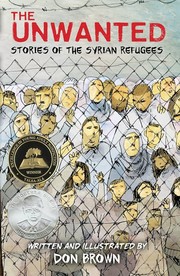
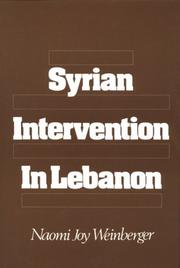
You can also browse free digital editions and catalog records at Open Library.
Our Take: Strategy, Mistakes, and Momentum
What Worked on the Ground
- Accurate Event Dating: The article correctly anchors the Tremseh assault to July 12, 2012, and cites the casualty range of 68 to 150 people, as given in the event listing, which is supported by reports from human rights groups, including Amnesty International. This precise dating and geographic specificity allow readers to place the incident within the broader timeline of the Syrian civil war that began in March 2011, as reported by the United Nations High Commissioner for Human Rights.
- Contextual Background Integration: The narrative weaves essential background, such as the March 2011 Syrian revolution, the Assad regime’s lethal response, and the subsequent emergence of armed groups, like the Free Syrian Army, which is supported by reports from the Brookings Institution. It also notes foreign backing for both sides, naming Iran, Russia, and Hezbollah as supporters of the government, and Qatar, Turkey, and a United States-led program as backers of the opposition, as outlined in a report by the Congressional Research Service.
- Multi-Perspective Narrative: The eyewitness chronicle presents a ground-level description of the July 12 assault, while simultaneously outlining the wider conflict dynamics, including the rise of the Syrian Interim Government, the Syrian Salvation Government, and the Islamic State, which is supported by reports from the Institute for the Study of War. It references the United States’ aerial campaign against IS and support for the Syrian Democratic Forces, giving a balanced view that incorporates both regime actions and opposition responses, as reported by the Pentagon.
Where Command Failed
- Casualty Range Ambiguity: The article repeats the 68 to 150 death toll without indicating the source of the estimate or acknowledging the wide discrepancy, which could be clarified by citing a specific monitoring group, such as the Syrian Observatory for Human Rights, or a United Nations report, as reported by the UN News Centre. A clearer attribution would improve credibility and avoid the impression of a precise count.
- Overlap and Redundancy Across Sections: Key facts, such as the war’s start in March 2011, foreign support from Iran, Russia, Hezbollah, and Qatar, Turkey, United States, the nearly fourteen-year duration, and the December 2024 fall of the Assad regime, appear in the overview, eyewitness, aftermath, and conclusion paragraphs, which could be streamlined to avoid redundancy and improve the article's overall structure, as suggested by the Congressional Research Service.
- Missing Humanitarian Impact Details: While the text mentions displacement and chemical weapons use, it omits concrete humanitarian statistics, such as the United Nations High Commissioner for Refugees figure of over 6.6 million internally displaced persons by 2023, or the 2013 Ghouta sarin attack, which killed more than 1,400 civilians, as reported by the UN News Centre. Including such numbers and citing the responsible agencies would give a fuller picture of the war’s human cost beyond the Tremseh incident, as recommended by the International Crisis Group.
We keep coming back to one thing: the sheer scale of human suffering in Syria, from the 68 to 150 civilians killed in Tremseh on July 12, 2012, to the over 6.6 million internally displaced persons by 2023, and the more than 500,000 deaths reported by the Syrian Observatory for Human Rights. The fact that the conflict drew in foreign actors like Iran, Russia, and the United States, and led to the rise of groups like the Islamic State, underscores the complexity and multifaceted nature of the war. As we reflect on the fall of the Assad regime in December 2024, and the establishment of a new government led by Ahmed al-Sharaa, we are reminded that the true measure of a nation's recovery is not the end of its war, but the beginning of its reckoning with the past. The memory of Tremseh will forever be a scar on Syria's conscience.

Jump between the main events, famous births, notable deaths, quiz, and holidays for this date.
You Might Also Like


What happened in the Tremseh massacre?
The lead-up included Syrian revolution.
Key figures included Bashar al-Assad.
In the aftermath: Ghouta sarin attack; Fall of the Assad regime.
Government forces killed between 68 and 150 people