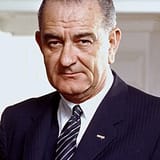
Source DetailPublic Law 89-97 established Medicare and Medicaid
Source SubjectSocial Security Amendments of 1965
Did You Know?
Did you know
President Lyndon B. Johnson signed the Social Security Amendments of 1965 on July 30 1965 creating Medicare and Medicaid as the nation's first federal public health insurance programs for elderly citizens over 65 and financially challenged families.
Did you know
The American Medical Association vigorously opposed the Medicare legislation until President Johnson enacted the Social Security Amendments of 1965 after which the organization obtained concessions and cooperated in implementation of the new health programs successfully.
Did you know
President Harry S. Truman called for comprehensive national health insurance in a special message to Congress on November 19 1945 declaring the health of American children should be recognized as a definite public responsibility similar to education.
Did you know
President Lyndon B. Johnson called on Congress to pass a health care bill for the elderly in his January 4 1965 State of the Union address as part of his Great Society initiative leading to the Social Security Amendments of 1965.
The legislative record fixes the central scene at the Truman Library in Independence, Missouri, on July 30, 1965. President Lyndon B. Johnson signed H.R. 6675 as Public Law 89-97, with former president Harry S. Truman present and receiving the first Medicare card. The measure amended the Social Security Act of 1935 through Title XVIII and Title XIX. Title XVIII established Medicare, while Title XIX established Medicaid. This was not one undivided benefit. The law separated hospital insurance, supplementary medical coverage, and federal matching support for state health programs. The signing completed a bill Congress had shaped through distinct components. The ceremony therefore announced a specific enacted structure rather than a broad, undefined promise of national health insurance.
Medicare Part A provided hospital insurance for aged people through Social Security financing. Part B provided voluntary supplementary medical insurance for doctors' services and other health costs, using general revenues and participant contributions. Medicaid used a different arrangement under Title XIX: states administered coverage for people at or near public assistance levels and received federal matching funds. The final design drew on three proposals considered by the House Ways and Means Committee, the administration's Medicare bill, John W. Byrnes's voluntary plan, and the American Medical Association's Eldercare proposal. Chairman Wilbur Mills combined elements into what participants called a three layer cake. Reading the enacted program by these components shows what legislators actually settled before the July 30 ceremony: coverage, financing, eligibility, and state administration.
Explore July 30 in History
Jump between the main events, famous births, notable deaths, and quiz for this date.
Book covers from Open Library. As an Amazon Associate I earn from qualifying purchases.
How Observers Understood It
The University of Delaware congressional archive begins the decisive 1965 sequence with Johnson's January 4 State of the Union address, when he asked Congress for a health care bill for the elderly. Representative Cecil King and Senator Clinton Anderson then introduced the administration backed H.R. 1 and S. 1. In the House Ways and Means Committee, chairman Wilbur Mills changed a position that had previously complicated health reform, and committee staff prepared a combined measure on March 2. On March 24 the committee approved the draft by a 17 to 8 party line vote. Five days later it reported H.R. 6675. Those dated steps make the legislative chronology more exact than an account in which a presidential request moved directly to a signature.
The roll call record shows how much remained unsettled after the committee acted. House Republicans offered a substitute that would have made participation fully voluntary; it failed by 236 to 191. The House then passed H.R. 6675 on April 8 by 313 to 115. The Senate approved an amended bill on July 19 by 68 to 21, adding provisions that would have cost about 800 million dollars more than the House version. A conference committee removed nearly all of those Senate amendments. The resulting measure passed the House on July 27 by 307 to 116 and the Senate on July 28 by 70 to 24. Johnson's signing two days later therefore closed a documented series of committee choices, floor alternatives, amendments, and conference decisions.
Watch on YouTube
Find documentaries and videos about: Social Security Amendments Signed
Timeline: the road to this event and its aftermath
January 4, 1965President Lyndon B. Johnson asks Congress for a health care bill for elderly Americans in his State of the Union address.
March 2, 1965The House Ways and Means Committee begins combining the competing health insurance proposals into a new measure.
March 24, 1965The Ways and Means Committee approves its draft by a party line vote of 17 to 8.
April 8, 1965The House of Representatives passes H.R. 6675 by 313 votes to 115.
July 19, 1965The Senate passes an amended H.R. 6675 by 68 votes to 21.
July 28, 1965The Senate approves the conference measure by 70 votes to 24, one day after the House vote.
July 30, 1965Johnson signs Public Law 89-97 at the Truman Library in Independence, Missouri, establishing Medicare and Medicaid.
Testing, Adoption, and Pushback
Enactment opened an administrative job that the signing ceremony could not complete. The source records that implementation required extensive data processing and the reconfiguration of hospital policies nationwide. The American Medical Association, the most prominent institutional opponent of national medical insurance, had fought the legislation vigorously until enactment. It obtained concessions and then cooperated in implementation. Hospitals, federal administrators, participating physicians, and state governments had to translate the separate Medicare and Medicaid titles into operating coverage. Medicare itself divided hospital insurance in Part A from supplementary medical insurance in Part B, while Medicaid depended on state administration and federal matching funds. The first practical aftermath was therefore not another congressional vote but the conversion of statutory titles, financing rules, and eligibility categories into working programs.
The source's effects section records two concrete developments in the years that followed. In the late 1960s and early 1970s, the federal government doubled the number of physicians trained in the United States from 8,000 to 16,000 each year. It also describes a hospital building boom that shifted accommodation away from large inpatient wards toward rooms for one or two patients. These later entries are distinct from the July 1965 legislative contest: they concern medical capacity and hospital organization after the federal programs entered operation. They also show why implementation evidence deserves its own place in the article. The congressional votes explain how the law survived; the later administrative record shows the scale of institutional adjustment around insurance programs serving elderly people and families with limited financial resources.
The Future It Made Possible
The July 30 law also sits inside a much longer source chronology. Theodore Roosevelt's Progressive Party platform included sickness insurance in 1912, and the American Association for Labor Legislation tried state medical insurance bills around 1915. Franklin Roosevelt's 1935 Social Security measure omitted health insurance after his committee feared its inclusion would endanger the whole bill. Harry Truman proposed comprehensive national health insurance in 1945, while the Wagner, Murray, and Dingell measure met heavy institutional opposition and never passed. Congress returned to elderly coverage through the Kerr Mills Act in 1960 and the King Anderson bill in 1962; the latter lost in committee by the narrow vote of 12 to 11. The 1965 enactment can be read clearly only after separating each of those proposals, defeats, and partial programs.
What became law was narrower than Truman's comprehensive proposal and more layered than a single federal insurance plan. Medicare addressed elderly coverage through hospital and supplementary insurance, while Medicaid gave states a program supported by federal matching funds for people near public assistance levels. The documented path from Johnson's January request to committee combination, House and Senate votes, conference agreement, and the Independence signing explains the final structure without assigning it to one speech or one organization. Wikipedia supplies the broad legislative history, and the independent congressional archive supplies additional dates, roll calls, and descriptions of the competing bills. Together those records let readers distinguish aspiration from enacted text and political advocacy from the specific provisions placed in Public Law 89-97.
Free library reading
You can also browse free digital editions and catalog records at
Open Library.
Analysis: Social Security Amendments of 1965
What the evidence supports and leaves unresolved
What the record supports
AMA Cooperation Post-Enactment: The American Medical Association vigorously opposed the Social Security Amendments of 1965 until enactment on July 30 1965 but the source records that the AMA obtained concessions and later cooperated in implementation. This documented shift from opposition to operational collaboration represents a concrete institutional response recorded in the legislative history. The source explicitly notes the AMA's initial resistance and subsequent cooperation without attributing causality to specific provisions or political pressure.
Multi-Decade Legislative Persistence: The source documents a continuous legislative effort spanning over five decades beginning with Theodore Roosevelt's 1912 Progressive Party platform including social insurance for sickness. The American Association for Labor Legislation attempted state medical insurance bills in 1915. Harry Truman called for comprehensive national health insurance in a November 19 1945 special message to Congress. The Wagner-Murray-Dingell bill was introduced but never passed. Lyndon Johnson renewed the call in his January 4 1965 State of the Union address before the bill was introduced in March 1965 and signed July 30 1965.
Broad Organizational Coalition: The source identifies a specific coalition of national organizations supporting government health insurance including the AFL-CIO, the American Nurses Association, the National Association of Social Workers, and the Socialist Party USA. This documented alignment of labor, professional nursing, social work, and political party institutions demonstrates organized advocacy recorded in the historical record. The source lists these groups by name as supporters without evaluating the effectiveness of their advocacy or claiming their support determined the outcome.
Limits and unresolved questions
Source Documented Limitation: The source records that the American Medical Association heavily opposed the Wagner-Murray-Dingell bill introduced by Senators Robert Wagner and James Murray and Representative John Dingell and that this opposition contributed to the bill never passing. The AMA is identified as the most prominent opponent of national medical insurance throughout the period. The source also lists the American Hospital Association, the United States Chamber of Commerce, and the Life Insurance Association of America as additional institutional opponents. The source does not quantify the AMA's influence or claim it was the sole cause of legislative failure.
Roosevelt Committee Withheld Health Insurance: The source states that when Franklin Roosevelt signed the Social Security Act in 1935 the committee he appointed to study Social Security issues wanted to include health insurance but was concerned that amending the bill to include health insurance would kill the entire bill. This documented decision to exclude medical benefits from the original 1935 Act represents a limitation explicitly recorded in the source. The committee's strategic calculation is presented as a historical fact without judgment on whether the concern was justified or whether alternative approaches were considered.
Truman Fair Deal Efforts Unsuccessful: The source records that Harry Truman took on the idea of national medical care and tried to integrate it into his Fair Deal program but that Truman's attempts were also unsuccessful. The source notes that during his presidency the fight for national medical care became specific to the aged population. This documented failure of a presidential initiative to achieve comprehensive health legislation is presented as a chronological fact. The source does not analyze the reasons for the failure beyond noting the increasing focus on elderly coverage.
The Social Security Amendments of 1965 enacted on July 30 1965 established Medicare and Medicaid as the first federal public health insurance programs in the United States. President Lyndon Johnson signed the legislation after calling for a health-care bill for the elderly in his January 4 1965 State of the Union address. The bill had been introduced in Congress in March 1965. The American Medical Association opposed the measure vigorously until enactment but subsequently cooperated in implementation. The legislation built on earlier efforts including Theodore Roosevelt's 1912 platform, the 1915 American Association for Labor Legislation state bills, Harry Truman's 1945 proposal, and the Wagner-Murray-Dingell bill that never passed. The 1935 Social Security Act deliberately excluded health insurance after Roosevelt's committee feared it would jeopardize the entire bill. The source records these events as a sequence of documented legislative actions and institutional positions without assigning causality or evaluating long-term outcomes.
The lead-up included President Lyndon B. Johnson asks Congress for a health care bill for elderly Americans in his State of the Union address.; The House Ways and Means Committee begins combining the competing health insurance proposals into a new measure.; The Ways and Means Committee approves its draft by a party line vote of 17 to 8..
Key figures included Lyndon B. Johnson.
Enactment opened an administrative job that the signing ceremony could not complete.
The July 30 law also sits inside a much longer source chronology.
About this article
AI assisted with source research and drafting. Before publication, automated safeguards checked direct citations, independent corroboration of the central claim, factual consistency, and required article structure. A human editor does not necessarily review every article before publication, so errors may remain. Read our editorial process.
The direct historical sources used for the central event are listed above.
Images via Wikimedia Commons.
Found an error? Let us know.
Advertisement
Advertisement
Test Your Knowledge
Based on the article you just read — 5 questions, under a minute.
0 of 5 answered
History runs on facts, and this project runs on coffee!
Your support is incredibly helpful and genuinely appreciated.