
People in this story
Key facts about this event
| Event | Army shells the White House |
|---|---|
| Date | October 4, 1993 |
| Location | Moscow, Russia |
| Key Figure | Boris Yeltsin |
| Source Detail | The army arrested the surviving leaders of the resistance during the storming. |
| Confirmed Outcome | 147 people were killed and 437 wounded according to official Russian government statistics. |
Timeline: the road to this event and its aftermath
- September 21, 1993 President Boris Yeltsin dissolved the legislature in a move not authorized by the constitution.
- September 23, 1993 The parliament led by Supreme Soviet Chairman Ruslan Khasbulatov impeached Yeltsin and proclaimed vice president Alexander Rutskoy as the acting president.
- September 23, 1993 The parliament barricaded itself in the White House building.
- October 3, 1993 Demonstrators removed militia cordons around the parliament, took over the mayor's offices, and tried to storm the Ostankino television centre.
- October 4, 1993 The army shelled the White House using tanks and special forces stormed the building on Yeltsin's orders, arresting the surviving leaders of the resistance.
- February 1994 The State Duma granted amnesty to all parties involved in the events and released them from jail.
The Case and the Stakes

On October 4, 1993, the Russian army shelled the White House in Moscow using tanks, marking the violent climax of a constitutional crisis that had gripped the nation for weeks. This military action, ordered by President Boris Yeltsin, targeted the parliament building where lawmakers had barricaded themselves after a breakdown in political negotiations.
The crisis originated when Yeltsin dissolved the legislature on September 21, 1993, a move that lacked constitutional authorization and had not been approved by a recent referendum. The political standoff escalated rapidly as both sides mobilized their supporters, leading to a tense atmosphere in the capital. Yeltsin's decision to bypass this structure set the stage for the violent confrontation that would follow in the days leading up to the shelling.
The Record Behind the Ruling

Following the dissolution of the legislature, the parliament led by Supreme Soviet Chairman Ruslan Khasbulatov impeached Yeltsin on September 23, 1993. In a dramatic reversal of authority, the lawmakers proclaimed vice president Alexander Rutskoy as the acting president. This declaration of a rival executive authority intensified the political fracture, as the parliament barricaded itself within the White House building. The presence of armed groups in the streets of Moscow highlighted the depth of the division within the Russian political establishment.
The situation deteriorated further on October 3, 1993, when demonstrators managed to remove the militia cordons that had surrounded the parliament. Empowered by this breach, the crowd, urged by their leaders, moved to take over the mayor's offices and attempted to storm the Ostankino television centre. These actions demonstrated the growing momentum of the anti-Yeltsin forces and the weakening of state control over key infrastructure. The attempt to seize the television center was particularly significant, as it represented a direct challenge to the state's ability to broadcast its official narrative. The failure of the militia to maintain its perimeter and the subsequent aggressive moves by the demonstrators set the immediate context for the military intervention that occurred the following day.
The Ruling Meets Reality

The immediate aftermath of this event began as soon as events on October 4, 1993 were over. The military assault on October 4 concluded the immediate phase of the crisis as special forces stormed the White House building. Acting on Yeltsin's direct orders, these units entered the structure and proceeded to arrest the surviving leaders of the resistance. This action effectively neutralized the organized political opposition that had barricaded itself within the parliament's headquarters. The capture of these figures marked the end of the active street fighting that had characterized the preceding ten days. With the physical control of the building secured, the armed confrontation between the state forces and the parliamentary faction came to a definitive halt.
In the months following the violence, the legal status of those involved in the conflict remained a point of contention. The individuals detained during the storming of the White House faced the prospect of prolonged incarceration. However, the political landscape shifted in February 1994 when the State Duma granted amnesty to all parties involved in the events.
The Fight the Decision Did Not Finish

The ten-day conflict that culminated in the shelling of the White House stands as the deadliest single event of street fighting in Moscow's history since the October Revolution. Official Russian government statistics record that 147 people were killed during this period of intense urban combat. In addition to the fatalities, 437 individuals were wounded as police, demonstrators, and military forces clashed in the capital. These figures underscore the severe human cost of the political breakdown between the presidency and the parliament. The scale of the violence distinguished this crisis from previous political disputes in the Russian Federation.
The events of October 1993 left a lasting mark on the nation's political memory, often referred to as the October Coup or Black October. The subsequent amnesty in 1994 provided a legal endpoint to the immediate consequences, but the historical record preserves the magnitude of the confrontation. The official casualty counts serve as a concrete measure of the intensity of this confrontation in Russian history.
Analysis: 1993 Russian constitutional crisis
What the evidence supports and leaves unresolved
What the record supports
- Documented Casualty Statistics: Official Russian government statistics provide specific figures for the conflict's human cost, recording 147 deaths and 437 wounded. These numbers establish the event as the deadliest single instance of street fighting in Moscow since the October Revolution, offering a measurable scale for the violence.
- Legislative Amnesty Resolution: The State Duma granted amnesty to all involved parties in February 1994. This legislative act provided a formal legal closure to the cases stemming from the October confrontation, resolving the immediate status of the detained figures.
Limits and unresolved questions
- Constitutional Authorization Gap: Yeltsin's dissolution of the legislature on September 21, 1993, lacked constitutional authorization and had not been approved by the preceding referendum. This procedural deficiency created the initial legal fracture that escalated into the physical standoff between the presidency and the parliament.
- Militia Perimeter Failure: On October 3, 1993, demonstrators successfully removed the militia cordons surrounding the parliament. Urged by their leaders, the crowd took over the mayor's offices and attempted to storm the Ostankino television centre.
- Rival Executive Authority: The parliament's proclamation of vice president Alexander Rutskoy as acting president on September 23 created a direct challenge to Yeltsin's authority. This declaration of a rival executive, led by Supreme Soviet Chairman Ruslan Khasbulatov, intensified the political fracture and contributed to the subsequent barricading of the White House.
Evidence Map: How We Checked the Central Claim
What the sources verify and how they were used
This comparison separates the event page selected for the account from the independently verified page used to corroborate it.
Central claim checked: Tanks bombard the Russian parliament, while demonstrators against President Yeltsin rally outside.
| Direct source | Verification role | Coverage |
|---|---|---|
| 1993 Russian constitutional crisis · Wikipedia Accessed 2026-10-04 | Selected event record | Supports the central claim shown above. |
| When majorities fail : the Russian Parliament, 1990-1993 : Andrews, Josephine T., 1960- : Free Download, Borrow, and Streaming : Internet Archive · archive.org Accessed 2026-10-04 | Independent corroboration | Supports the central claim shown above. |
You Might Also Like

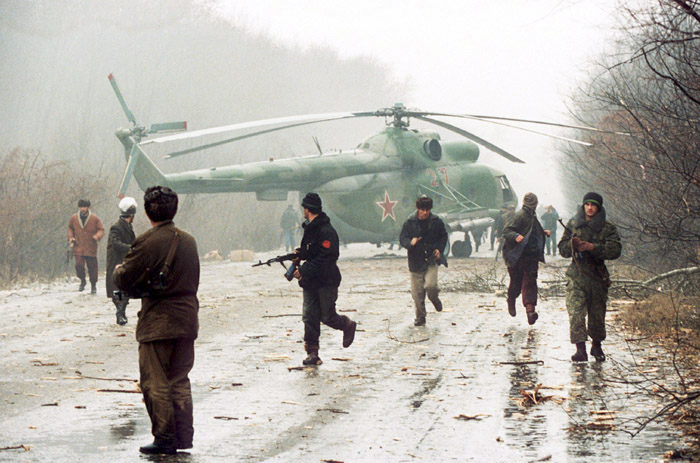

What happened on October 4, 1993?
The recorded event date is October 4, 1993.
Key figures included Boris Yeltsin, Ruslan Khasbulatov, Alexander Rutskoy.
Official Russian government statistics provide specific figures for the conflict's human cost, recording 147 deaths and 437 wounded.