July 12 in History

52 events 70 – 2026

July 12 spans 52 recorded events across recorded history, from 70 to 2026. Below is a curated digest of the most significant moments tied to this date.

By · Wikipedia

1960 — Orlyonok, the main Young Pioneer camp of the Russian SFSR, is founded

More major events on July 12

The featured story and these ranked highlights form a quick summary. Every recorded event remains available in the chronology below.

  1. 1943 World War II: Battle of Kursk: German and Soviet forces engage in the Battle of Prokhorovka, one of the largest armored engagements of all time. Source
  2. 2001 Space Shuttle program: Space Shuttle Atlantis is launched on mission STS-104, carrying the Quest Joint Airlock to the International Space Station. Source
  3. 1975 São Tomé and Príncipe declare independence from Portugal. Source

Did you know

In 1960, Orlyonok, the main Young Pioneer camp of the Russian SFSR, is founded. This featured entry focuses on the immediate decision and its direct historical impact.

Did you know

Young Pioneer camp was the name for the vacation or summer camps of Young Pioneers. This helps explain why the event mattered beyond the initial announcement.

Did you know

In the 20th century these camps existed in many socialist countries, particularly in the Soviet Union. This clarifies the institutional and public response around the event.

Did you know

In 1960, Orlyonok, the main Young Pioneer camp of the Russian SFSR, is founded had consequences that extended beyond the first headline. The key context is the institutions involved, the policy shift, and how the public response evolved afterward.

Did you know

In 1960, Orlyonok, the main Young Pioneer camp of the Russian SFSR, is founded had consequences that extended beyond the first headline. The key context is the institutions involved, the policy shift, and how the public response evolved afterward.


The armies of Titus attack the walls of Jerusalem after a six-month siege.
Three days later they breach the walls, which enables the army to destroy the Second Temple.
AD 70 (LXX) was a common year starting on Monday of the Julian calendar. At the time, it was known as the Year of the Consulship of Vespasian and Titus. The denomination AD 70 for this year has been used since the early medieval period, when the Anno Domini calendar era became the prevalent method in Europe for naming years.
70
Pope_Felix_IV
Election of Pope Felix IV following the death of Pope John I earlier that year.
Head of the Catholic Church from 526 to 530
Pope Felix IV was the bishop of Rome from 12 July 526 to his death on 22 September 530. He was the chosen candidate of Ostrogoth King Theodoric the Great, who had imprisoned Felix's predecessor, John I.
526
Leo_V_the_Armenian
Leo V the Armenian is crowned as Byzantine Emperor after he successfully forced previous emperor Michael I Rangabe to abdicate the previous day.
Byzantine emperor from 813 to 820
Leo V the Armenian was the Byzantine emperor from 813 to 820. He is chiefly remembered for ending the decade-long war with the Bulgars, as well as initiating the second period of Byzantine iconoclasm.
813
King Constantine II of Scotland, King Hywel Dda of Deheubarth, Ealdred of Bamburgh and King Owain of the Cumbrians accept the overlordship of King Æthelstan of England, leading to seven years of peace in the north.
King of Alba from 900 to 943
Causantín mac Áeda was an early King of Scotland, known then by the Gaelic name Alba. The Kingdom of Alba, a name which first appears in Constantine's lifetime, was situated in what is now Northern Scotland.
927
Third_Crusade
Third Crusade: Saladin's garrison surrenders to Philip Augustus, ending the two-year siege of Acre.
1189–1192 attempted re-conquest of the Holy Land
The Third Crusade (1189–1192) was an attempt led by King Philip II of France, King Richard I of England, and Emperor Frederick Barbarossa to reconquer the Holy Land following the capture of Jerusalem by the Ayyubid sultan Saladin in 1187. For this reason, the Third Crusade is also known as the Kings' Crusade.
1191
Pope_Benedict_XII
Pope Benedict XII issues the papal bull Fulgens sicut stella matutina to reform the Cistercian Order.
Head of the Catholic Church from 1334 to 1342
Pope Benedict XII, born Jacques Fournier, was a cardinal and inquisitor, and later, head of the Catholic Church from 30 December 1334 to his death, in April 1342. He was the third Avignon pope and reformed monastic orders and opposed nepotism. Unable to remove his capital to Rome or Bologna, Benedict started the great palace at Avignon. He settled the beatific vision controversy of Pope John XXII with the bull Benedictus Deus, which stated that souls may attain the "fullness of the beatific vision" before the Last Judgment. Despite many diplomatic attempts with Emperor Louis IV to resolve their differences, Benedict failed to bring the Holy Roman Empire back under papal dominance. He died 25 April 1342 and was buried in Avignon.
1335
Jack_Cade's_Rebellion
Although he had been previously pardoned, Jack Cade is killed while fleeing, bringing an end to Jack Cade's Rebellion.
Popular revolt in England, 1450
Jack Cade's Rebellion or Cade's Rebellion was a popular revolt in 1450 against the government of England, which took place in the south-east of the country between the months of April and July. It stemmed from local grievances regarding the corruption, maladministration and abuse of power of the king's closest advisors and local officials, as well as recent military losses in France during the Hundred Years' War. Leading an army of men from south-eastern England, the rebellion's leader Jack Cade marched on London in order to force the government to reform the administration and remove from power the "traitors" deemed responsible for bad governance. Apart from the Cornish rebellion of 1497, it was the largest popular uprising to take place in England during the 15th century.
1450
Ottoman_Empire
The Ottomans capture Euboea.
Turkish Empire (c. 1299–1922)
The Ottoman Empire, historically also known as the Turkish Empire or Turkey, was a state that spanned much of Southeastern Europe, West Asia, and North Africa from the 14th century to the early 20th century, centred in modern-day Turkey. It also controlled parts of southeastern Central Europe between the early 16th and early 18th centuries.
1470
Joseon
Joseon Dynasty official Choe Bu returns to Korea after months of shipwrecked travel in China.
1392–1897 Korean dynasty
Joseon, officially Great Joseon State, was a dynastic kingdom of Korea that existed for 505 years. It was founded by Taejo of Joseon in 1392 and replaced by the Korean Empire in 1897. The kingdom was founded after the overthrow of Goryeo in what is today the city of Kaesong. In 1393, Korea was retitled and the capital was moved to modern-day Seoul. The kingdom's northernmost borders were expanded to the natural boundaries at the rivers of Amnok and Tuman through the subjugation of the Jurchens.
1488
Hartmann_Schedel
Hartmann Schedel's Nuremberg Chronicle, one of the best-documented early printed books, is published.
German historian, cartographer, physician and humanist (1440–1514)
Hartmann Schedel was a German historian, physician, humanist, and one of the first cartographers to use the printing press. He was born and died in Nuremberg. Matheolus Perusinus served as his tutor.
1493
Lê Cung Hoàng cedes the throne to Mạc Đăng Dung, ending the Lê dynasty and starting the Mạc dynasty.
Emperor of Đại Việt
Lê Cung Hoàng, born Lê Xuân, was the last emperor of the Later Lê dynasty of Vietnam and reigned from 1522 to 1527.
1527
Henry_VIII
King Henry VIII of England marries his sixth and last wife, Catherine Parr, at Hampton Court Palace.
King of England from 1509 to 1547
Henry VIII was King of England and Ireland from 22 April 1509 until his death in 1547.
1543
Diego_de_Landa
Fray Diego de Landa, acting Bishop of Yucatán, burns the sacred idols and books of the Maya.
Spanish Catholic bishop in colonial Mexico (1524–1579)
Diego de Landa Calderón, O.F.M. was a Spanish Franciscan bishop of the Roman Catholic Archdiocese of Yucatán. He led a campaign against idolatry and human sacrifice. In doing so, he burned Maya manuscripts (codices) which contained knowledge of Maya religion and civilization, and the history of the American continent. Ironically, however, his work in documenting and researching the Maya was indispensable in achieving the current understanding of their culture, to the degree that Mayanist William Gates asserted that "ninety-nine percent of what we today know of the Mayas, we know as the result either of what Landa has told us in the pages that follow, or have learned in the use and study of what he told". Gates also noted that "it is an equally safe statement that... he burned ninety-nine times as much knowledge of Maya history and sciences as he has given us".
1562
Mughal_Empire
Mughal Empire annexes Bengal after defeating the Bengal Sultanate at the Battle of Rajmahal.
1526–1857 empire in South Asia
The Mughal Empire was an early modern empire in South Asia. At its peak, the empire stretched from the outer fringes of the Indus River Basin in the west, northern Afghanistan in the northwest, and Kashmir in the north, to the highlands of present-day Assam and Bangladesh in the east, and the uplands of the Deccan Plateau in South India.
1576
Ostrog_Bible
The Ostrog Bible, one of the early printed Bibles in a Slavic language, is published.
1581 printed Church Slavonic translation of the Bible
The Ostrog Bible was the first complete printed edition of the Bible in Church Slavonic, published in Ostrog in the Polish–Lithuanian Commonwealth by the printer Ivan Fyodorov in 1581 with the patronage of Konstanty Wasyl Ostrogski. It was based mainly on Gennady's Bible and was the primary source for the Moscow Bible published in 1663 under Alexis of Russia.
1580
Battle_of_Aughrim
Battle of Aughrim (Julian calendar): The decisive victory of William III of England's forces in Ireland.
1691 battle of the Williamite War in Ireland
The Battle of Aughrim was the decisive battle of the Williamite War in Ireland. It was fought between the largely Irish Jacobite army loyal to James II and the forces of William III on 12 July 1691, near the village of Aughrim, County Galway.
1691
James_Cook
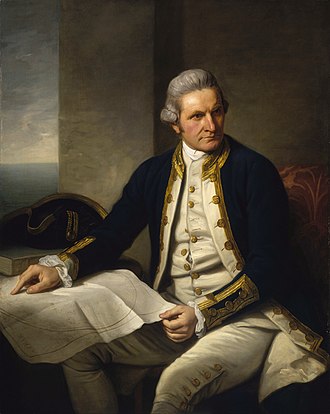
Captain James Cook begins his third voyage.
British explorer and naval officer (1728–1779)
Captain James Cook was a British Royal Navy officer, explorer, and cartographer who led three voyages of exploration to the Pacific and Southern Oceans between 1768 and 1779. He completed the first recorded circumnavigation of the main islands of New Zealand, and led the first recorded visit by Europeans to the east coast of Australia and the Hawaiian Islands.
1776
Jacques_Necker
In response to the dismissal of the French finance minister Jacques Necker, the radical journalist Camille Desmoulins gives a speech which results in the storming of the Bastille two days later.
French statesman (1732–1804)
Jacques Necker was a Genevan banker, financier and statesman who served as finance minister of France for Louis XVI. He was a reformer, but his innovations sometimes caused great discontent. Necker was a constitutional monarchist, a political economist, and a moralist, who wrote a severe critique of the new principle of equality before the law.
1789
Civil_Constitution_of_the_Clergy
The Civil Constitution of the Clergy is passed in France by the National Constituent Assembly.
1790 French law
The Civil Constitution of the Clergy was a law passed on 12 July 1790 during the French Revolution, that sought the complete control over the Catholic Church in France by the French government. As a result, a schism was created, resulting in an illegal and underground French Catholic Church loyal to the Papacy, and a "constitutional church" that was subservient to the State. The schism was not fully resolved until 1801. King Louis XVI ultimately granted Royal Assent to the measure after originally opposing it, but later expressed regret for having done so.
1790
Ranjit_Singh
Ranjit Singh conquers Lahore and becomes Maharaja of the Punjab (Sikh Empire).
Sikh Maharaja, 1801–1839
Ranjit Singh was the founder and the first maharaja of the Sikh Empire, ruling from 1801 until his death in 1839.
1799
Second_Battle_of_Algeciras
British ships inflict heavy damage on Spanish and French ships in the Second Battle of Algeciras.
1801 battle of the Algeciras campaign
The Second Battle of Algeciras was fought on 12 July 1801 between a Royal Navy squadron and a larger Spanish and French squadron in the Gut of Gibraltar during the Algeciras campaign of the war of the Second Coalition. The battle followed the First Battle of Algeciras on 6 July, in which a French squadron anchored at the Spanish port of Algeciras was attacked by a larger British squadron based at nearby Gibraltar. In a heavy engagement fought in calm weather in the close confines of Algeciras Bay, the British force had been becalmed and battered, suffering heavy casualties and losing the 74-gun ship HMS Hannibal. Retiring for repairs, both sides called up reinforcements, the French receiving support first, from the Spanish fleet based at Cádiz, which sent six ships of the line to escort the French squadron to safety.
1801
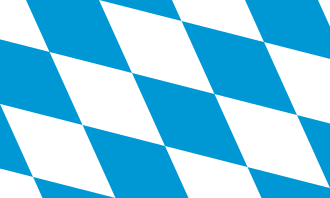
Bavaria
At the insistence of Napoleon, Bavaria, Baden, Württemberg and thirteen minor principalities leave the Holy Roman Empire and form the Confederation of the Rhine.
State in Germany
Bavaria, officially the Free State of Bavaria, is a landlocked state of Germany. It borders the states of Baden-Württemberg to the west, Hesse to the north-west, and Thuringia and Saxony to the north, as well as the countries of Switzerland and Austria to the south and the Czech Republic to the east. The state's capital and largest city is Munich; other major cities include Nuremberg, Augsburg, Regensburg, and Ingolstadt. With an area of 70,550 square kilometres, it is the largest German state, and with 13.08 million inhabitants, the second-most populous.
1806
The American Army of the Northwest briefly occupies the Upper Canadian settlement at what is now at Windsor, Ontario.
U.S. Army formation during the War of 1812
The Army of the Northwest was a United States Army formation formed at the outset of the War of 1812 and charged with taking control of the state of Ohio, the Indiana Territory, Michigan Territory and Illinois Territory. The army suffered initial defeats at Detroit and the Battle of Frenchtown, but was ultimately victorious in its objective of securing the Northwest and defeating Tecumseh. William Henry Harrison's successful campaigns while leading the Army of the Northwest are crediting with propelling him to national prominence.
1812
A riot occurs in Woodstock, New Brunswick, between Catholics and members of the Orange Order that results in up to ten deaths.
1847 civil disturbance in Woodstock, New Brunswick
On July 12, 1847, a riot occurred in Woodstock, New Brunswick, between Catholics and Protestant members of the Orange Order. The violence resulted in the deaths of up to ten individuals and has been described by Canadian journalist Dan Soucoup as "one of New Brunswick's worst ethnic confrontations".
1847
Medal_of_Honor
The Medal of Honor is authorized by the United States Congress.
Highest award in the United States Armed Forces
The Medal of Honor (MOH) is the highest military decoration of the United States Armed Forces and is awarded to recognize American soldiers, sailors, marines, airmen, guardians, and coast guardsmen who have distinguished themselves by acts of valor. The medal is normally awarded by the president of the United States and is presented "in the name of Congress." According to the Congressional Medal of Honor Society, Congressional Medal of Honor (CMOH) "is sometimes mistakenly used because the Medal was created by Congress," though the official name of the award is simply "Medal of Honor."
1862
Kingdom_of_Serbia
Serbian forces begin their siege of the Bulgarian city of Vidin; the siege is later called off when the war ends.
Country in Southeast Europe (1882–1918)
The Kingdom of Serbia was a country located in Southeastern Europe which was created when the ruler of the Principality of Serbia, Milan I, was proclaimed king in 1882.
1913
Second_Revolution_(Republic_of_China)
The Second Revolution breaks out against the Beiyang government, as Li Liejun proclaims Jiangxi independent from the Republic of China.
1913 revolt in southern China
The Second Revolution was a failed 1913 revolt by the governors of several southern Chinese provinces and supporters of Sun Yat-sen's Kuomintang (KMT) against the Beiyang government of the Republic of China, led by Yuan Shikai. It was quickly defeated by Yuan's armies and led to the continued consolidation of Yuan's powers as President of the Republic of China.
1913
Bisbee_Deportation
The Bisbee Deportation occurs as vigilantes kidnap and deport nearly 1,300 striking miners and others from Bisbee, Arizona.
1917 illegal deportation of miners attempting unionization in Arizona, United States
The Bisbee Deportation was the illegal kidnapping and deportation of about 1,300 striking mine workers, their supporters, and citizen bystanders by 2,000 members of a deputized posse, who arrested them beginning on July 12, 1917, in Bisbee, Arizona. The action was orchestrated by Phelps Dodge, the major mining company in the area, which provided lists of workers and others who were to be arrested to the Cochise County sheriff, Harry C. Wheeler. Those arrested were taken to a local baseball park before being loaded onto cattle cars and deported 200 miles (320 km) to Tres Hermanas in New Mexico.
1917
Imperial_Japanese_Navy
The Imperial Japanese Navy battleship Kawachi blows up at Shunan, western Honshu, Japan, killing at least 621.
Navy of Japan between 1868 and 1945
The Imperial Japanese Navy (IJN) was the navy of the Empire of Japan from 1868 to 1945, when it was dissolved following Japan's surrender in World War II. The Japan Maritime Self-Defense Force (JMSDF) was formed between 1952 and 1954 after the dissolution of the IJN.
1918
Soviet–Lithuanian_Peace_Treaty
The Soviet–Lithuanian Peace Treaty is signed, by which Soviet Russia recognizes the independence of Lithuania.
Signed between Lithuania and Soviet Russia on 12 July 1920
The Soviet–Lithuanian Peace Treaty, also known as the Moscow Peace Treaty, was signed between Lithuania and Soviet Russia on July 12, 1920. In exchange for Lithuania's neutrality and permission to move its troops in the territory that was recognised during its war against Poland, Soviet Russia recognized the sovereignty of Lithuania. The treaty was a major milestone in Lithuania's struggle for international recognition and recognised Lithuania's eastern borders. Interwar Lithuania officially maintained that its de jure borders were those delineated by the treaty although a large territory, the Vilnius Region, was actually controlled by Poland.
1920
World_War_II
World War II: Battle of Kursk: German and Soviet forces engage in the Battle of Prokhorovka, one of the largest armored engagements of all time.
Global conflict (1939–1945)
World War II, or the Second World War, was a global conflict between two coalitions: the Allies and the Axis powers. Nearly all of the world's countries participated, with many engaging in total war on an unprecedented scale. World War II was the deadliest conflict in history, causing the deaths of 60 to 75 million people, a majority of whom were civilians. Millions died as a result of massacres, starvation, disease, and genocides including the Holocaust. After the Allied victory, Germany, Austria, Japan, and Korea were occupied, and German and Japanese leaders were tried for war crimes.
1943
David_Ben-Gurion
Israeli Prime Minister David Ben-Gurion orders the expulsion of Palestinians from the towns of Lod and Ramla.
Prime Minister of Israel (1948–1953; 1955–1963)
David Ben-Gurion was the primary national founder and first prime minister of the State of Israel. As head of the Jewish Agency from 1935, and later president of the Jewish Agency Executive, he was the de facto leader of the Jewish community in Palestine, and largely led the movement for an independent Jewish state in Mandatory Palestine.
1948
India
Indian city Pune floods due to failure of the Khadakwasla and Panshet dams, killing at least two thousand people.
Country in South Asia
India, officially the Republic of India, is a country in South Asia. It is the world's seventh-largest country by area and the largest by population. Bounded by the Indian Ocean on the south, the Arabian Sea on the southwest, and the Bay of Bengal on the southeast, it shares land borders with Pakistan to the west; China, Nepal and Bhutan to the north; and Bangladesh and Myanmar to the east. In the Indian Ocean, India is near Sri Lanka and the Maldives.
1961
ČSA_Flight_511_(July_1961)
ČSA Flight 511 crashes at Casablanca–Anfa Airport in Morocco, killing 72.
Fatal aviation accident
ČSA Flight 511 was a flight operated by an Ilyushin Il-18 that crashed near Casablanca-Anfa Airport in Morocco on July 12, 1961. All 72 people on board were killed. The cause of the crash remains undetermined.
1961
Gorton
Pauline Reade, 16, disappears in Gorton, England, the first victim in the Moors murders.
Area of Manchester, England
Gorton is an area of Manchester, in Greater Manchester, England; it lies to the south-east of the city centre. The population at the 2011 census was 36,055. Neighbouring areas include Levenshulme, Openshaw and Denton. Gorton Monastery, a 19th-century High Victorian Gothic former Franciscan friary is a major landmark.
1963
1967_Newark_riots
Riots begin in Newark, New Jersey.
Armed conflicts in Newark, New Jersey, United States
The 1967 Newark riots involved violent, armed conflict in the streets of Newark, New Jersey. Taking place over a four-day period, the Newark riots resulted in at least 26 deaths and hundreds more serious injuries. Serious property damage, including shattered storefronts and fires caused by arson, left many of the city's buildings damaged or destroyed. At the height of the conflict, the National Guard was called upon to occupy the city with tanks and other military equipment, leading to iconic media depictions that were considered particularly shocking when shared in the national press. In the aftermath of the riots, Newark was quite rapidly abandoned by many of its remaining middle-class and affluent residents, as well as much of its white working-class population. The large amount of violence led to accelerated flight, followed by a decades-long period of disinvestment and urban blight, including soaring crime rates and gang activity.
1967
Australian_Aboriginal_flag
The Australian Aboriginal flag is flown for the first time.
Official flag representing Aboriginal Australians
The Australian Aboriginal flag is an official flag of Australia that represents Aboriginal Australians. It was granted official status in 1995 under the Flags Act 1953, together with the Torres Strait Islander flag, in order to advance reconciliation and in recognition of the importance and acceptance of the flag by the Australian community. The two flags are often flown together with the Australian national flag.
1971
National_Personnel_Records_Center_fire
A fire destroys the entire sixth floor of the National Personnel Records Center of the United States.
1973 fire in Missouri, United States
The National Personnel Records Center fire of 1973, also known as the 1973 National Archives fire, was a fire that occurred at the Military Personnel Records Center (MPRC) in the St. Louis suburb of Overland, Missouri, from July 12 to 16, 1973.
1973
São_Tomé_and_Príncipe
São Tomé and Príncipe declare independence from Portugal.
Island country in Central Africa
São Tomé and Príncipe, officially the Democratic Republic of Sao Tome and Principe, is an island country in the Gulf of Guinea, off the western equatorial coast of Central Africa. It consists of two archipelagos around the two main islands of São Tomé and Príncipe, about 81 nautical miles apart and about 135 and 121 nautical miles off the northwestern coast of Gabon. With a population of 201,800, São Tomé and Príncipe is the second-smallest and second-least populous African sovereign state after Seychelles.
1975
Kiribati
The island nation of Kiribati becomes independent from the United Kingdom.
Island country in the central Pacific
Kiribati, officially the Republic of Kiribati, is an archipelagic country spanning the Micronesia and Polynesia sub-regions of Oceania in the central Pacific Ocean. The state comprises 32 atolls and other islands and one remote raised coral island, Banaba. Its total land area is 811 km2 (313 sq mi) dispersed over 3,441,810 km2 (1,328,890 sq mi) of ocean. The spread of the country's islands, from Banaba in the west to Kiritimati in the east straddles the equator and the 180th meridian. The International Date Line goes around Kiribati and swings far to the east, almost reaching 150°W. This brings Kiribati's easternmost islands, the southern Line Islands south of Hawaii, into the same day as the Gilbert Islands and places them in the most advanced time zone on Earth: UTC+14.
1979
Seismology
Chinese seismologists successfully predict the 1995 Myanmar–China earthquake, reducing the number of casualties to 11.
Scientific study of earthquakes and propagation of elastic waves through a planet
Seismology is the scientific study of earthquakes and the generation and propagation of elastic waves through planetary bodies. It also includes studies of the environmental effects of earthquakes such as tsunamis; other seismic sources such as volcanoes, plate tectonics, glaciers, rivers, oceanic microseisms, and the atmosphere; and artificial processes such as explosions.
1995
Ulster_Volunteer_Force
The Ulster Volunteer Force attack a house in Ballymoney, County Antrim, Northern Ireland with a petrol bomb, killing the Quinn brothers.
Ulster loyalist paramilitary group
The Ulster Volunteer Force (UVF) is an Ulster loyalist paramilitary group based in Northern Ireland. Formed in 1965, it first emerged in 1966. Its first leader was Gusty Spence, a former British Army soldier from Northern Ireland. The group undertook an armed campaign of almost thirty years during The Troubles. It declared a ceasefire in 1994 and officially ended its campaign in 2007, although some of its members have continued to engage in violence and criminal activities. The group is a proscribed organisation and is on the terrorist organisation list of the United Kingdom.
1998
France_national_football_team
France win their first World Cup title, defeating defending champions Brazil 3–0.
Men's association football team
The France national football team represents France in men's international football. It is overseen by the French Football Federation, the governing body for football in France. It is a member of UEFA in Europe and FIFA in global competitions. The team's colours and imagery reference two national symbols: the Flag of France and Gallic rooster. The team is colloquially known as Les Bleus. They play home matches at the Stade de France in Saint-Denis and train at Centre National du Football in Clairefontaine-en-Yvelines.
1998
Space_Shuttle_program
Space Shuttle program: Space Shuttle Atlantis is launched on mission STS-104, carrying the Quest Joint Airlock to the International Space Station.
1972–2011 United States human spaceflight program
The Space Shuttle program was the fourth human spaceflight program carried out by the U.S. National Aeronautics and Space Administration (NASA), which accomplished routine transportation for Earth-to-orbit crew and cargo from 1981 to 2011. Its official program name was carried over from the 1969 plan for the Space Transportation System (STS) of reusable spacecraft. Only the shuttle and supporting rockets were funded for development; a proposed nuclear lunar shuttle in the plan was canceled in 1972. It flew 135 missions and carried 355 astronauts from 16 countries, many on multiple trips.
2001
2006_Hezbollah_cross-border_raid
A cross-border raid by Hezbollah militants starts the 2006 Lebanon War.
Attack in the 2006 Lebanon War
Hezbollah militants carried out a cross-border raid on an Israeli military patrol on 12 July 2006. Using rockets fired on several Israeli towns as a diversion, Hezbollah militants crossed from Lebanon into Israel and ambushed two Israeli Army vehicles, killing three soldiers and capturing two other soldiers. Another five soldiers were killed inside Lebanese territory in a failed rescue attempt. Hezbollah demanded the release of Lebanese prisoners held by Israel in exchange for the release of the captured soldiers. Israel refused and launched a large-scale ground and air campaign across Lebanon in response to the Hezbollah raid. This marked the start of the 2006 Lebanon War and the end of the 2000–2006 Shebaa Farms conflict. Two years later, on 16 July 2008, the bodies of the two captured soldiers were returned to Israel by Hezbollah in exchange for Samir Kuntar and four Hezbollah prisoners.
2006
United_States_Army
U.S.
Army Apache helicopters engage in airstrikes against armed insurgents in Baghdad, Iraq, where civilians are killed; footage from the cockpit is later leaked to the Internet.
The United States Army is the land service branch of the United States Armed Forces. It is designated as the army of the United States in the United States Constitution. As a part of the United States Department of Defense, it is one of the six armed forces of the United States and one of the eight uniformed services of the United States. Founded in 1784, it succeeded the Continental Army, formed in 1775 during the American Revolutionary War.
2007
Syrian_civil_war
Syrian Civil War: Government forces target the homes of rebels and activists in Tremseh and kill anywhere between 68 and 150 people.
2011–2024 armed conflict in Syria
The Syrian civil war was an armed conflict that began with the Syrian revolution in March 2011, when popular discontent with the Ba'athist regime ruled by Bashar al-Assad triggered large-scale protests and pro-democracy rallies across Syria, as part of the wider Arab Spring. The Assad regime responded to the protests with lethal force, which led to a series of defections, the emergence of armed opposition groups, and the civilian uprising descending into a civil war. The war lasted almost 14 years and culminated in the fall of the Assad regime in December 2024. Many sources regard this as the end of the civil war even though clashes have continued into 2026.
2012
A tank truck explosion kills more than 100 people in Okobie, Nigeria.
This is a list of notable tank truck fires and explosions.
2012
Brétigny-sur-Orge_train_crash
Six people are killed and 200 injured in a French passenger train derailment in Brétigny-sur-Orge.
2013 public transit disaster in Paris, France
On 12 July 2013, a train crash in the commune of Brétigny-sur-Orge in the southern suburbs of Paris left seven people dead and 428 injured when a passenger train carrying 385 people derailed and hit the station platform.
2013
Gazpromavia_Flight_9608
Gazpromavia Flight 9608 crashes in Russia's Kolomensky District near Kolomna, killing three.
2024 aviation accident in Russia
On 12 July 2024, a Sukhoi Superjet 100 operated by Gazpromavia as Gazpromavia Flight 9608 crashed during a ferry flight from Tretyakovo Airport to Vnukovo International Airport. All three crew members, who were the only occupants on board, were killed.
2024
A bar fire kills 33 people in Bangkok, Thailand.
Fire in Bangkok, Thailand
On 12 July 2026, a fire occurred shortly before midnight ICT (UTC+07:00) at the Rong Beer Na Lat Phrao, a beer hall and live-music venue in the Chatuchak district of Bangkok, Thailand. The fire killed 36 people and injured more than 70, of whom 24 were reported to be in critical condition. The fire was the deadliest in Thailand since the 2009 Santika Club fire in Bangkok during New Year celebrations, which killed 67 people.
2026

History runs on facts, and this project runs on coffee!

Your support is incredibly helpful and genuinely appreciated.

Support with a coffee ☕