June 24 in History

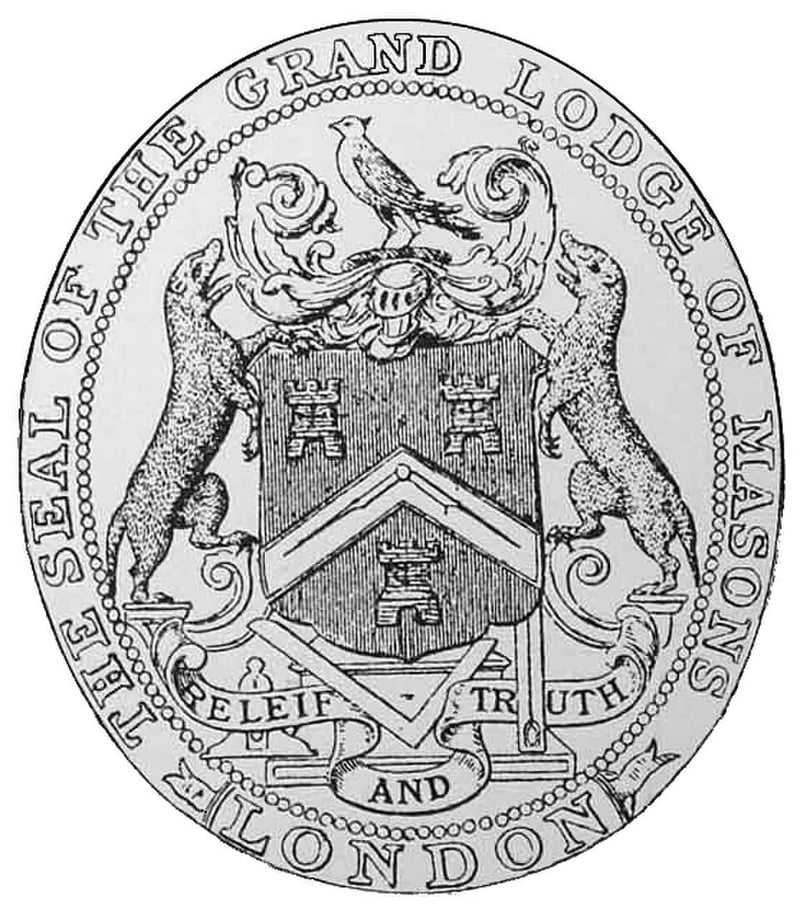
The Premier Grand Lodge of England is founded in London, the first Masonic Grand

1717 — The Premier Grand Lodge of England is founded in London, the first Masonic Grand Lodge in the world (now the United Grand Lodge of England)

June 24 spans 70 recorded events across recorded history, from 1312 BC to 2026. Below is a curated digest of the most significant moments tied to this date.

By · Wikipedia

Historical Events 70 events 1312 BC – 2026

More major events on June 24

The featured story and these ranked highlights form a quick summary. Every recorded event remains available in the chronology below.

  1. 1713 The treaty of Adrianople ends the Russo-Turkish War of 1710–1713, which restores territory to the Ottomans while allowing the Russians to focus on their war against the Swedes. Source
  2. 1954 First Indochina War: Battle of Mang Yang Pass: Viet Minh troops belonging to the 803rd Regiment ambush G.M. 100 of France in An Khê. Source
  3. 1940 World War II: Operation Collar, the first British Commando raid on occupied France, by No 11 Independent Company. Source

Did you know

The Premier Grand Lodge of England was initially concerned with the practice of Freemasonry in London and Westminster.
Did you know

It was later known as the Grand Lodge of England to reflect its broader geographical scope.

Did you know

The Ancient Grand Lodge of England was another prominent Masonic Grand Lodge in England during this period.

Did you know

The Premier Grand Lodge of England existed for nearly a century before uniting with the Ancient Grand Lodge of England in 1813.

Did you know

The resulting union formed the United Grand Lodge of England, which still exists today.


Mursili II launches a campaign against the Kingdom of Azzi-Hayasa.
King of the Hittite Empire from c. 1320–1295 BC
Mursili II was a king of the Hittite Empire c. 1330–1295 BC or 1321–1295 BC.
-1312
Roman emperor Trajan inaugurates the Aqua Traiana, an aqueduct that channels water from Lake Bracciano, 40 kilometres (25 miles) northwest of Rome.
Calendar year
Year 109 (CIX) was a common year starting on Monday of the Julian calendar. At the time, it was known as the Year of the Consulship of Palma and Tullus. The denomination 109 for this year has been used since the early medieval period, when the Anno Domini calendar era became the prevalent method in Europe for naming years.
109
Julius_Nepos
Julius Nepos forces Roman usurper Glycerius to abdicate the throne and proclaims himself Emperor of the Western Roman Empire.
Western Roman emperor from 474 to 480
Julius Nepos, or simply Nepos, ruled as Roman emperor of the West from 24 June 474 to 28 August 475. After losing power in Italy, Nepos retreated to his home province of Dalmatia, from which he continued to claim the western imperial title, with recognition from the Eastern Roman Empire, until he was murdered in 480. Though Nepos's successor in Italy, Romulus Augustulus, is traditionally deemed the last western Roman emperor, Nepos is regarded by current historians as the true last emperor of the west, being the last widely recognised holder of the position.
474
The Battle of Moira is fought between the High King of Ireland and the Kings of Ulster and Dál Riata.
It is claimed to be the largest battle in the history of Ireland.
The Battle of Moira, also known as the Battle of Magh Rath, was fought in the summer of AD 637 by the High King of Ireland, Domnall II, against his foster son Congal Cáech, King of Ulaid, supported by his ally Domnall Brecc, King of Dál Riata. The battle resulted in a decisive victory for the High King and his army, and Congal Cáech was killed in the fighting.
637
Vikings_in_Brittany
The Vikings sack the French city of Nantes.
Viking occupation of Brittany (c. 800s–1000s)
Vikings were active in Brittany during the Middle Ages, even occupying a portion of it for a time. Throughout the 9th century, the Bretons faced threats from various flanks: they resisted full incorporation into the Frankish Carolingian Empire yet they also had to repel an emerging threat of the new duchy of Normandy on their eastern border by these Scandinavian colonists.
843
Battle_of_Cedynia
Battle of Cedynia, the first documented victory of Polish forces, takes place.
972 battle between Mieszko I of Poland and Odo I of Lusatia
The Battle of Cedynia was fought on 24 June 972 near the Oder river, when an army led by Mieszko I of Poland defeated the forces of the Saxon margrave Hodo. Whether the battle actually took place near the modern-day town of Cedynia is disputed in modern scholarship.
972
Battle_of_São_Mamede
Battle of São Mamede, near Guimarães: Forces led by Afonso I defeat forces led by his mother Teresa of León and her lover Fernando Pérez de Traba.
1128 battle establishing Afonso Henriques' control of the County of Portugal
The Battle of São Mamede took place on 24 June 1128 near Guimarães and is considered a seminal event in the process that led to the foundation of Portugal as an independent kingdom and country.
1128
Siege_of_Jaén_(1230)
The Siege of Jaén begins, in the context of the Spanish Reconquista.
Battle of the Spanish Reconquista
The siege of Jaén was one of many sieges on that city during the Spanish Reconquista. The siege was carried out from 24 June through September, 1230 by forces of the Kingdom of Castile commanded by Ferdinand III of Castile against the defending Taifa of Jayyān (جيان). The battle resulted in a Jayyānese victory after the Castilian withdrawal and abandonment of the siege immediately following the death of King Alfonso IX of León.
1230
First_War_of_Scottish_Independence
First War of Scottish Independence: The Battle of Bannockburn concludes with a decisive victory by Scottish forces led by Robert the Bruce.
1296–1328 war between England and Scotland
The First War of Scottish Independence was the first of a series of different wars between the Kingdom of England and the Kingdom of Scotland. It lasted from the English invasion of Scotland in 1296 until the de jure restoration of Scottish independence with the Treaty of Edinburgh–Northampton in 1328. De facto independence was established in 1314 AD following an English defeat at the Battle of Bannockburn. The wars were caused by the attempts of the English kings to seize territory by claiming sovereignty over Scotland, while the Scots fought to keep both English rule and authority out of Scotland.
1314
Hundred_Years'_War
Hundred Years' War: Battle of Sluys: The French fleet is almost completely destroyed by the English fleet commanded personally by King Edward III.
Medieval Anglo-French conflicts, 1337–1453
The Hundred Years' War was a conflict between the kingdoms of England and France and a civil war in France during the late Middle Ages. It emerged from feudal disputes over the Duchy of Aquitaine and was triggered by a claim to the French throne made by Edward III of England. The war grew into a broader military, economic, and political struggle involving factions from across Western Europe, fuelled by emerging nationalism on both sides. The periodisation of the war typically charts it as taking place over 116 years. However, it was an intermittent conflict which was frequently interrupted by external factors, such as the Black Death, and several years of truces.
1340
Dancing_mania
A sudden outbreak of St.
John's Dance causes people in the streets of Aachen, Germany, to experience hallucinations and begin to jump and twitch uncontrollably until they collapse from exhaustion.
Dancing mania was a phenomenon which occurred primarily in mainland Europe between the 14th and 17th centuries. It involved groups of people dancing erratically, sometimes thousands at a time. The mania affected adults and children who danced until, allegedly, they collapsed from exhaustion and injuries, and sometimes died. One of the first major outbreaks was in Aachen, in the Holy Roman Empire, in 1374, and it quickly spread throughout Europe; one particularly notable outbreak occurred in Strasbourg in 1518 in Alsace, also in the Holy Roman Empire.
1374
John_Cabot
John Cabot lands in North America at Newfoundland leading the first European exploration of the region since the Vikings.
Italian navigator and explorer (c. 1450 – c. 1500)
John Cabot was an Italian navigator and explorer. His 1497 voyage to the coast of North America under the commission of Henry VII, King of England is the earliest known European exploration of coastal North America since the Norse visits to Vinland in the eleventh century. To mark the celebration of the 500th anniversary of Cabot's expedition, both the Canadian and British governments declared Cape Bonavista, Newfoundland as representing Cabot's first landing site. However, alternative locations have also been proposed.
1497
Henry_VIII
Henry VIII and Catherine of Aragon are crowned King and Queen of England.
King of England from 1509 to 1547
Henry VIII was King of England and Ireland from 22 April 1509 until his death in 1547.
1509
Field_of_the_Cloth_of_Gold
The Field of the Cloth of Gold, a summit meeting between Henry VIII of England and Francis I of France, ends.
1520 Anglo-French meeting in Calais, France
The Field of the Cloth of Gold was a summit meeting between King Henry VIII of England and King Francis I of France from 7 to 24 June 1520. Held at Balinghem, between Ardres in France and Guînes in the English Pale of Calais, it was an opulent display of wealth by both kings.
1520
The Anabaptist state of Münster is conquered and disbanded.
Christian movement
Anabaptism is a Christian movement which traces its origins to the Radical Reformation in the 16th century. Anabaptists believe that baptism is valid only when candidates freely confess their faith in Christ and request to be baptized. This stance, commonly referred to as believer's baptism, is opposed to the baptism of infants, who are not able to make a conscious decision to be baptized.
1535
Henry_VIII
English King Henry VIII commands his fourth wife, Anne of Cleves, to leave the court.
King of England from 1509 to 1547
Henry VIII was King of England and Ireland from 22 April 1509 until his death in 1547.
1540
Miguel_López_de_Legazpi
Miguel López de Legazpi conquers Manila for Spain, modern day capital of the Philippines.
Spanish conquistador, navigator, and colonial administrator (1502–1572)
Don Miguel López de Legazpi, also known as El Adelantado and El Viejo, was a Spanish conquistador who financed and led an expedition to conquer the Philippine islands in the mid-16th century. He was joined by Guido de Lavezares, relative Martin de Goiti, friar Andrés de Urdaneta, and his grandsons Juan and Felipe de Salcedo, in the expedition. Legazpi established the first Spanish settlement in the East Indies after his expedition crossed the Pacific Ocean, arriving in Cebu in 1565.
1571
Geertruidenberg
The Dutch city of Geertruidenberg held by the Spanish, capitulates to a besieging Dutch and English army led by Maurice of Nassau.
City and Municipality in North Brabant, Netherlands
Geertruidenberg is a city and municipality in the province North Brabant in the south of the Netherlands. The city, named after Saint Gertrude of Nivelles, received city rights in 1213 from the count of Holland. The fortified city prospered until the 15th century.
1593
Samuel_de_Champlain
Samuel de Champlain encounters the mouth of the Saint John River, site of Reversing Falls and the present-day city of Saint John, New Brunswick, Canada.
French explorer of North America (1574–1635)
Samuel de Champlain was a French explorer, navigator, cartographer, soldier, geographer, diplomat, and chronicler who founded Quebec City and established New France as a permanent French colony in North America.
1604
Battle_of_Macau
Battle of Macau: The Dutch make a failed attempt to capture Macau.
1622 battle of the Dutch-Portuguese War
The Battle of Macau in 1622 was a conflict of the Dutch–Portuguese War fought in the Portuguese settlement of Macau, in southeastern China. The Portuguese, outnumbered and without adequate fortification, managed to repel the Dutch in a much-celebrated victory on 24 June after a three-day battle. The battle is the only major engagement that was fought primarily between two European powers on the Chinese mainland.
1622
Évora
The Spanish garrison of Évora capitulates, following the Portuguese victory at the Battle of Ameixial.
UNESCO World Heritage Site
Évora, officially the Very Noble and Ever Loyal City of Évora, is a city and a municipality in Portugal. It has 53,591 inhabitants (2021), in an area of 1,307.08 square kilometers (504.67 mi2). It is considered the historic capital of the Alentejo region and serves as the seat of the Évora District.
1663
The treaty of Adrianople ends the Russo-Turkish War of 1710–1713, which restores territory to the Ottomans while allowing the Russians to focus on their war against the Swedes.
1713 treaty between Russia and the Ottomans
The Treaty of Adrianople, also called the Treaty of Edirne, was signed on 24 June 1713 between the Ottoman Empire and the Tsardom of Russia and confirmed the Treaty of the Pruth of 1711, which had ended the Pruth River Campaign (1710–1711).
1713
Nativity_of_John_the_Baptist
On the Feast of St.
John the Baptist, Bach leads the first performance of his Christ unser Herr zum Jordan kam, BWV 7, the third cantata of his chorale cantata cycle.
The Nativity of John the Baptist (or Birth of John the Baptist, or Nativity of the Forerunner, or colloquially Johnmas or St. John's Day is a Christian feast day. It is observed annually on 24 June. The Nativity of John the Baptist is a high-ranking liturgical feast, kept in the Catholic Church, Eastern Orthodox Church, Anglicanism, and Lutheranism. The sole biblical account of the birth of John the Baptist comes from the Gospel of Luke.
1724
Battle_of_Wilhelmsthal
Battle of Wilhelmsthal: The British-Hanoverian army of Ferdinand of Brunswick defeats French forces in Westphalia.
1762 battle of the Seven Years' War
The Battle of Wilhelmsthal was fought on 24 June 1762 during the Seven Years' War between the allied forces of Britain, Prussia, Hanover, Brunswick and Hesse under the command of the Duke of Brunswick against France. Once again, the French threatened Hanover, so the Allies manoeuvered around the French, surrounded the invasion force, and forced them to retreat. It was the last major action fought by Brunswick's force before the Peace of Paris brought an end to the war.
1762
American_Revolutionary_War
American Revolutionary War: The Great Siege of Gibraltar begins.
1775–1783 conflict in North America
The American Revolutionary War, also known as the Revolutionary War or American War of Independence or simply the American Revolution, was the armed conflict that comprised the final eight years of the broader American Revolution, in which American Patriot forces organized as the Continental Army and commanded by George Washington defeated the British Army. The conflict was fought in North America, the Caribbean, and the Atlantic Ocean. The war's outcome seemed uncertain for most of the war, but Washington and the Continental Army's decisive victory in the Siege of Yorktown in 1781 led King George III and the Kingdom of Great Britain to negotiate an end to the war. In 1783, in the Treaty of Paris, the British monarchy acknowledged the independence of the Thirteen Colonies, leading to the establishment of the United States as an independent and sovereign nation.
1779
French_Constitution_of_1793
The first Republican constitution in France is adopted.
Document of the French Revolution
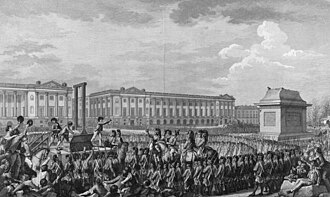
The Constitution of 1793, also known as the Constitution of the Year I or the Montagnard Constitution, was the second constitution ratified for use during the French Revolution under the First Republic. Designed by the Montagnards, principally Maximilien Robespierre and Louis Saint-Just, it was intended to replace the constitutional monarchy of 1791 and the Girondin constitutional project. With sweeping plans for democratization and wealth redistribution, the new document promised a significant departure from the relatively moderate goals of the Revolution in previous years.
1793
Napoleonic_Wars
Napoleonic Wars: Napoleon's Grande Armée crosses the Neman river beginning the invasion of Russia.
1803–1815 series of wars led by Napoleon
The Napoleonic Wars (1803–15) were a global series of conflicts fought by a fluctuating array of European coalitions against the French First Republic (1803–04) under the First Consul followed by the First French Empire (1804–15) under the Emperor of the French, Napoleon. The wars originated in political forces arising from the French Revolution (1789–99) and French Revolutionary Wars (1792–1802) and produced a period of French domination over Continental Europe. The wars are categorised as seven conflicts, five named after the coalitions that fought Napoleon, plus two named for their respective theatres: the War of the Third Coalition, War of the Fourth Coalition, War of the Fifth Coalition, War of the Sixth Coalition, War of the Seventh Coalition, the Peninsular War, and the French invasion of Russia.
1812
Battle_of_Beaver_Dams
Battle of Beaver Dams: A British and Indian combined force defeats the United States Army.
1813 battle of the War of 1812
The Battle of Beaver Dams took place on 24 June 1813, during the War of 1812. A column of troops from the United States Army marched from Fort George and attempted to surprise a British outpost at Beaver Dams, billeting themselves overnight in the village of Queenston, Ontario. Laura Secord, a resident of Queenston, had earlier learned of the American plans from several Americans billeted at her house and had struck out on a long and difficult trek to warn the British at Decou's stone house near present-day Brock University. When the Americans resumed their march, they were ambushed by Kahnawake and other native warriors and eventually surrendered to a small British detachment led by Lieutenant James FitzGibbon. About 500 U.S. troops, including their wounded commander, were taken prisoner.
1813
Battle_of_Carabobo
Battle of Carabobo: Decisive battle in the war of independence of Venezuela from Spain.
1821 battle of the Venezuelan War of Independence
The Battle of Carabobo, on 24 June 1821, was fought between independence fighters, led by Venezuelan General Simón Bolívar, and the Royalist forces, led by Spanish Field Marshal Miguel de la Torre. Bolívar's decisive victory at Carabobo led to the independence of Venezuela and establishment of the Republic of Gran Colombia.
1821
Ibrahim_Pasha_of_Egypt
An Egyptian army under Ibrahim Pascha routs an Ottoman army under Hafiz Pasha in the battle of Nezib.
Egyptian general and Wāli of Egypt and Sudan (1789–1848)
Ibrahim Pasha was an Egyptian general and politician; he was the commander of both the Egyptian and Ottoman armies and the eldest son of Muhammad Ali, the Ottoman Wāli and unrecognized Khedive of Egypt and Sudan. He was the second ruler of Egypt from the Muhammad Ali dynasty and ruled from 20 July 1848 to 10 November 1848.
1839
Battle_of_Solferino
Battle of Solferino (Battle of the Three Sovereigns): Sardinia and France defeat Austria in Solferino, northern Italy.
Battle of the Second Italian War of Independence
The Battle of Solferino on 24 June 1859 was the climactic battle of the Second Italian War of Independence and resulted in the victory of the allied French army under Napoleon III and the Piedmont-Sardinian army under Victor Emmanuel II against the Austrian army under Emperor Franz Joseph I. It was the last major battle in world history in which all the armies were under the personal command of their monarchs. There were approximately 300,000 soldiers on both sides in the most important battle, the largest since the Battle of Leipzig in 1813. The number of soldiers present was about 130,000 Austrian troops and a combined total of 140,000 French and allied Piedmontese troops, but not all were actually involved in the battle. After the battle, the Austrian emperor stopped directly commanding his army.
1859
Austro-Prussian_War
Austro-Prussian War: In the Battle of Custoza an Austrian army defeats the Italian army.
1866 war in Europe
The Austro-Prussian War was fought in 1866 between the Austrian Empire and the Kingdom of Prussia, with each also being aided by various allies within the German Confederation. Prussia had also allied with the Kingdom of Italy, linking this conflict to the Third Independence War of Italian unification. The Austro-Prussian War was part of the wider rivalry between Austria and Prussia, and resulted in Prussian dominance over the German states, having confirmed Prussia's superior military organization and technology compared to Austria at the time.
1866
O_Canada
First performance of O Canada at the Congrès national des Canadiens-Français.
The song would later become the national anthem of Canada.
"O Canada" is the national anthem of Canada. The song was originally commissioned by Lieutenant Governor of Quebec Théodore Robitaille for the 1880 Saint-Jean-Baptiste Day ceremony; Calixa Lavallée composed the music, after which French-language words were written by the poet and judge Sir Adolphe-Basile Routhier.
1880
Assassination_of_Sadi_Carnot
Assassination of the French President, Sadi Carnot by Sante Caserio during the Ère des attentats (1892–1894).
1894 murder of the French President
On 24 June 1894, French President Sadi Carnot was assassinated by Italian anarchist Sante Geronimo Caserio in Lyon, France. A part of the Ère des attentats anarchist terrorist campaign (1892–1894), it led to a historic crackdown on French anarchist activities.
1894
Serbia
Greece and Serbia annul their alliance with Bulgaria.
Country in Southeast and Central Europe
Serbia, officially the Republic of Serbia, is a landlocked country in Southeast and Central Europe. Located in the Balkans, it is bordered by Hungary to the north, Romania to the northeast, Bulgaria to the southeast, North Macedonia to the south, Croatia to the northwest, Bosnia and Herzegovina to the west, and Montenegro to the southwest. Serbia also claims to share a border with Albania through the disputed territory of Kosovo. Serbia has about 6.5 million inhabitants, excluding Kosovo. Belgrade, Serbia's capital, is also its largest city.
1913
Mary_Pickford
Mary Pickford becomes the first female film star to sign a million-dollar contract.
Canadian actress and producer (1892–1979)
Gladys Louise Smith, baptised as Gladys Marie Smith, known professionally as Mary Pickford, was a Canadian American film actress and producer. A pioneer in the American film industry with a Hollywood career spanning five decades, Pickford was one of the most popular actresses of the silent film era. Beginning her film career in 1909, Pickford became Hollywood's first millionaire by 1916, and, at the height of her career, had complete creative control of her films and was one of the most recognizable women in the world. Due to her popularity, unprecedented international fame, and success as an actress and businesswoman, she was known as the "Queen of the Movies". She was a significant figure in the development of film acting and is credited with having defined the ingénue type in cinema, a persona that also earned her the nickname "America's Sweetheart".
1916
Airmail
First airmail service in Canada from Montreal to Toronto.
Service which transports mail by air
Airmail is a mail transport service branded and sold on the basis of at least one leg of its journey being by air. Airmail items typically arrive more quickly than surface mail, and usually cost more to send. Airmail may be the only option for sending mail to some destinations, such as overseas, if the mail cannot wait the time it would take to arrive by ship, sometimes weeks. The Universal Postal Union adopted comprehensive rules for airmail at its 1929 Postal Union Congress in London. Since the official language of the Universal Postal Union is French, airmail items worldwide are often marked Par avion, literally: "by airplane".
1918
National_Football_League
The American Professional Football Association is renamed the National Football League.
Professional American football league
The National Football League (NFL) is a professional American football league in the United States. Composed of 32 teams, it is divided equally between the American Football Conference (AFC) and the National Football Conference (NFC). The NFL is one of the major professional sports leagues in the United States and Canada and the highest professional level of American football in the world. Each NFL season begins annually with a three-week preseason in August, followed by an 18-week regular season, which runs from early September to early January, with each team playing 17 games and having one bye week. Seven teams from each conference, including the four division winners and three wild card teams, then advance to the playoffs, a single-elimination tournament, which culminates in the Super Bowl, played in early February between the winners of the AFC and NFC championship games. The NFL is headquartered in New York City.
1922
Siamese_revolution_of_1932
A bloodless revolution instigated by the People's Party ends the absolute power of King Prajadhipok of Siam (now Thailand).
Revolution in Siam
The Khana Ratsadon staged a coup d'état in Siam on 24 June 1932. It ended Siam's centuries-long absolute monarchy rule under the Chakri dynasty and resulted in a bloodless transition of Siam into a constitutional monarchy, the introduction of democracy and the first constitution, and the creation of the National Assembly. Dissatisfaction caused by economic crisis and incompetent government, as well as the rise of Western-educated non-royals to positions of influence, fueled the revolution.
1932
Plaek_Phibunsongkhram
Siam is renamed Thailand by Plaek Phibunsongkhram, the country's third prime minister.
Prime Minister of Thailand (1938–1944; 1948–1957)
Plaek Phibunsongkhram, commonly known in English language sources as Phibun and as Chomphon Por in Thai, was a Thai military officer and politician who served as the third prime minister of Thailand from 1938 to 1944 and again from 1948 to 1957. He rose to power as a leading member of the Khana Ratsadon, becoming prime minister in 1938 and later consolidating his influence as a military dictator. His regime allied with the Empire of Japan during World War II, and his administration was marked by authoritarian policies and the promotion of Thai nationalism. He was closely involved in both domestic reforms and foreign policy during the war and played a central role in shaping modern Thai state ideology. Phibun's ideology gets described as fascist.
1939
World_War_II
World War II: Operation Collar, the first British Commando raid on occupied France, by No 11 Independent Company.
Global conflict (1939–1945)
World War II, or the Second World War, was a global conflict between two coalitions: the Allies and the Axis powers. Nearly all of the world's countries participated, with many engaging in total war on an unprecedented scale. World War II was the deadliest conflict in history, causing the deaths of 60 to 75 million people, a majority of whom were civilians. Millions died as a result of massacres, starvation, disease, and genocides including the Holocaust. After the Allied victory, Germany, Austria, Japan, and Korea were occupied, and German and Japanese leaders were tried for war crimes.
1940
Bamber_Bridge
US military police attempt to arrest a black soldier in Bamber Bridge, England, sparking the Battle of Bamber Bridge mutiny that leaves one dead and seven wounded.
Village in Lancashire, England
Bamber Bridge is a large village in Lancashire, England, 3 miles (5 km) south-east of Preston, in the borough of South Ribble. The name derives from the Old English "bēam" and "brycg", which probably means "tree-trunk bridge". People who live in Bamber Bridge are often known locally as Briggers.
1943
Victory_Day_parades
The first Victory Day Parade takes place on Red Square in Moscow, Soviet Union, symbolizing the victory of the Soviet Union over Nazi Germany.
Typical military parades
Victory Day parades are military parades that are held on 9 May in some post-Soviet nations, primarily Russia, Kazakhstan, Belarus and Ukraine. They are held to honor the traditional Victory Day holiday, which commemorates the German Instrument of Surrender on 8 May, 1945 and the end of the Second World War in Europe. In 2015, the Ukrainian government renamed the holiday as "Victory Day over Nazism in World War II" as part of decommunization laws and in 2023 moved the holiday to 8 May, renaming it to Day of Remembrance and Victory over Nazism in World War II 1939 – 1945.
1945
Kenneth_Arnold
Kenneth Arnold makes the first widely reported UFO sighting near Mount Rainier, Washington.
American aviator and businessman (1915–1984)
Kenneth Albert Arnold was an American aviator, businessman, and politician.
1947
Cold_War
Cold War: Start of the Berlin Blockade: The Soviet Union makes overland travel between West Germany and West Berlin impossible.
1947–1991 geopolitical rivalry between US and USSR
The Cold War was a period of international geopolitical rivalry between the United States (US) and the Soviet Union (USSR) and their respective allies, the capitalist Western Bloc and communist Eastern Bloc. It began in the aftermath of the Second World War and ended with the dissolution of the Soviet Union in 1991. The term cold war is used because there was no direct fighting between the two superpowers, though each supported opposing sides in regional conflicts known as proxy wars. In addition to the struggle for ideological and economic influence and an arms race in both conventional and nuclear weapons, the Cold War was expressed through technological rivalries such as the Space Race, espionage, propaganda campaigns, embargoes, and sports diplomacy.
1948
Westerns_on_television
The first television western, Hopalong Cassidy, starring William Boyd, is aired on NBC.
Television genre based on the American Old West
Television Westerns are programs with settings in the later half of the 19th century in the American Old West, Western Canada and Mexico during the period from about 1860 to the end of the so-called "Indian Wars". More recent entries in the Western genre have used the neo-Western subgenre, placing events in the modern day, or the space Western subgenre, but still draw inspiration from the outlaw attitudes prevalent in traditional Western productions.
1949
Apartheid
Apartheid: In South Africa, the Group Areas Act is passed, formally segregating races.
South African system of racial segregation
Apartheid was a system of institutionalised racial segregation that existed in South Africa and South West Africa from 1948 to the early 1990s. It was characterised by an authoritarian political culture based on baasskap, which ensured that South Africa was dominated politically, socially, and economically by the nation's minority white population. Under this minoritarian system, white citizens held the highest status, followed by Indians, Coloureds and black Africans, in that order. The economic legacy and social effects of apartheid continue to the present day, particularly inequality.
1950
First_Indochina_War
First Indochina War: Battle of Mang Yang Pass: Viet Minh troops belonging to the 803rd Regiment ambush G.M. 100 of France in An Khê.
1946–1954 French colonial war in Indochina
The First Indochina War, known alternatively internationally as the French Indochina War, was fought in French Indochina between France and the Viet Minh and their respective allies, from 19 December 1946 until 11 August 1954. Most of the engagements of this conflict occurred in Vietnam.
1954
In Roth v.
United States, the U.S. Supreme Court rules that obscenity is not protected by the First Amendment.
Roth v. United States, 354 U.S. 476 (1957), along with its companion case Alberts v. California, was a landmark decision of the Supreme Court of the United States which redefined the constitutional test for determining what constitutes obscene material unprotected by the First Amendment. The Court, in an opinion by Justice William J. Brennan Jr. created a test to determine what constituted obscene material: Whether the average person, applying contemporary community standards, would find that the material appeals to a prurient interest in sex, and whether the material was utterly without redeeming social value. Although the Court upheld Roth’s conviction and allowed some obscenity prosecutions, it drastically loosened obscenity laws. The decision dissatisfied both social conservatives who thought that it had gone too far in tolerating sexual imagery, and liberals who felt that it infringed on the rights of consenting adults.
1957
Venezuela
Venezuelan President Rómulo Betancourt is injured in an assassination attempt.
Country in South America
Venezuela, officially the Bolivarian Republic of Venezuela, is a country on the northern coast of South America, consisting of a continental landmass and various islands and islets in the Caribbean Sea. It comprises an area of 912,050 km2 (352,140 sq mi), with a population estimated at 31.8 million in 2025. The capital and largest urban agglomeration is Caracas. The continental territory is bordered on the north by the Caribbean Sea and the Atlantic Ocean, on the west by Colombia, on the south by Brazil, on the east by Guyana, and on the northeast by Trinidad and Tobago. Venezuela consists of 23 states, the Capital District, and the Federal Dependencies covering Venezuela's offshore islands. Venezuela is among the most urbanized countries in Latin America, with an estimated urbanization rate of 88.4% in 2022. The vast majority of Venezuelans live in urban areas in the north, including in the capital.
1960
Zanzibar
The United Kingdom grants Zanzibar internal self-government.
Semi-autonomous region of Tanzania
Zanzibar is a Tanzanian semi-autonomous region off the coast of East Africa. It is located in the Indian Ocean, and consists of many small islands and two large ones: Unguja Island and Pemba Island. The capital is Zanzibar City, located on the island of Unguja. Its historic centre, Stone Town, is a World Heritage Site.
1963
UpStairs_Lounge_arson_attack
The UpStairs Lounge arson attack takes place at a gay bar located on the second floor of the three-story building at 141 Chartres Street in the French Quarter of New Orleans, Louisiana, US.
Thirty-two people die as a result of fire or smoke inhalation.
The UpStairs Lounge arson attack, sometimes called the UpStairs Lounge Fire, occurred on June 24, 1973, at a gay bar called the UpStairs Lounge located on the 2nd floor of the 3-story building at 604 Iberville Street in New Orleans, Louisiana, in the United States. 32 people died and 15 were injured as a result of fire or smoke inhalation. The official cause is still listed as "undetermined origin". The primary suspect, a gay man with a history of psychiatric impairment named Roger Dale Nunez who had been ejected from the bar earlier in the day, was never charged and died by suicide in November 1974.
1973
Eastern_Air_Lines_Flight_66
Eastern Air Lines Flight 66 encounters severe wind shear and crashes on final approach to New York's JFK Airport killing 113 of the 124 passengers on board, making it the deadliest U.S.
plane crash at the time. This accident led to decades of research into downburst and microburst phenomena and their effects on aircraft.
Eastern Air Lines Flight 66 was a regularly scheduled flight from New Orleans to New York City that crashed on June 24, 1975, when a Boeing 727-225 went on approach to New York's John F. Kennedy International Airport, killing 113 of the 124 people on board. The accident was determined to be caused by wind shear stemming from a microburst, but the failure of the airport and the flight crew to recognize the severe weather hazard was also a contributing factor.
1975
Ahmad_al-Ghashmi
Ahmad al-Ghashmi, the president of the Yemen Arab Republic, is killed when a bomb exploded in a suitcase carried by a South Yemeni envoy.
President of North Yemen from 1977 to 1978
Ahmad bin Hussein al-Ghashmi was a Yemeni military officer who served as the fourth President of the Yemen Arab Republic from 11 October 1977 until his assassination eight months later. Al-Ghashmi had assumed power when his predecessor, Ibrahim al-Hamdi, was likewise assassinated.
1978
Humber_Bridge
The Humber Bridge opens to traffic, connecting Yorkshire and Lincolnshire.
It remained the world's longest bridge span for 17 years.
The Humber Bridge is a 2.22-kilometre single-span road suspension bridge near Kingston upon Hull, East Riding of Yorkshire, England. When it opened to traffic on 24 June 1981, it was the longest of its type in the world; the Akashi Kaikyō Bridge surpassed it in 1998, and it became the fourteenth-longest by 2025.
1981
British_Airways_Flight_009
"The Jakarta Incident": British Airways Flight 009 flies into a cloud of volcanic ash thrown up by the eruption of Mount Galunggung, resulting in the failure of all four engines.
1982 aviation accident over Indonesia
British Airways Flight 009, sometimes referred to by its callsign SPEEDBIRD 9 or as the Jakarta incident, was a scheduled British Airways flight from London Heathrow to Auckland, with stops in Bombay, Kuala Lumpur, Perth and Melbourne.
1982
Jiang_Zemin
Jiang Zemin succeeds Zhao Ziyang to become the General Secretary of the Chinese Communist Party after the 1989 Tiananmen Square protests and massacre.
Leader of China from 1989 to 2002
Jiang Zemin was a Chinese politician who served as the general secretary of the Chinese Communist Party (CCP) from 1989 to 2002, as the chairman of the Central Military Commission from 1989 to 2004, and as the president of China from 1993 to 2003. Jiang was the third paramount leader of China from 1989 to 2002. He was the core leader of the third generation of Chinese leadership, one of four core leaders alongside Mao Zedong, Deng Xiaoping, and Xi Jinping.
1989
Boeing_B-52_Stratofortress
A Boeing B-52 Stratofortress crashes at Fairchild Air Force Base near Spokane, Washington, killing four.
American strategic bomber aircraft
The Boeing B-52 Stratofortress is an American nuclear-capable subsonic jet-powered strategic bomber. The B-52 was designed and built by Boeing, which has continued to provide support and upgrades. It has been operated by the United States Air Force (USAF) since 1955 and was flown by NASA from 1959 to 2007. The bomber can carry up to 70,000 pounds (32,000 kg) of weapons and has a typical combat range of around 8,800 miles (14,200 km) without aerial refueling.
1994
1995_Rugby_World_Cup
Rugby World Cup: South Africa defeats New Zealand and Nelson Mandela presents Francois Pienaar with the Webb Ellis Cup in an iconic post-apartheid moment.
Men's rugby union event in South Africa
The 1995 Rugby World Cup was the third Rugby World Cup. It was hosted and won by South Africa, and was the first Rugby World Cup in which every match was held in one country.
1995
The Igandu train disaster in Tanzania kills 281, the worst train accident in African history.
2002 public transit disaster in Dodoma, Tanzania
The Igandu train disaster occurred during the early morning of June 24, 2002, in Tanzania. It is one of the worst rail accidents in African history. A passenger train with over 1,200 people on board rolled backwards down a hill into a slow-moving goods train, killing 281. The cause was brake failure, with unproven claims of sabotage.
2002
Capital_punishment
In New York, capital punishment is declared unconstitutional.
Legal killing of a person as punishment
Capital punishment, also known as the death penalty and formerly called judicial homicide, is the state-sanctioned killing of a person as punishment for actual or supposed misconduct. The sentence ordering that an offender be punished in such a manner is called a death sentence, and the act of carrying out the sentence is an execution. A prisoner who has been sentenced to death and awaits execution is condemned and is commonly referred to as being "on death row". Etymologically, the term capital refers to execution by beheading, but executions are carried out by many methods.
2004
Wimbledon_Championships
At Wimbledon, John Isner of the United States defeats Nicolas Mahut of France, in the longest match in professional tennis history.
Annual tennis tournament held in London
The Wimbledon Championships, commonly called Wimbledon, is a tennis tournament organised annually by the All England Lawn Tennis and Croquet Club in collaboration with the Lawn Tennis Association in Wimbledon, London. It is chronologically the third of the four Grand Slam tennis events each year, held after the Australian Open and the French Open and before the US Open. It is the oldest tennis tournament in the world and is widely regarded as the most prestigious.
2010
Julia_Gillard
Julia Gillard assumes office as the first female Prime Minister of Australia.
Prime Minister of Australia from 2010 to 2013
Julia Eileen Gillard is an Australian former politician who served as the 27th prime minister of Australia from 2010 to 2013. She held office as the leader of the Labor Party (ALP), having previously served as the 13th deputy prime minister from 2007 to 2010. She is the first and only woman to hold either office.
2010
Lonesome_George
Death of Lonesome George, the last known individual of Chelonoidis nigra abingdonii, a subspecies of the Galápagos tortoise.
Last known male Pinta Island tortoise
Lonesome George was a male Pinta Island tortoise and the last known individual of the subspecies. In his last years, he was known as the rarest creature in the world. George serves as an important symbol for conservation efforts in the Galápagos Islands and throughout the world.
2012
Prime_Minister_of_Italy
Former Italian Prime Minister Silvio Berlusconi is found guilty of abusing his power and engaging in sex with an underage prostitute, and is sentenced to seven years in prison.
Head of government
The prime minister of Italy, officially the president of the Council of Ministers, is the head of government of the Italian Republic. The office of president of the Council of Ministers is established by articles 92–96 of the Constitution of Italy; the president of the Council of Ministers is appointed by the president of the Italian Republic and must have the confidence of the parliament to stay in office.
2013
Surfside,_Florida
The Champlain Towers South condominium in Surfside, Florida suffers a sudden partial collapse, killing 98 people inside.
Town in the state of Florida, United States
Surfside is a town in Miami-Dade County, Florida, United States. Surfside is a primarily residential beachside community, with several multistory condominium buildings adjacent to Surfside Beach on the Atlantic Ocean. The town is bordered on the south by the North Beach neighborhood of Miami Beach, on the north by Bal Harbour, on the west by Biscayne Bay, and on the east by the Atlantic Ocean. It also serves as part of the Miami metropolitan area of South Florida. The population was 5,689 as of the 2020 census.
2021
In Dobbs v.
Jackson Women's Health Organization, the U.S. Supreme Court rules that the U.S. Constitution does not assign the authority to regulate abortions to the federal government, thereby returning such authority to the individual states. This overturns the prior decisions in Roe v. Wade (1973) and Planned Parenthood v. Casey (1992).
Dobbs v. Jackson Women's Health Organization, 597 U.S. 215 (2022), is a landmark decision of the United States Supreme Court in which the court held that the United States Constitution does not confer a right to abortion. The court's decision overruled both Roe v. Wade (1973) and Planned Parenthood v. Casey (1992), recognizing the authority of state governments to regulate any aspect of abortion that federal law does not preempt.
2022
Wagner_Group
The Wagner Group led by Yevgeny Prigozhin launches an insurrection against the Russian government.
Russian private military company
The Wagner Group, officially known as PMC Wagner, is a Russian state-funded private military company (PMC) that was controlled until 2023 by Yevgeny Prigozhin, a former close ally of Russia's president Vladimir Putin, and since then by Pavel Prigozhin. The Wagner Group has used infrastructure of the Russian Armed Forces. Evidence suggests that Wagner has been used as a proxy by the Russian government, allowing it to have plausible deniability for military operations abroad, and hiding the true casualties of Russia's foreign interventions.
2023
2026_Venezuela_earthquakes
Two earthquakes strike Venezuela, leaving more than 2,200 people dead and dozens of others missing.
M7.2 and M7.5 doublet earthquake
On 24 June 2026, two large strike-slip earthquakes affected northwestern and central Venezuela. The epicenters of both earthquakes were in Veroes Municipality, west of San Felipe, the capital city of Yaracuy. The first earthquake, which measured Mw 7.2, occurred at 18:04 VET and was classified as a foreshock. It was followed by a Mw 7.5 mainshock 39 seconds later. The two earthquakes caused widespread damage across the country, particularly in the capital Caracas and especially the state of La Guaira, where 80% of buildings collapsed. As of July 2026, it has been confirmed that more than 5,500 people were killed, 16,700 were injured, and tens of thousands still remain missing.
2026

History runs on facts, and this project runs on coffee!

Your support is incredibly helpful and genuinely appreciated.

Support with a coffee ☕