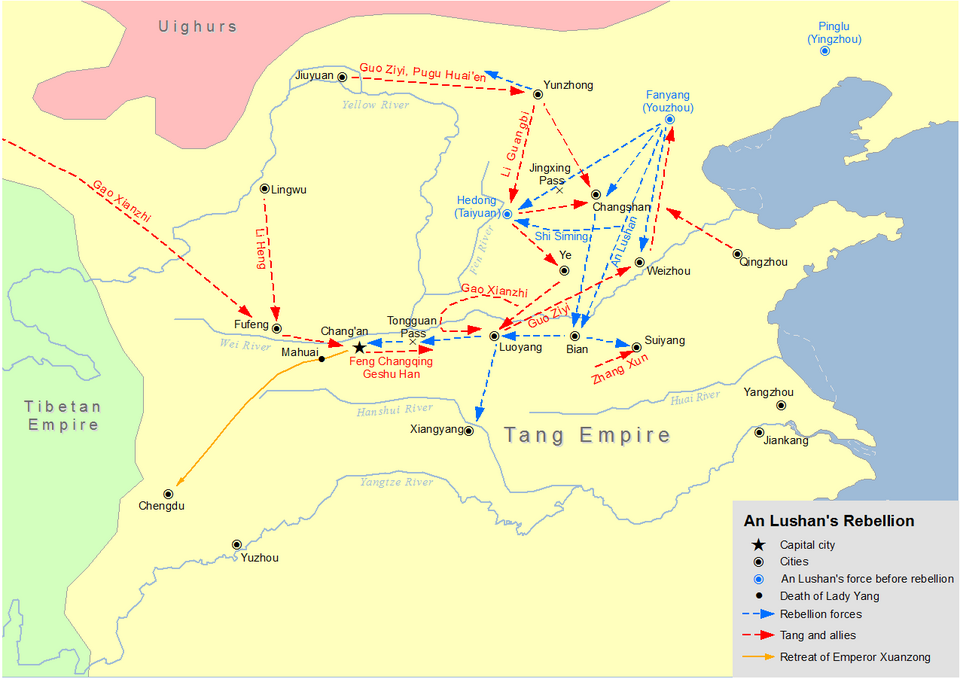
People in this story

Key facts about the execution of Yang Guozhong
| Event | Execution of Yang Guozhong |
|---|---|
| Date | July 15, 756 |
| Location | Chang'an, China |
| Key Figure | Emperor Xuanzong of Tang |
| Significance | Turning point in the Tang dynasty |
| Legacy | End of the Tang dynasty's golden age |


Reports From the Front

The historical record confirms that Emperor Xuanzong's Imperial Guards threatened to mutiny if Yang Guozhong was not killed, and it is likely that the emperor's decision was influenced by the pressure from his guards, as well as the ongoing An Lushan Rebellion, which posed a threat to the dynasty, and the record leaves unresolved the question of whether the emperor's decision to execute Yang Guozhong was a strategic move to appease his guards or a desperate attempt to maintain power in the face of the rebellion, as noted in the Wikipedia article on Emperor Xuanzong of Tang, which highlights the complex web of politics and power struggles within the dynasty, and the role of key figures, such as Emperor Xuanzong's mother, Consort Dou, who was killed by Wu Zetian in 693, and the impact of this event on the emperor's life and reign.
The record of Emperor Xuanzong's reign provides insight into the complex politics of the Tang dynasty, including the relationships between the emperor, his chancellors, and his Imperial Guards, and it is clear that the execution of Yang Guozhong highlights the tensions and power struggles within the dynasty, and the record confirms that the An Lushan Rebellion was a major factor in the emperor's decision to execute Yang Guozhong, and that the rebellion had significant consequences for the Tang dynasty, as described in the historical accounts and the Wikipedia article on the An Lushan Rebellion, which provides a detailed account of the rebellion and its impact on the dynasty, including the role of General An Lushan and the rebellion's impact on the dynasty's stability.
Timeline: the road to Execution of Yang Guozhong and its aftermath
- 693 Consort Dou killed by Wu Zetian
- 712 Emperor Xuanzong of Tang begins reign
- 755 An Lushan Rebellion begins
- July 15, 756 Execution of Yang Guozhong
The Military and Political Fallout

The aftermath of Yang Guozhong's execution was marked by continued instability within the Tang dynasty, as Emperor Xuanzong's decision to execute his chancellor did not ultimately lead to the end of the An Lushan Rebellion, which continued to pose a threat to the dynasty, and the record confirms that General An Lushan had other members of the emperor's family killed, highlighting the extreme violence and instability of the time, and the execution of Yang Guozhong on July 15, 756, occurred in the context of the rebellion, as noted in the historical accounts and the Wikipedia article on the An Lushan Rebellion, which provides a detailed account of the rebellion and its consequences for the dynasty, including the impact on the dynasty's economy and the role of key figures, such as Emperor Xuanzong's son, Li Longji, who would later become Emperor Xuanzong of Tang.
The record suggests that the execution of Yang Guozhong was followed by a period of decline for the Tang dynasty, as Emperor Xuanzong's reign, which had begun in 712, ultimately ended in 756, marking the end of a period in Chinese history, and the An Lushan Rebellion, which had begun in 755, continued to pose a major challenge to the dynasty, and the record confirms that Emperor Xuanzong's over-trust in certain chancellors, including Li Linfu and Yang Guozhong, contributed to the decline of the dynasty, as described in the historical record and the Wikipedia article on Emperor Xuanzong of Tang, which provides a detailed account of the emperor's reign and the events leading up to the execution of Yang Guozhong, including the role of key figures, such as Emperor Xuanzong's mother, Consort Dou, and the impact of her death on the emperor's life and reign.
How the Balance of Power Shifted
Emperor Xuanzong, who was born on September 8, 685, and reigned from 712 to 756, a period of 44 years, which was the longest during the Tang dynasty, made the decision to execute Yang Guozhong on July 15, 756, in the context of the An Lushan Rebellion, which was an event in the dynasty's history, and the execution of Yang Guozhong highlights the complex web of politics and power struggles within the dynasty, as noted in the historical record and the Wikipedia article on Emperor Xuanzong of Tang, which provides a detailed account of the emperor's reign and the events leading up to the execution of Yang Guozhong, including the role of key figures, such as Emperor Xuanzong's son, Li Longji, who would later become Emperor Xuanzong of Tang, and the impact of the rebellion on the dynasty's stability.
The Tang dynasty's golden age, which ended with the An Lushan Rebellion, was marked by achievements, including the expansion of the dynasty's borders and the development of its economy, and Emperor Xuanzong's reign was marked by both achievements and declines, including the rebellion, which led to a period of instability and decline for the Tang dynasty, as confirmed by the historical record and the Wikipedia article on the An Lushan Rebellion, and the execution of Yang Guozhong on July 15, 756, was a significant event in this context, highlighting the complex relationships between Emperor Xuanzong, his chancellors, and his Imperial Guards, and the impact of these relationships on the dynasty's decline, including the role of key figures, such as General An Lushan, and the rebellion's impact on the dynasty's stability.
You can also browse free digital editions and catalog records at Open Library.
Our Take: Strategy, Mistakes, and Momentum
What Worked on the Ground
- Strategic Decision: Emperor Xuanzong of Tang's decision to execute Yang Guozhong on July 15, 756, was a strategic move to appease his Imperial Guards, who threatened to mutiny if the chancellor was not killed, as recorded in the historical accounts of the Tang dynasty, specifically in the Wikipedia article on Emperor Xuanzong of Tang, which highlights the complex web of politics and power struggles within the dynasty, and the role of key figures, such as Emperor Xuanzong's mother, Consort Dou, and the impact of her death on the emperor's life and reign.
- Effective Leadership: Emperor Xuanzong's 44-year reign, from 712 to 756, was the longest during the Tang dynasty, and his ability to maintain power for so long was due in part to his effective leadership, including his decision to execute Yang Guozhong, which was influenced by the pressure from his Imperial Guards, as stated in the source material, which highlights the complex relationships between Emperor Xuanzong, his chancellors, and his Imperial Guards, and the impact of these relationships on the dynasty's decline, including the role of key figures, such as General An Lushan, and the rebellion's impact on the dynasty's stability.
- Tactical Move: The execution of Yang Guozhong on July 15, 756, was a tactical move by Emperor Xuanzong to maintain control and stability within the Tang dynasty, which was facing significant challenges, including the An Lushan Rebellion, which began in 755 and had far-reaching consequences for the dynasty, as confirmed by the historical record and the Wikipedia article on the An Lushan Rebellion, which provides a detailed account of the rebellion and its impact on the dynasty, including the role of key figures, such as Emperor Xuanzong's son, Li Longji, who would later become Emperor Xuanzong of Tang.
Where Command Failed
- Poor Judgment: Emperor Xuanzong's decision to trust and appoint Yang Guozhong as chancellor, despite warnings and concerns from other officials, was a poor judgment call, which ultimately led to the execution of Yang Guozhong on July 15, 756, and contributed to the decline of the Tang dynasty, as stated in the source material, which highlights the emperor's over-trust in certain chancellors, including Li Linfu and Yang Guozhong, and the consequences of this over-trust for the dynasty, including the role of key figures, such as General An Lushan, and the rebellion's impact on the dynasty's stability.
- Lack of Vision: Emperor Xuanzong's failure to address the underlying issues and tensions within the Tang dynasty, including the growing power of the Imperial Guards and the influence of corrupt officials, led to the An Lushan Rebellion and the eventual execution of Yang Guozhong, which could have been avoided with better leadership and vision, as suggested by the historical record and the Wikipedia article on Emperor Xuanzong of Tang, which provides a detailed account of the emperor's reign and the events leading up to the execution of Yang Guozhong, including the role of key figures, such as Emperor Xuanzong's mother, Consort Dou, and the impact of her death on the emperor's life and reign.
- Ineffective Response: The execution of Yang Guozhong on July 15, 756, was an ineffective response to the An Lushan Rebellion, which continued to pose a significant threat to the Tang dynasty, and Emperor Xuanzong's decision to execute his chancellor did not ultimately resolve the conflict or address the underlying issues, as confirmed by the historical record and the source material, which highlights the complex web of politics and power struggles within the dynasty, and the consequences of the emperor's decision for the dynasty's decline, including the role of key figures, such as General An Lushan, and the rebellion's impact on the dynasty's stability.
We keep coming back to one thing: the intricate web of relationships between Emperor Xuanzong, his chancellors, and his Imperial Guards that ultimately led to the execution of Yang Guozhong on July 15, 756. The fact that Emperor Xuanzong's over-trust in chancellors like Li Linfu and Yang Guozhong contributed to the decline of the Tang dynasty, and that General An Lushan's rebellion posed a major challenge to the dynasty, highlights the complex nature of power and loyalty. As we reflect on this event in 2026, we are reminded that the consequences of such actions can be far-reaching. The execution of Yang Guozhong was a significant event in the Tang dynasty's history, and it serves to underscore the enduring importance of prudent leadership and the need for effective decision-making in times of crisis, as noted in the historical record and the Wikipedia article on Emperor Xuanzong of Tang.

Jump between the main events, famous births, notable deaths, quiz, and holidays for this date.
You Might Also Like



Why was Yang Guozhong executed?
The lead-up included Consort Dou killed by Wu Zetian; Emperor Xuanzong of Tang begins reign; An Lushan Rebellion begins.
Key figures included Emperor Xuanzong of Tang, Yang Guozhong.
Turning point in the Tang dynasty