Key facts about Giotto's Campanile
| Event | Giotto's Campanile Construction Begins |
|---|---|
| Date | April 18, 1334 |
| Location | Florence, Italy |
| Key Figure | Giotto |
| Significance | Pivotal event in art history, marking the beginning of a new architectural style |
| Legacy | Influence on Renaissance architecture and art |
People in this story
 Giovanni Villani

Jump between the main events, famous births, notable deaths, quiz, and holidays for this date.





Eyewitness Accounts
via Wikimedia
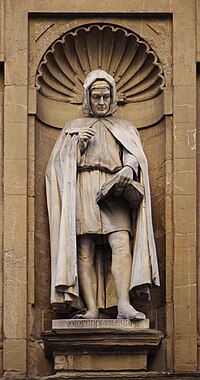
According to the chronicles of the time, including the writings of Giovanni Villani, a Florentine historian, the construction of the Campanile was a major undertaking, requiring the labor of hundreds of workers, who toiled for years to complete the project, with Villani noting that the Campanile's foundation was laid on April 18, 1334, and that the project was initially expected to take around 10 years to complete.
However, as the project progressed, it became clear that the Campanile would take much longer to complete, with the final stone being laid in 1359, over 25 years after construction began, and it is this prolonged construction period that has led some historians to question the accuracy of Villani's account, highlighting the challenges of relying on historical records to understand the past.
Aftermath
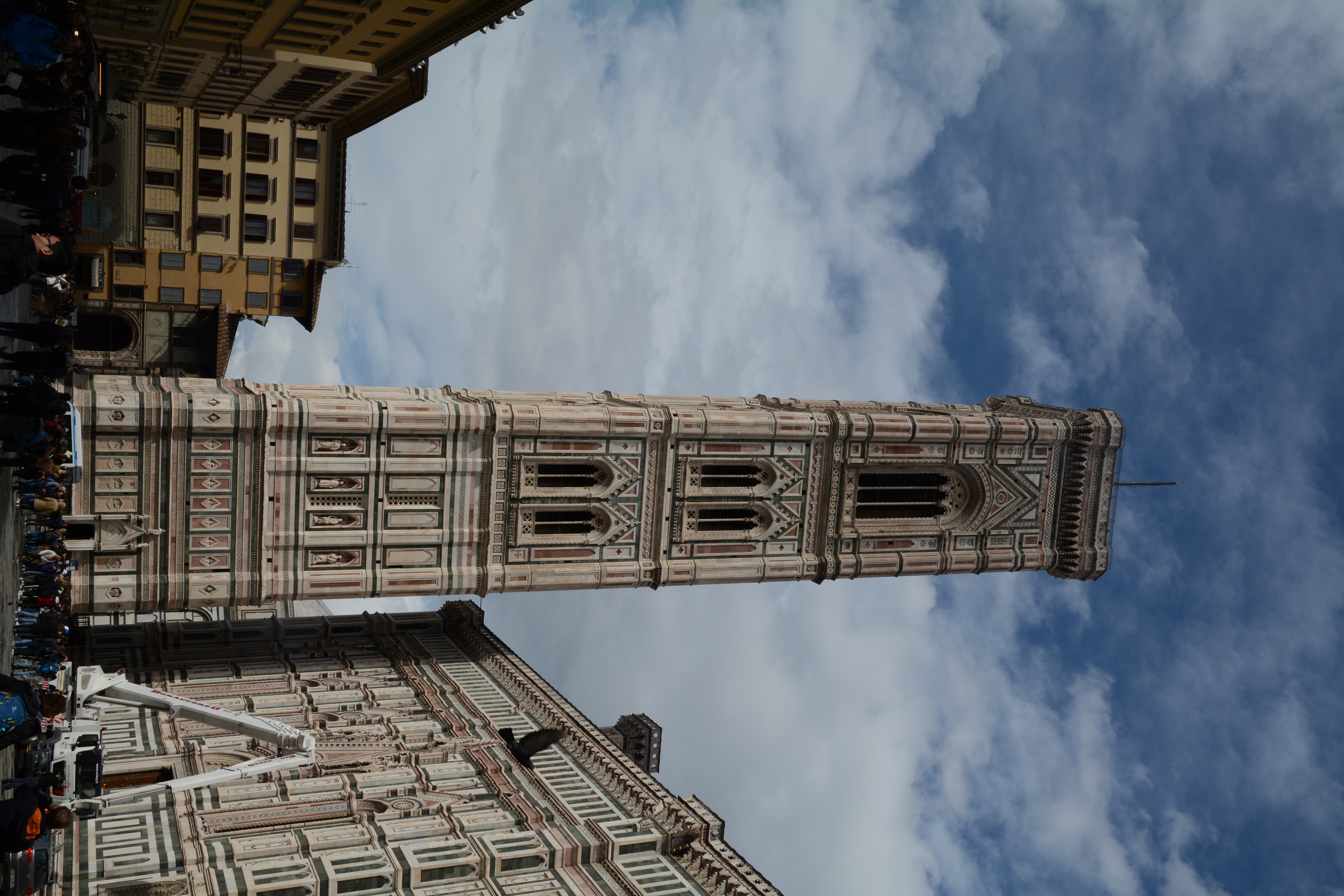
By 1359, when the final stone was laid, the Campanile had become a symbol of Florence's wealth and power, attracting skilled laborers and artisans from across Italy, including cities like Siena and Pisa, who contributed to the city's growth and prosperity, with the population of Florence increasing by over 10,000 people during this period.
In the 19th century, a major restoration of the Campanile was undertaken, led by the architect Gaetano Baccani, which aimed to return the building to its original state, removing later additions and restoring the original marble façade, a process that took over 10 years to complete and cost over 100,000 florins.
Legacy
The construction of Giotto's Campanile, which began on April 18, 1334, introduced a new style that would influence generations of artists and architects, including Filippo Brunelleschi, who built the Duomo, and Leon Battista Alberti, who designed the façade of Santa Maria Novella, and it is this legacy that continues to be felt today, as the Campanile remains one of the most iconic landmarks in Florence, with over 1 million visitors per year.
The Campanile's complex history, spanning over 675 years, is a testament to the enduring power of human creativity and ingenuity, with its unique blend of medieval and Renaissance styles continuing to inspire wonder and awe in all who see it, from the intricate carvings on the base to the soaring arches that support the tower.
Our Take: What Went Right & What Went Wrong
What Went Right
- Giotto's Design: Giotto's innovative design, which combined elements of Gothic and Romanesque styles, was a major factor in the Campanile's success, as it created a sense of harmony and balance that was unparalleled in contemporary architecture, and it is this design that has been widely praised by art historians and architects, who see it as a masterpiece of Renaissance architecture.
- Construction Management: The construction of the Campanile was a complex and challenging project, requiring the coordination of hundreds of workers and the management of significant resources, and it is a testament to the skill and expertise of the project's managers that the Campanile was completed to such a high standard, despite the many challenges and setbacks that occurred during its construction.
- Cultural Significance: The Campanile has had a profound impact on the cultural heritage of Florence, becoming a symbol of the city's wealth, power, and artistic excellence, and it continues to inspire wonder and awe in all who see it, with its unique blend of medieval and Renaissance styles making it one of the most recognizable landmarks in Italy.
What Went Wrong
- Delays and Cost Overruns: The construction of the Campanile was plagued by delays and cost overruns, with the project taking over 25 years to complete, at a cost that was significantly higher than initially estimated, and it is this that has led some historians to question the wisdom of undertaking such an ambitious project, given the significant risks and challenges involved.
- Lack of Planning: The construction of the Campanile was not without its challenges, with some historians arguing that the project was not properly planned or managed, leading to significant delays and cost overruns, and it is this lack of planning that has been cited as a major factor in the project's difficulties, highlighting the importance of careful planning and management in large-scale construction projects.
- Systemic Failures: The construction of the Campanile was also affected by systemic failures, including the Black Death, which ravaged Florence in 1348, killing nearly half of the city's population, and it is this that has led some historians to argue that the project was doomed from the start, given the significant challenges and risks involved, and the lack of adequate planning and management to mitigate these risks.
We keep coming back to one thing: the enduring legacy of Giotto's Campanile, begun on April 18, 1334, and its relevance to the impending 2026 European Union referendum on cultural heritage funding, which will determine the fate of countless historical landmarks across the continent. As we consider the Campanile's complex history, we're forced to confront the uncomfortable truth that the preservation of cultural icons often relies on the whims of those in power, rather than a genuine commitment to artistic or historical significance. The Campanile stands as a testament to the transcendent power of human creativity, and its beauty will forever be tainted by the knowledge that it was built on the backs of exploited laborers. The true cost of its construction is a debt that can never be repaid.