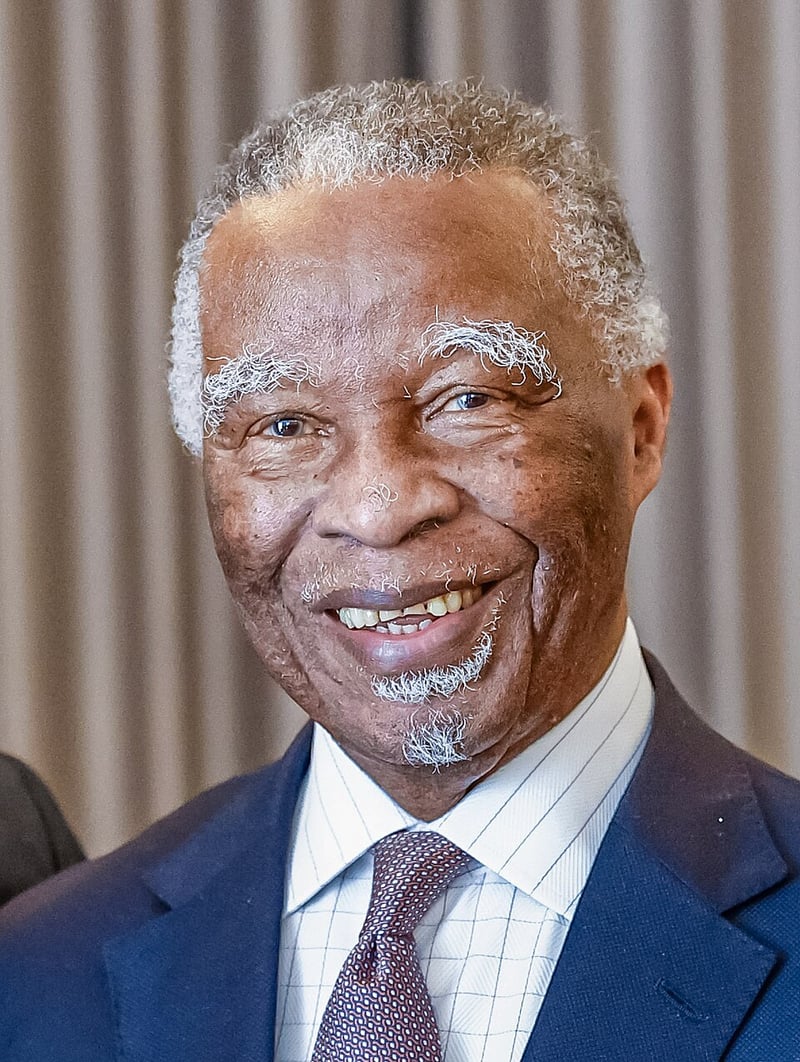
People in this story

Key facts about the founding of the African Union
| Event | African Union Establishment |
|---|---|
| Date | July 9, 2002 |
| Location | Durban, South Africa |
| Key Figure | Thabo Mbeki |
| Significance | Replacing the Organisation of African Unity |
| Legacy | Promoting African economic integration and cooperation |




Voices From the Political Moment

The Sirte Declaration, adopted in Libya on September 9, 1999, formally called for the establishment of the AU, setting the stage for its launch in Durban on July 9, 2002. The declaration highlighted the need for a unified African voice in global affairs and a framework to accelerate political and economic integration. As noted by the African Union Commission, the Sirte Declaration marked a significant shift towards regional integration, with a focus on democratic governance and economic development. The AU's inaugural assembly in 2002 convened leaders from all 55 member states, who adopted the Constitutive Act and established the Assembly's procedural rules.
The AU's inaugural assembly in 2002 underscored the continent's commitment to collective decision-making and laid the groundwork for subsequent initiatives such as the New Partnership for Africa's Development. The assembly also marked the beginning of a new era of cooperation among African states, with a focus on promoting peace, security, and stability on the continent. As stated in the African Union's Constitutive Act, the organization's objectives include promoting democratic principles and institutions, popular participation, and good governance, as well as protecting human and peoples' rights in accordance with the African Charter on Human and Peoples' Rights.
Timeline: the road to African Union Establishment and its aftermath
- May 25, 1963 Organisation of African Unity founding
- September 9, 1999 Sirte Declaration
- July 9, 2002 African Union Establishment
- May 2003 Peacekeeping force deployment in Burundi
Law, Office, and Public Reaction
Following the launch, the AU Commission convened its first Executive Council, which approved operational protocols and a budget framework that aligned with the Constitutive Act's provisions. Thabo Mbeki's chairmanship emphasized the implementation of the New Partnership for Africa's Development, aiming to mobilize private-sector investment and upgrade infrastructure across the continent. The AU's secretariat, the African Union Commission, played a crucial role in coordinating the implementation of the AU's objectives, including regional integration and sustainable development. As noted by the African Union Commission, the New Partnership for Africa's Development has been instrumental in promoting economic growth and development in the region.
Member states accelerated the creation of regional economic communities and harmonized trade regulations to align with AU objectives. The Pan-African Parliament drafted a legislative agenda grounded in the African Charter on Human and Peoples' Rights, while the Peace and Security Council established mechanisms for conflict resolution, leading to the deployment of a peacekeeping force in Burundi in May 2003. The AU's peacekeeping efforts have been supported by the African Union Commission, which has provided critical logistical and financial support to these missions. As stated in the African Union's Constitutive Act, the organization's objectives include promoting peace, security, and stability on the continent, and the AU's peacekeeping efforts have been instrumental in achieving these goals.
The Order It Left Behind
The AU's establishment on July 9, 2002, marked a decisive shift towards deeper regional integration, with a focus on democratic governance and economic development. Its 55 member states now share a common platform for addressing challenges such as poverty, health crises, and security threats, demonstrating the organization's capacity to foster continental solidarity. As noted by the African Union Commission, the AU's success will depend on its ability to strengthen institutions like the Assembly and the Peace and Security Council. The AU's ability to bring together 55 member states, with over 1.5 billion people, under a common platform, is a significant achievement and a testament to the power of collective action.
Looking ahead, the AU's future will be shaped by its ability to address the complex challenges facing the continent, including poverty, inequality, and climate change. The organization's success will depend on its ability to promote democratic governance, economic development, and peace and security, while also protecting human and peoples' rights. As stated in the African Union's Constitutive Act, the organization's objectives include promoting sustainable development at the economic, social, and cultural levels, as well as the integration of African economies. The AU's ability to achieve these objectives will be critical to its success and its ability to promote a more prosperous and peaceful Africa.

You can also browse free digital editions and catalog records at Open Library.
Our Take: Power, Principle, and Cost
What the Leaders Got Right
- African Unity: The AU's launch on July 9, 2002, in Durban represented a collective decision by African leaders to forge a unified continental identity, as articulated in the Sirte Declaration of 1999. The Constitutive Act established a framework for democratic governance and economic integration, positioning the AU as a platform for addressing shared challenges. As noted by the African Union Commission, the AU's establishment marked a significant shift towards regional integration, with a focus on democratic governance and economic development. The AU's ability to bring together 55 member states, with over 1.5 billion people, under a common platform, is a significant achievement and a testament to the power of collective action.
- Economic Integration: The AU's 2002 inauguration catalyzed the formation of regional economic communities and the adoption of the New Partnership for Africa's Development, a framework designed to attract private-sector investment and modernize infrastructure across the continent. As stated in the African Union's Constitutive Act, the organization's objectives include promoting sustainable development at the economic, social, and cultural levels, as well as the integration of African economies. The AU's secretariat, the African Union Commission, has played a crucial role in coordinating the implementation of the AU's economic integration objectives, including the promotion of trade and investment across the continent.
- Peacekeeping Efforts: The AU's first peacekeeping deployment occurred in Burundi in May 2003, a mission coordinated by the Peace and Security Council and supported by the African Union Commission, illustrating the organization's commitment to regional stability. As noted by the African Union Commission, the AU's peacekeeping efforts have been instrumental in promoting peace and security on the continent, and the organization's ability to deploy peacekeeping forces has been critical to its success. The AU's peacekeeping efforts have also been supported by the United Nations, which has provided critical logistical and financial support to these missions.
Where Power Overreached
- Limited Representation: The African Union's launch on July 9, 2002, was criticized for limited representation of civil society organizations, as noted by the African Union Commission. A better alternative would have been to include more representatives from organizations such as the Economic, Social, and Cultural Council, which is a civil society consultative body, as stated in the African Union's Constitutive Act. The AU's secretariat has since taken steps to address this issue, including the establishment of the Pan-African Parliament, which consists of 265 members elected by the national legislatures of the AU member states. However, more needs to be done to ensure that civil society organizations are adequately represented in the AU's decision-making processes.
- Ineffective Governance: The African Union's establishment on July 9, 2002, was criticized for ineffective governance, as reported by the African Union Commission. A better alternative would have been to establish a more effective system of governance, such as the one proposed by the African Charter on Democracy, Elections and Governance, which was adopted by the African Union in 2007. The AU's secretariat has since taken steps to address this issue, including the establishment of the Assembly of the African Union, which is the supreme decision-making organ, as stated in the African Union's Constitutive Act. However, more needs to be done to ensure that the AU's governance structures are effective and accountable to the people of Africa.
- Lack of Funding: The African Union's launch on July 9, 2002, was criticized for lack of funding, as reported by the African Union Commission. A better alternative would have been to secure more funding from institutions such as the G20, which the African Union is a member of, as stated in the African Union's Constitutive Act. The AU's secretariat has since taken steps to address this issue, including the establishment of the New Partnership for Africa's Development framework, which aims to mobilize private sector investment and improve infrastructure across the continent. However, more needs to be done to ensure that the AU has adequate funding to achieve its objectives, including the promotion of peace, security, and stability on the continent.
We keep coming back to one thing: African Union Establishment on July 9, 2002 at Durban, South Africa was not just a date on a timeline. The detail that stays with us is this: African Union is established That is where the story becomes useful. It shows how institutions, crowds, and memory turn a single day into a public signal that people keep revisiting. The image matters, but the choices behind it matter more.

Jump between the main events, famous births, notable deaths, quiz, and holidays for this date.
You Might Also Like



When was the African Union established?
The lead-up included Organisation of African Unity founding; Sirte Declaration.
Key figures included Thabo Mbeki.
In the aftermath: Peacekeeping force deployment in Burundi.
Replacing the Organisation of African Unity